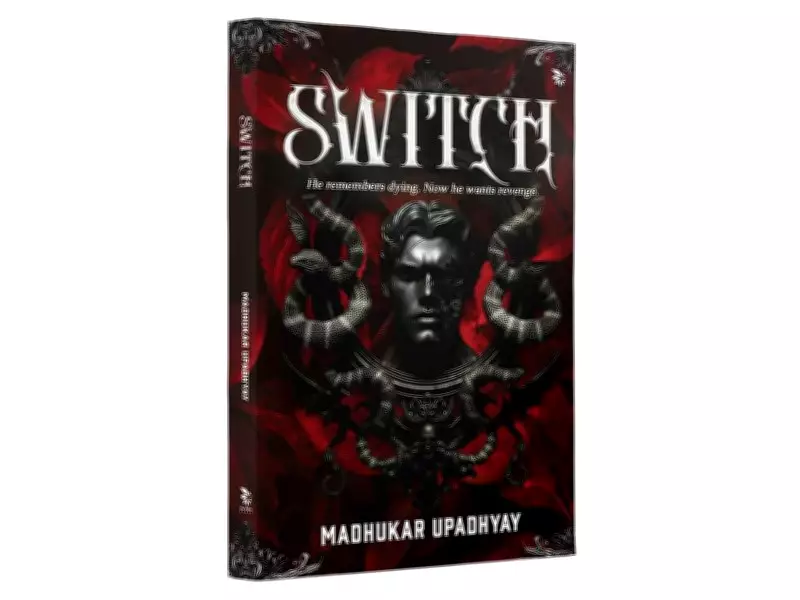
Novel Explores the Intersection of Trauma, Belief, and Violence
Madhukar Upadhyay's psychological thriller SWITCH, published with Nu Voice Press, a division of Hubhawks, delves into the unsettling space where science and inherited beliefs collide. The novel follows Vivaan, a young man recovering from a traumatic brain injury whose personality begins to shift violently. He develops obsessive thoughts, fractured memories, and claims to remember being murdered in a previous life as a snake. Vivaan identifies a specific family he believes killed him in that former existence and becomes consumed by revenge.
The story forces readers to confront whether Vivaan is suffering from trauma-induced delusion or whether his damaged mind has constructed a reality powerful enough to justify violence. This central question drives the narrative, as doctors, loved ones, and readers grapple with the terrifying possibility that belief can become a motive for murder.
Cultural Grounding in Indian Belief Systems
Unlike conventional psychological thrillers set in clinical environments, SWITCH is deeply rooted in Indian cultural psychology. The novel portrays families seeking help from both neurologists and priests, with medical reports competing against inherited belief systems about karma, curses, and past lives. This conflict between faith and clinical reality gives the novel its haunting power, as science does not operate alone in this world.

The author, Madhukar Upadhyay, brings a unique perspective as a licensed veterinarian with interests in science, philosophy, religion, and psychology. His background allows him to approach the subject with analytical curiosity and emotional sensitivity, creating a narrative that neither sensationalizes mental illness nor dismisses spiritual belief.
Fractured Identity and Unreliable Narration
The brilliance of SWITCH lies in its refusal to provide easy answers. Vivaan exists in a morally unstable space where he is simultaneously a victim, a threat, and an unreliable narrator trapped inside his own spiraling perception. As the story progresses, readers experience the same uncertainty that consumes the characters around him. Memories contradict themselves, reality becomes slippery, and every explanation feels incomplete.
The novel transforms into an exploration of how dangerous belief can become when combined with unresolved trauma and emotional desperation. According to the publisher, the horror does not emerge from ghosts or supernatural spectacle but from the terrifying possibility that a fractured mind can transform belief into justification.
Relevance to Evolving Indian Thriller Audience
What makes SWITCH particularly relevant today is its understanding of the evolving Indian thriller audience. Readers are increasingly drawn toward layered psychological narratives that blur boundaries between truth and perception. Films and series like Shutter Island, Split, and Sacred Games have proven audiences are fascinated by fractured minds and morally ambiguous realities. SWITCH builds on that fascination while grounding it firmly within Indian cultural psychology.
The novel's central question remains deeply unsettling: What if reincarnation became a criminal motive? By the end, readers are left questioning not only Vivaan's reality but the fragile nature of truth itself. Because sometimes the most dangerous thing is not what the mind remembers but what it chooses to believe.