Tamil Nadu Launches Comprehensive Shipbuilding Policy to Seize Global Market Opportunity
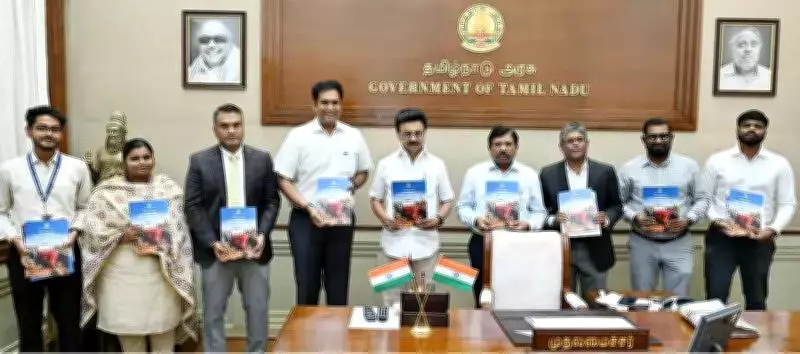
In a strategic move to capture a significant portion of the global shipbuilding industry, valued at nearly 14.5 lakh crore, the Tamil Nadu government unveiled its ambitious shipbuilding policy on Wednesday. This comprehensive framework addresses shipyards, repair and maintenance services, and environmentally friendly ship recycling, positioning the state as a future leader in the maritime sector.
Vision for Global Leadership in Sustainable Shipbuilding
The policy outlines a clear vision to establish Tamil Nadu as a global leader in sustainable and technologically advanced shipbuilding. It aims to transform the state into a premier hub for high-value, large ocean-going vessels, including very large crude carriers (VLCCs). Chief Minister M K Stalin emphasized that the policy focuses on making Tamil Nadu the shipbuilding and repair capital of India, with aspirations to become the destination of choice for international shipbuilders and investors.
The state seeks to achieve this through the creation of world-class infrastructure, targeted financial incentives, and a strong emphasis on sustainability. By nurturing a robust shipbuilding cluster, Tamil Nadu aims to accelerate economic growth, generate high-quality employment opportunities, and set new global benchmarks for the maritime industry.

Comprehensive Incentives and Support Mechanisms
The policy offers a wide array of incentives for multiple categories of maritime structures, including:
- Defense craft and submarines
- Luxury yachts and recreational vessels
- Offshore docks for vessel repair and maintenance
- Research and development institutions
- Global capability centers (GCCs) in the maritime sector
A key component of the implementation strategy involves the establishment of a Special Purpose Vehicle called NSHIPTN. This entity, with separate legal existence under the state-owned SIPCOT, will play a crucial role in facilitating smoother financing for shipyard projects. Incentives will be provided in various forms, including private equity investments, asset leasing arrangements, capital subsidies on eligible fixed assets, and production-linked incentives.
Leveraging Natural Advantages and Infrastructure
Tamil Nadu's Shipbuilding Policy 2026 highlights the state's significant natural advantages for maritime development. With a coastline stretching 1,076 kilometers, deep water access capable of handling vessels above 200,000 deadweight tonnage (DWT), and a thriving manufacturing ecosystem comprising over 40,000 factories, the state possesses ideal conditions for shipbuilding expansion.
The policy document notes that Tamil Nadu's maritime infrastructure includes three major ports, seven government captive ports, and 17 non-major ports. This extensive port network provides a solid foundation for developing a comprehensive shipbuilding and repair ecosystem.
Collaboration and Skill Development Initiatives
Beyond infrastructure and financial incentives, the policy emphasizes human capital development and industry collaboration. The Government of Tamil Nadu will partner with the Indian Maritime University (IMU) to design and deliver specialized courses aligned with industry requirements, ensuring a skilled workforce for the growing maritime sector.
Additionally, subsidies will be provided to promote the marine component manufacturing industry, creating a supportive ecosystem for ancillary businesses. The policy draws inspiration from international models that have successfully developed world-class shipyard infrastructure and shipbuilding capabilities.
Broader Context and Government Support
The state's initiative comes at a time when the central government has announced a substantial Rs 69,725 crore support package to revitalize India's shipbuilding sector. This alignment of state and central government efforts creates a favorable environment for maritime industry growth.

Industries Minister T R B Rajaa highlighted the state's advantages in a social media post following the policy unveiling, stating, "Tamil Nadu has a natural advantage: 1,076 km coastline, deep water access capable of handling vessels above 2,00,000 DWT and a manufacturing ecosystem with more than 40,000 factories."
The policy represents a significant step toward realizing Tamil Nadu's maritime potential and marks a strategic effort to position India as a competitive player in the global shipbuilding industry, which continues to see substantial growth and technological advancement.