

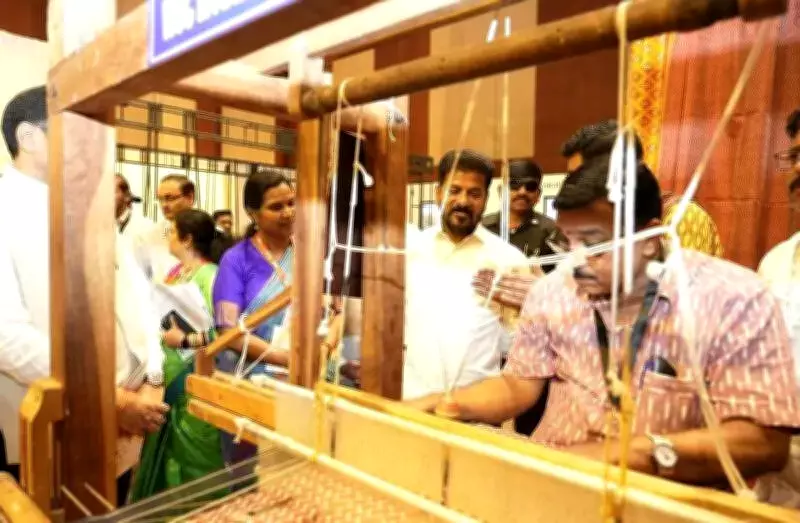
Telangana Sets Sights on Becoming South Asia's Premier Textile Hub by 2047
In a bold declaration at the 13th Asian Textile Conference (ATEXCON) 2026, Telangana Chief Minister A Revanth Reddy outlined the state's ambitious vision to transform into the textile capital of South Asia by 2047. Speaking in Hyderabad on Friday, Reddy emphasized the government's commitment to developing a comprehensive textile ecosystem that spans from cotton cultivation to international fashion markets in major global cities such as London, New York, Paris, Milan, Tokyo, and Dubai.
Building on Past Successes for Future Growth
Reddy highlighted Telangana's proven track record in global manufacturing, noting its success in producing vaccines and medicines for worldwide distribution. He pointed to the state's role as a manufacturing hub for Apple AirPods as a model for replicating achievements in the fashion industry. "We have the skill and will to lead in textiles," Reddy asserted, linking this push to the broader Telangana Rising vision, which targets a $1 trillion economy by 2034 and $3 trillion by 2047.
Infrastructure and Incentives to Attract Investment
The Chief Minister detailed the state's advantages for investors, including robust infrastructure, readily available land, reliable power and water supplies, attractive incentives, and efficient execution processes. He also connected the textile initiative to Hyderabad's growing reputation as a film production destination, citing the recent opening of Netflix's Eyeline Studios. "We will encourage the film industry to source its fashion needs from us," Reddy stated, referencing Tollywood, Bollywood, and Hollywood activities in the region.

Key Projects and Traditional Strengths
Telangana has already established significant textile infrastructure, such as the Kakatiya Mega Textile Park in Warangal and several apparel parks. Reddy underscored the sector's deep roots in the state's identity, mentioning unique textiles like Pochampally Ikat, Gadwal sarees, Warangal durries, and Narayanpet weaves, which serve as a lifeline for weaving communities.
Integrating Technology with Tradition
IT & Industries Minister D Sridhar Babu emphasized the fusion of traditional craftsmanship with modern technologies like artificial intelligence, blockchain, and the Internet of Things. "By integrating technology with the traditional charkha, we aim to elevate the 'Made in Telangana' brand globally through a 'New Swadeshi' vision," he explained. The government plans to create green textile hubs and focus on skilling youth, particularly women, to blend traditional knowledge with contemporary tools in design, cutting, and stitching.
This strategic move positions Telangana to leverage its leadership in sectors such as deep-tech, pharma, life sciences, aerospace, defence, manufacturing, and energy, aiming to establish a dominant presence in the global textile market over the coming decades.






