

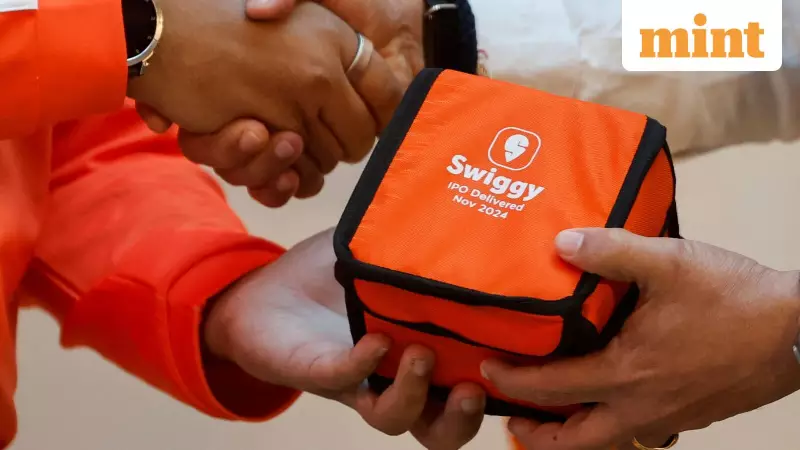
In a bold new move to capture customer attention and market share, India's leading quick commerce platforms have unleashed a surprising weapon: cosmetics priced at a mere one rupee. Swiggy Instamart and Zepto have both launched aggressive campaigns where shoppers can access select beauty and skincare items for just ₹1, provided they add other cosmetics worth a specified amount to their cart. This strategic shift highlights a deeper battle beyond groceries, as these delivery giants aim to become go-to destinations for impulse beauty purchases.
The Mechanics of the One-Rupee Beauty Offer
The campaigns, launched recently, operate on a simple but effective model. On platforms like Swiggy Instamart and Zepto, customers who add beauty products worth at least ₹599 to their virtual cart unlock a special catalogue. This exclusive section features entry-level products from popular brands available for the unbelievable price of ₹1. The catalogue includes items from well-known names such as Lakmé lipsticks, Maybelline kajal, Mamaearth sheet masks, Plum face washes, and Minimalist serums.
Not to be left behind, BigBasket's quick service BB Now is running a parallel promotion, offering substantial discounts of around 60% across its entire range of beauty and skincare products. These are not mere flash sales but calculated campaigns co-funded by the platforms and the participating brands themselves. The immediate goal is dual: to increase the total number of orders and to boost the average order value by encouraging customers to explore and add cosmetics to their baskets.

The Strategic Why: Margins, Sampling, and Market Shift
Why are platforms known for delivering vegetables and snacks suddenly obsessed with lipstick and serums? The answer lies in profitability and consumer behavior. Beauty and personal care products offer significantly higher margins (25-35%) compared to the low-margin staples that form the core of quick commerce. Groceries and fruits typically have margins ranging from a thin 2-5% for fresh produce to 8-12% for packaged goods.
According to Satish Meena, founder of Datum Intelligence, these ₹1 deals act as a powerful sampling tool for brands. "New-age and YouTube-first beauty brands especially push these deals on Blinkit, Swiggy and Zepto to get customers to try their products," he explained. The quick commerce app, opened multiple times a week by users, provides instant product discovery through prominent placements and pop-ups, making it a more efficient sampling channel than traditional methods.
For the brands, funding these deep discounts is a strategic customer acquisition play. While quick commerce may not yet be their largest sales channel, it offers unparalleled instant visibility and rapid trial cycles. Converting a customer through a ₹1 trial is often more cost-effective than expensive digital marketing campaigns with high customer acquisition costs. The bet is that a short-term discount can create a long-term, high-frequency buyer.
Long-Term Ambitions and Market Growth
The ultimate ambition for quick commerce companies is clear: they no longer want to be perceived just as emergency grocery delivery apps. They are actively positioning themselves as impulse-led discovery platforms for discretionary categories like beauty. This allows them to carve a path to sustainable growth and improved profitability, moving beyond the low-margin essentials business.
This strategy directly encroaches on the territory of specialized online beauty retailers like Nykaa and even offline stores. The success of these campaigns will hinge on whether platforms can expand the variety of discounted products and, crucially, if customers who try a ₹1 product later repurchase it at full price.

The beauty segment in quick commerce, while smaller than staples, is its fastest-growing vertical. India's overall beauty and personal care market is currently valued at $24 billion and is projected to reach $45 billion by 2030. Within this, quick commerce is the fastest-growing channel. Its Gross Merchandise Value (GMV) for beauty climbed to roughly $1 billion in 2024 and is expected to hit $3 billion by 2030, representing a compound annual growth rate (CAGR) of over 20%. This growth far outpaces traditional e-commerce (13-14% CAGR) and offline retail (8-9% CAGR).
As India's quick-commerce sector heads towards a projected GMV of ₹64,000 crore in FY25, beauty and other discretionary categories are already contributing a significant 20-25% of gross sales for leading platforms. The ₹1 lipstick is more than a gimmick; it's a strategic spearhead in a high-stakes battle for the Indian consumer's wallet and attention.





