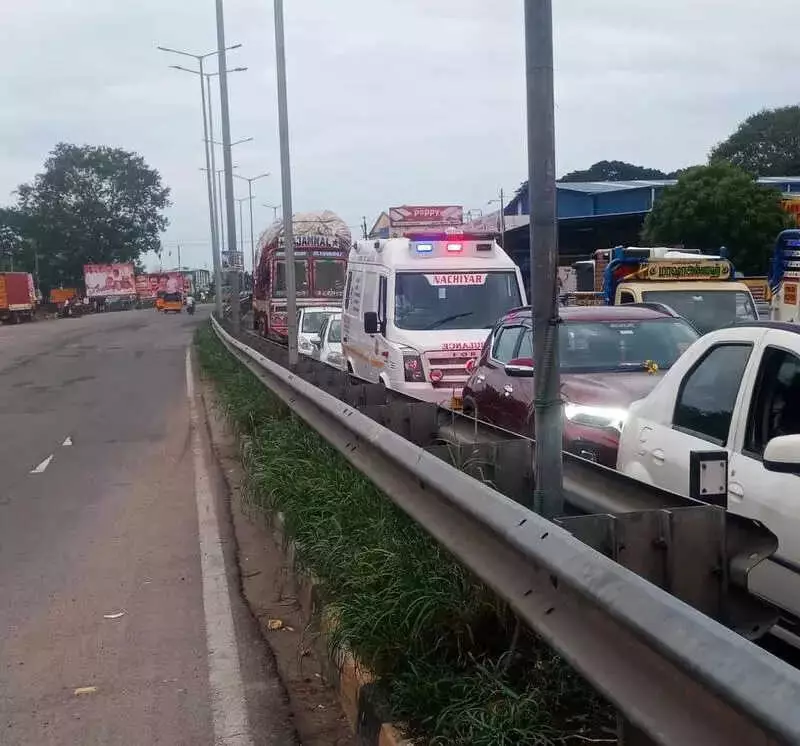
Residents of Trichy, a city known for its relatively smoother traffic flow compared to the notorious snarls of Chennai or Bengaluru, are facing a new and frustrating reality. The epicenter of this growing crisis is the Palpannai junction, a critical point where three major national highways intersect. What was once a minor irritation has transformed into a major bottleneck, with motorists now routinely spending over half an hour navigating this single crossing.
Anatomy of a Bottleneck: Infrastructure and Stalled Projects
The core of the problem lies in the junction's design and the failure to keep pace with growth. Palpannai sits at the convergence of the Chennai–Trichy, Trichy–Thanjavur, and Trichy–Madurai highways. However, the infrastructure has glaring gaps. The Trichy–Thanjavur stretch lacks proper service lanes, while the other connecting highways remain narrow. A flyover built 15 years ago is now inadequate, with experts suggesting a Cloverleaf design would have been more future-proof. Furthermore, existing service lanes have not been widened to allow for smooth free left turns.
Compounding the issue are two crucial ring road projects that remain in limbo. A northern semi-ring road, proposed in 2021 to link six highways and allow through-traffic to bypass Palpannai completely, has not taken off. Another semi-ring road between Thuvakudi and Jeeyapuram, first proposed back in 2007, is only half-finished. The detailed project report (DPR) for the remaining 19.9 km is still pending with the National Highways Authority of India (NHAI).

The Surge: More People, More Vehicles, More Cargo
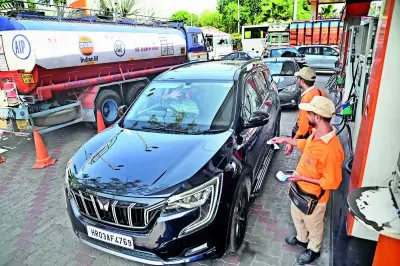
The strain on Palpannai is a direct result of Trichy's rapid development. Since the Covid-19 pandemic, the city's four Regional Transport Offices (RTOs) have registered a dramatic 18–36% increase in new vehicle registrations. Daily traffic at the nearby Samayapuram toll plaza has skyrocketed from 8,000 vehicles in 2010 to around 25,000 today. Passenger cars now constitute 73% of this daily traffic, up from 67%.
Simultaneously, the population in approximately ten wards surrounding Palpannai has nearly doubled, from about 1.3 lakh in 2011 to an estimated 2.3 lakh now. This demographic boom is fueled by new investments along the Chennai and Thanjavur highways. Adding to the congestion is an industrial revival along the Trichy–Thanjavur highway, where units like BHEL and various MSMEs are seeing renewed activity. The movement of raw materials and finished goods, especially during peak evening hours, brings a significant volume of cargo traffic into the already choked junction.
Poor Regulation and Potential Solutions
Traffic management has also failed to adapt. Despite the availability of a semi-ring road section that provides access to Panjapur KKBT, many Tamil Nadu State Transport Corporation (TNSTC) and private buses from Thanjavur and other delta districts continue to use Palpannai. Road safety council members argue that buses and heavy vehicles should be mandatorily diverted, particularly on weekends. Police officials counter that commercial vehicles avoid the semi-ring road because it is incomplete and eventually reconnects to the city at Panjapur.
Looking for a way ahead, Ward 39 councillor L Rex has proposed developing a bund road along the Uyyakondan Canal. This could divert vehicles from Ariyamangalam to Senthaneerpuram, bypassing Palpannai, and would require only a new bridge to complete the link. Residents have suggested more immediate measures, such as routing point-to-point buses from delta districts via the existing semi-ring road and restricting truck movement during peak hours by utilizing the Panjapur truck terminal effectively.
For now, the people of Trichy are left with little choice but to endure the long delays at Palpannai, a stark symbol of the city's growing pains and the urgent need for integrated infrastructure planning and execution.