

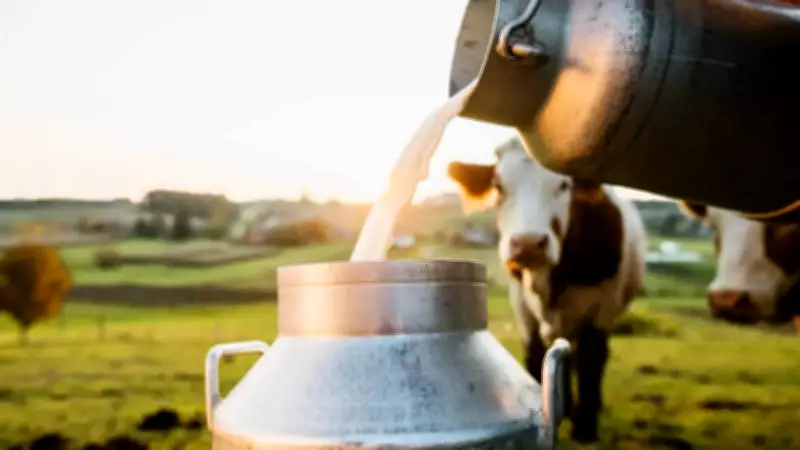
Uttar Pradesh Emerges as India's Premier Milk Producer with Remarkable 40% Growth
Milk, a fundamental dietary staple in Indian homes, is celebrated for its rich calcium content and essential nutrients that promote bone health, muscle development, and overall wellness. According to recent data, India maintains its global leadership in milk production, contributing approximately one-quarter of the world's total supply. A significant development highlights Uttar Pradesh as the nation's top milk-producing state, achieving an impressive 40% increase in output.
Record-Breaking Milk Production in Uttar Pradesh
The latest reports indicate that Uttar Pradesh experienced a substantial 40% rise in milk production between the fiscal years 2016-17 and 2024-25. Production surged from 277 lakh tonnes to 388 lakh tonnes during this period, solidifying its position as the leading contributor to India's dairy sector. This growth is credited to strategic planning and grassroots initiatives under Chief Minister Yogi Adityanath's administration. Notably, Uttar Pradesh alone accounts for 16% of the country's total milk production, with five states collectively responsible for 54%.
Empowering Women Through Dairy Initiatives
A key factor in this success is the Uttar Pradesh State Rural Livelihood Mission, which has engaged lakhs of women in dairy activities. Through self-help groups, these women collectively procure nearly 10 lakh litres of milk daily, generating business worth Rs. 5000 crore. This initiative not only boosts milk production but also enhances rural livelihoods and economic empowerment.

FSSAI's Comprehensive Milk Composition Standards
The Food Safety and Standards Authority of India (FSSAI) has established stringent guidelines for milk composition to ensure quality and safety. According to FSSAI regulations, different milk types must meet specific requirements for milk fat and milk solids-not-fat:
- Buffalo Milk: Minimum 5.0% milk fat and 9.0% milk solids-not-fat.
- Cow Milk: Minimum 3.2% milk fat and 8.3% milk solids-not-fat.
- Goat Milk: Minimum 3.0% milk fat and 8.0% milk solids-not-fat.
- Camel Milk: Minimum 2.0% milk fat and 6.0% milk solids-not-fat.
- Toned Milk: Minimum 3.0% milk fat and 8.5% milk solids-not-fat.
- Double Toned Milk: Minimum 1.3% milk fat and 9.0% milk solids-not-fat.
- Skimmed Milk: Maximum 0.5% milk fat and minimum 8.7% milk solids-not-fat.
- Full Cream Milk: Minimum 6.0% milk fat and 9.0% milk solids-not-fat.
Stringent Regulations on Milk Additives and Safety
FSSAI mandates that milk must be free from any food additives and comply with the Food Safety and Standards (Contaminants, Toxins and Residues) Regulations, 2011. The total urea content in milk is strictly limited to not more than 700 ppm. Additionally, all milk products must be prepared and handled in accordance with Schedule 4 of the Food Safety and Standards (Licensing and Registration of Food Businesses) Regulations, 2011, and other relevant guidelines under the Food Safety and Standard Act, 2006, to ensure consumer safety and quality assurance.






