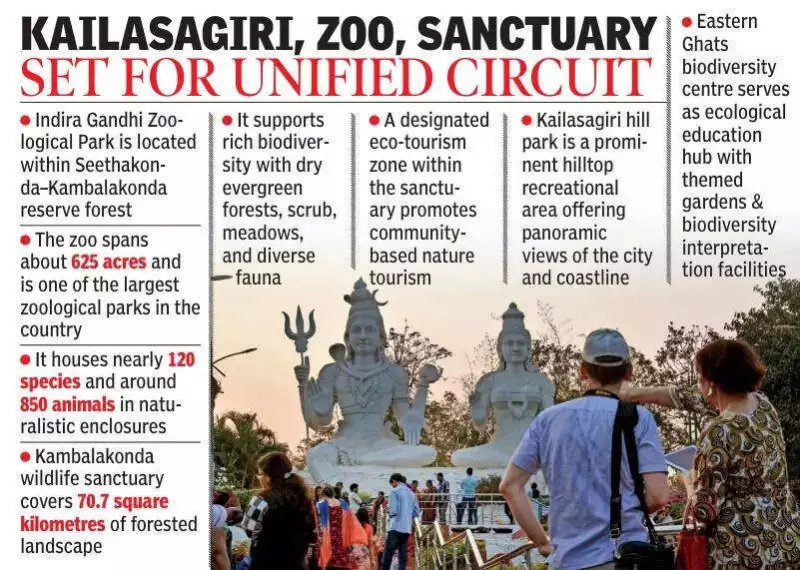
Vizag Plans Major Wildlife & Eco-Tourism Hub by Linking Parks & Sanctuaries
The Visakhapatnam Metropolitan Region Development Authority (VMRDA) has unveiled an ambitious plan to create a comprehensive wildlife, aquatic life, and eco-recreational destination in the city. This initiative marks a significant step toward sustainable urban development in the region.
Unifying Natural Assets into a Single Circuit
VMRDA officials recently approved the preparation of a concept development plan during an Authority meeting. The project proposes to integrate several key natural attractions that currently operate independently. These include:
- Kailasagiri hill
- Indira Gandhi Zoological Park
- Kambalakonda Wildlife Sanctuary
- Surrounding aquatic environments
The goal is to bring these diverse elements together under a common vision and planning framework. This integration will create a seamless visitor experience while promoting sustainable mobility systems throughout the circuit.

Focus on Conservation and Education
VMRDA Chairperson MV Pranav Gopal emphasized the Authority's mandate for planned regional development. He highlighted Visakhapatnam's rich ecological wealth, which encompasses hills, sanctuaries, aquatic zones, and parks. Gopal stressed the urgent need for a holistic eco-recreation destination that serves multiple purposes.
The project aims to achieve several important objectives:
- Conserve natural habitats and restore ecosystems
- Raise awareness about biodiversity among visitors
- Offer educational entertainment experiences for tourists, students, and local communities
- Balance habitat creation with sustainable design principles
Developing a Comprehensive Plan
VMRDA has decided to appoint a consultant to prepare the detailed concept plan. This consultant will outline the project's vision, goals, and integrated development strategies. The planning process will include several key components:
An attraction precedent study will analyze national and international case examples. This research will provide valuable insights into design approaches, operational models, and visitor engagement strategies that can be incorporated into the Vizag project.
The plan will address multiple aspects of development, including:
- Animal enclosure design and habitat creation
- Circulation patterns and transportation models
- Protection of environmentally sensitive zones
- Back-of-house animal infrastructure improvements
- Species selection and collection plans
- Appropriate flora and fauna planning
Creating a Unified Destination
Ultimately, this initiative seeks to transform the entire project area into a single, integrated destination. By connecting these natural assets, VMRDA hopes to enhance the visitor experience while promoting environmental conservation. The project represents a forward-thinking approach to urban planning that values both ecological preservation and recreational opportunities.
Pranav Gopal added that the integrated approach will benefit all stakeholders. Tourists will enjoy a more comprehensive experience, students will gain valuable educational opportunities, and local communities will benefit from both conservation efforts and potential economic opportunities.
The VMRDA's vision for Visakhapatnam reflects a growing recognition of the importance of balancing urban development with environmental stewardship. As cities across India grapple with similar challenges, Vizag's integrated eco-tourism model could serve as an example for other metropolitan regions seeking to preserve their natural heritage while promoting sustainable tourism.