

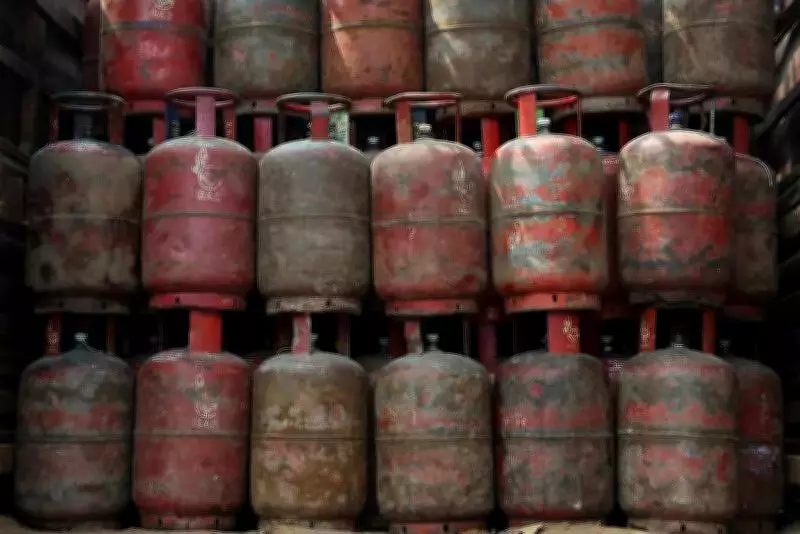
West Asia Conflict Triggers LPG Supply Crisis for Pune Industries
The ongoing conflict in West Asia has begun to severely impact industrial operations in parts of Pune district, with multiple units in the engineering and powder-coating sectors reporting complete production halts due to commercial LPG supply restrictions. The situation is escalating as firms face mounting financial losses and scramble for alternatives.
Production Grinds to a Halt as Fuel Runs Out
Mass Precision Pvt Ltd, a powder-coating unit in Chakan employing approximately 250 workers, has suspended operations since Friday due to LPG unavailability. Owner Rajesh Deodhare revealed that despite employees reporting to work, production has completely stopped as distributors have no stock for commercial consumers.
"I have been trying to procure LPG for four consecutive days without success," Deodhare stated. "With a monthly turnover of Rs 7–8 crore, we are incurring losses of nearly Rs 25 lakh daily while production remains suspended."

He compared the situation to the COVID-19 shutdowns, noting that even during business stoppages, companies must continue paying worker salaries and servicing loan EMIs. "The situation could deteriorate rapidly if supplies aren't restored soon," he warned.
Widespread Impact Across Manufacturing Sectors
Sahyadri Industries, another Chakan-based manufacturer of fabrication components, machined parts, and sheet metal assemblies, has similarly halted production for four days after exhausting LPG supplies. Owner Jaidev Akkalkote reported that 10-15 workers are currently performing cleaning duties as no production activity is possible.
Both industrialists emphasized they continue paying workers despite shutdowns, recognizing that skilled labor is difficult to replace once employees depart.
Government Prioritizes Domestic Supply
The Union Ministry of Petroleum and Natural Gas has implemented LPG supply restrictions to non-essential users, prioritizing domestic households and emergency requirements. The ministry announced a 25-day inter-booking period to prevent hoarding and black marketing, while imported LPG for non-domestic use is being directed primarily to essential sectors like hospitals and educational institutions.
For other non-domestic sectors including restaurants, hotels, and industries, a committee comprising three executive directors from Oil Marketing Companies has been established to review representation for LPG supply.
Industry Scrambles for Alternatives
A senior BPCL official, speaking anonymously, confirmed that bulk LPG supply requests from industries are undergoing strict scrutiny, with distribution approved only for verified essential or emergency service demands.
Industrial units typically maintain just 3-4 days of LPG stock, raising concerns about widespread shutdowns if fresh supplies aren't restored promptly. Some companies are exploring alternatives like electric-powered ovens and plasma-cutter machines, but industry representatives note these transitions involve significant costs and installation periods of at least one month.
Steel and Foundry Operations Threatened
The steel industry faces particular challenges, with Sakshi Katti, an executive at a Chakan steel production unit, stating: "Operating furnaces without fuel supply presents major problems." Their foundry, with 200-tonne capacity fully dependent on LPG, requires approximately 20 cylinders every two weeks and has only one week of stock remaining.
The only alternative—switching to diesel—proves prohibitively expensive for most operations.
MSME Clusters Highly Vulnerable
Sandip Belsare, president of the Pimpri Chinchwad Small Scale Industries Association and an engineering firm owner in Bhosari, revealed that over 50% of regional industries rely on LPG. "While some units explore alternatives, the process is costly and difficult," he noted, adding that he has ordered two electric-operated plasma machines for his own firm.
Kalyan Dekhale, owner of Rudra Veer Technologies powder-coating units in Bhosari and Chakan employing 70-80 workers, reported having only 2-3 days of LPG stock remaining. "If supply isn't restored, we too will halt operations," he stated.

Casting Clusters Seek Solutions
Vidhi Daryanani, Secretary General of the Aluminium Casters' Association of India, explained that casting clusters in Pune-Pimpri Chinchwad, Nashik, Chhatrapati Sambhajinagar, and Kolhapur are predominantly MSME-dominated. Smaller foundries and die-casters lacking piped natural gas connections depend entirely on commercial LPG cylinders ranging from 35kg to 427kg.
"While larger units may have partially transitioned to PNG or induction, mid-tier operations remain highly exposed," Daryanani observed. She suggested MSMEs could evaluate alternatives depending on existing infrastructure and urgency, including:
- Switching to light diesel oil
- Transitioning to electric induction furnaces or natural gas
- Reducing batch frequency
Situation Snapshot
- Engineering firms and powder-coating units are among the most affected by LPG supply restrictions
- Electric-operated ovens for powder-coating and plasma-cutter machines for engineering serve as potential alternatives
- Transition costs to electric-operated machinery are substantial, with complete setup replacements requiring significant time
- Most industrial units maintain only 3-4 days of LPG inventory
- The Union ministry has formed a three-member committee to review non-domestic user demands
The industrial landscape in Pune district faces mounting pressure as the West Asia conflict continues to disrupt critical fuel supplies, forcing businesses to choose between costly alternatives or extended production shutdowns.





