

The Subjectivity of Automotive Design: When Bold Choices Backfire
Car design represents one of the most challenging aspects of automobile manufacturing, where artistic vision meets engineering constraints. Design remains inherently subjective—what appears futuristic and innovative to one individual can seem awkward and mismatched to another. This delicate balance between form and function has led to numerous vehicles that pushed creative boundaries, sometimes venturing too far into unconventional territory.
The global automotive industry has produced several models that became infamous for their controversial styling, drawing widespread criticism while occasionally developing unexpected cult followings. These vehicles serve as important case studies in how design decisions can dramatically impact a car's market reception and legacy.
Global Icons of Controversial Design
Pontiac Aztek (2001)

Universally recognized as one of the most criticized automotive designs in history, the Pontiac Aztek launched in 2001 when crossover SUVs were still establishing their market presence. The model gained immediate notoriety for its confused styling language that seemed to lack cohesive direction. The front end appeared cluttered with split headlamps and an overly bulky grille, while the rear featured an awkward, high-set design that never harmonized with the vehicle's overall proportions.
Despite its practical features and innovative interior packaging, the Aztek's visual appeal consistently failed to meet consumer expectations, transforming it into a lasting symbol of automotive design gone wrong.
Fiat Multipla (1998)
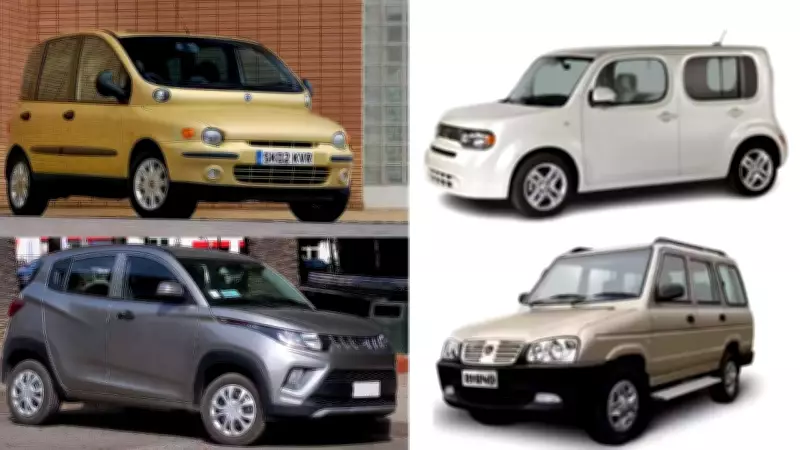
Fiat took an exceptionally bold approach with their Multipla MPV, introducing a revolutionary two-tier front design with headlamps positioned unusually high above the main grille. The resulting appearance—often described as resembling a frog with an extra face—combined with an exceptionally large windshield and tall side windows to create one of the most polarizing designs in automotive history.
Nissan Cube (1998)
Japan's contribution to unconventional automotive aesthetics arrived with the Nissan Cube, which debuted domestically in 1998 before expanding to global markets. The vehicle's deliberately boxy shape and asymmetrical rear window design represented a radical departure from conventional styling norms. Many critics particularly focused on the lopsided rear section, which appeared intentionally unfinished to some observers.
SsangYong Rodius (2004)
The South Korean manufacturer attempted to blend luxury and practicality with the Rodius MPV, but the execution resulted in a vehicle with noticeably disproportionate rear sections. The overall silhouette lacked visual cohesion, with the rear appearing as though borrowed from an entirely different vehicle—essentially resembling a conventional sedan with an awkwardly mounted upper deck.
India's Distinctive Design Controversies
Maruti Suzuki Omni (1984-2019)
India's automotive market has produced several vehicles shaped primarily by utility-first thinking rather than aesthetic considerations. The Maruti Suzuki Omni stands as a prime example, featuring an uncompromisingly boxy shape with flat panels and basic design elements that prioritized functionality over visual appeal. Remarkably, this purely utilitarian approach sustained production for thirty-five years until 2019, demonstrating how practical considerations can sometimes outweigh design criticisms in certain market segments.
Chevrolet SRV (2006)
Based on the Opel Corsa platform, the Chevrolet SRV aimed to deliver sporty hatchback characteristics but suffered from dated design elements, awkward proportions, and noticeable visual imbalance. Even at its launch, the vehicle appeared stylistically out of place within its competitive segment, struggling to connect with Indian consumers despite its European origins.
DC Thar Customization

India's automotive modification scene produced its own design controversy with the DC Thar, a customized version of the Mahindra Thar created by Dilip Chhabria's DC Design firm. This reinterpretation replaced the original vehicle's rugged, purposeful design with flashy, overly stylized elements that many enthusiasts felt compromised the Thar's authentic identity, resulting in a vehicle that appeared exaggerated and visually unbalanced.
Mahindra KUV100 (2016)
Mahindra's attempt to create an entirely new micro-SUV segment brought forth the KUV100, featuring a high-set bonnet, narrow stance, and unusually shaped headlamps that created disproportionate visual elements. While offering innovative practical features including an optional front bench seat, the vehicle's unconventional styling remained a persistent talking point throughout its market presence.
ICML Rhino (2006)
The lesser-known ICML Rhino from International Cars and Motors Ltd presented a particularly confusing design language, combining boxy, upright upper sections with rounded lower elements. This stylistic mismatch created a disjointed appearance that struggled to compete in India's increasingly sophisticated SUV market.
The Lasting Legacy of Design Controversy
Ultimately, design aesthetics remain profoundly subjective within the automotive world. Some vehicles initially criticized for their appearance have gradually developed dedicated cult followings, while others achieved commercial success despite their perceived design flaws. These controversial models collectively serve as powerful reminders that automotive design represents a critical factor that can either establish or undermine a vehicle's market image and historical legacy.
The ongoing tension between innovative styling and mainstream acceptance continues to drive automotive design evolution, ensuring that future vehicles will likely continue to challenge conventional aesthetic boundaries while occasionally producing new additions to the annals of controversial automotive design.





