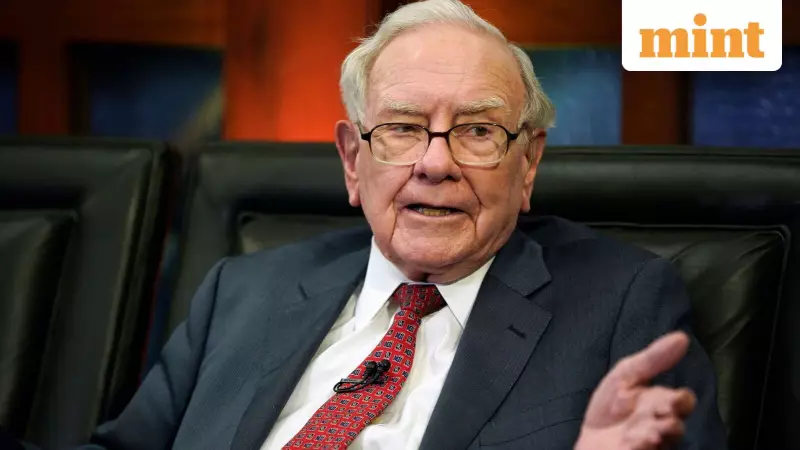
Legendary investor Warren Buffett, renowned for his Midas touch in the stock market, applies his core philosophy even to family Christmas presents. Instead of traditional gifts, the Berkshire Hathaway chairman has famously given shares of companies to his relatives, turning festive generosity into a masterclass in wealth building.
From Cash Splurges to Stock Shares: The Buffett Christmas Evolution
This tradition, however, wasn't always in place. In a revealing 2019 interview with ThinkAdvisor, Mary Buffett, the investor's former daughter-in-law, shared the backstory. For years, Buffett would gift each family member $10,000 in cash for Christmas. The recipients, including Mary who was married to Buffett's son Peter, would quickly spend the money. "As soon as we got home, we’d spend it, whoo!" she recalled.
This habit of immediate consumption did not align with the long-term, sustainable investment strategy of the billionaire, whose net worth stands at a staggering $154 billion. Noticing the money was being used for trivial expenses, Buffett decided to overhaul the gift-giving practice entirely.

The Pivotal Year: Coca-Cola Shares as a Lifelong Lesson
The change came one Christmas when envelopes contained not cash, but a letter from Buffett alongside $10,000 worth of shares in a company he had recently purchased—a trust associated with beverage giant Coca-Cola. The letter gave the family a choice: cash in the shares immediately or hold onto them as an investment.
Mary Buffett, taking inspiration from her famed father-in-law, chose the latter. "I thought ‘Well, [this stock] is worth more than $10,000.’ So I kept it, and it kept going up," she explained. This decision marked the beginning of a new, financially empowering family tradition.
A Legacy of Profitable Presents
From that point on, Warren Buffett gifted stocks every Christmas. Mary mentioned that Wells Fargo was among the companies whose shares were given. Her confidence in Buffett's picks led her to buy more of the same stocks independently. "Then, every year when he'd give us stock — Wells Fargo being one of them — I would just buy more of it because I knew it was going to go up," she stated.
This faith was well-placed. For instance, Wells Fargo stock has risen by 21.9% recently and has surged over 200% in the past five years. Most companies in Buffett's portfolio have demonstrated strong performance, validating his approach of gifting assets with growth potential instead of fleeting cash.
What Do You Gift a Billionaire? A Balance Sheet!
The gift exchange wasn't one-sided. Mary Buffett also shared what she believed was the perfect present for the Oracle of Omaha. Realising that a man of his wealth desired nothing material, she decided to gift him proof of the family's financial independence and success.
"The first year we were married, I realised, 'Warren is very rich. Therefore, he doesn't want anything'," Mary said. Her solution was ingenious: "I put together our music company's balance sheet to show him that we were making money." She wanted to demonstrate that the family was thriving financially on its own, a gesture that likely meant more to Buffett than any physical item.
Key Financial Takeaways for Indian Families
Warren Buffett's Christmas story offers powerful lessons for everyone, especially in a savings-oriented culture like India's:
- Gift Investments, Not Just Cash: Consider gifting stocks, mutual fund units, or even starting a SIP for a loved one. It promotes long-term financial health over immediate spending.
- Prioritise Long-Term Growth: Assets like equities have the potential to generate significant returns over time, unlike cash which can be spent on depreciating items.
- Embed Financial Education Early: Buffett’s method is a practical way to teach family members, especially the younger generation, about investing and compound growth.
The tale transcends a simple holiday anecdote. It encapsulates Warren Buffett's core belief in the power of patient capital and serves as a timeless reminder that the best gifts are those that appreciate in value, both financially and educationally.