Chhattisgarh Mid-Day Meal Cooks' 34-Day Protest Reaches Stalemate Over Wage Demands
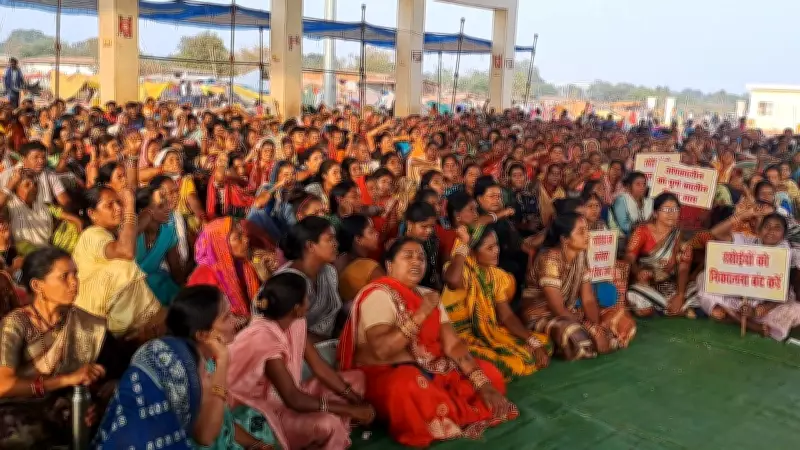
For over a month now, hundreds of mid-day meal cooks, predominantly women, have transformed Tuta ground in New Raipur into their temporary residence. Their indefinite strike, now entering its 34th day, centers on a critical demand: a substantial increase in their daily wages from the current Rs 66 to Rs 440. More pragmatic voices within the group suggest even a raise to Rs 261—equivalent to what MGNREGA workers receive—would represent significant progress.
Government Response and Escalating Tensions
The state government has offered a monthly increase of Rs 500, translating to less than Rs 17 per day. Simultaneously, the education department has issued warnings about disciplinary action against cooks who disrupt the mid-day meal program, instructing district officials to ensure the system involving approximately 70,000 cooks continues uninterrupted. This firm stance from both sides has created a complete stalemate.
The situation intensified earlier this week when two protesting women—Dulari Yadav (in her 60s) and Rukmani Sinha (in her 50s)—passed away after their health deteriorated. While medical professionals cited preexisting conditions, these tragic deaths have further inflamed the already tense atmosphere.

Police Action and Personal Stories of Struggle
On Thursday night, between 500-600 cooks attempted to march to the Mantralaya to voice their demands, sitting on the road when police intervention stopped them. After refusing to disperse despite multiple administrative warnings on Friday, authorities registered a case against them under rioting and traffic obstruction charges.
Meghraj Baghel, a mid-day meal cook and secretary of Chhattisgarh School Madhyanbhojan Rasoiya Sanyukta Sangh, shared his perspective: "For 31 years, we worked quietly for the government. In 1995, I earned Rs 15 daily; in 2026, it's Rs 66—an average annual increase of about Rs 1.65. I worked even on the day my father died. We are committed, but can't they understand our situation? We work five hours daily, and our compensation doesn't remotely keep pace with inflation."
Emotional Accounts from Protesting Cooks
Shipra Tarafdar (45) from Kanker district, who has worked as a cook since 2008, emotionally described her circumstances: "I've left my children alone to participate here. My husband, a teacher, died before his batch was regularized, so I receive no pension. Raising two sons is incredibly difficult—we economize on food, clothing, everything." She recalled hitting her son when he persistently requested money for cricket equipment, adding, "He didn't eat for days afterward. I don't want to be here, but I must fight for my children. At minimum, increase our wages to Rs 261 daily."
Triveni Yadav, another protester, revealed: "I've spent Rs 1,200 from my own pocket to be here and haven't received my December salary yet. During Diwali, when our children expect gifts, we must borrow money to fulfill their wishes."
Living Conditions and Government Schemes
The protesters have received some community support, with locals contributing rice and vegetables. For bathing, they utilize a nearby pond they cleaned themselves. "When we arrived, this place smelled terrible, so we cleaned it. We cook in small groups and sleep on the floor, with some creating makeshift tents. We want to return home, but the government ignores our plight," Yadav explained.
Lilavati Chaturvedi (42) from Bemetara noted she earned Rs 40 daily fifteen years ago, not significantly different from today's Rs 66. "The government ignores us because we've remained peaceful and appear vulnerable. My husband is a laborer with irregular work. We have two children and take loans during medical emergencies, struggling to repay them," she said.
Kachra Chandrakar (42) from Mahasamund mentioned: "The government provides free rice and salt, plus Rs 1,000 monthly under the Mahatari Vandana Yojna. Yet, with rising prices, purchasing vegetables remains challenging."

Daily Work Routine and Unanswered Demands
Ulfi Yadav (57) detailed their daily responsibilities: "We begin at 10 AM, cleaning rice and vegetables, then using wood fires to cook rice, dal, and vegetables. After serving the food and cleaning utensils, we finish around 3 PM."
State Education Minister Gajendra Yadav has not responded to calls and messages regarding these demands. Education department officials maintain that the requested wage hike is excessively steep. Meanwhile, the protest continues with no resolution in sight, highlighting the growing disparity between government workers' compensation and living costs in Chhattisgarh.