Gold Jewellery vs Solid Gold Investment: Which Offers Better Financial Returns?
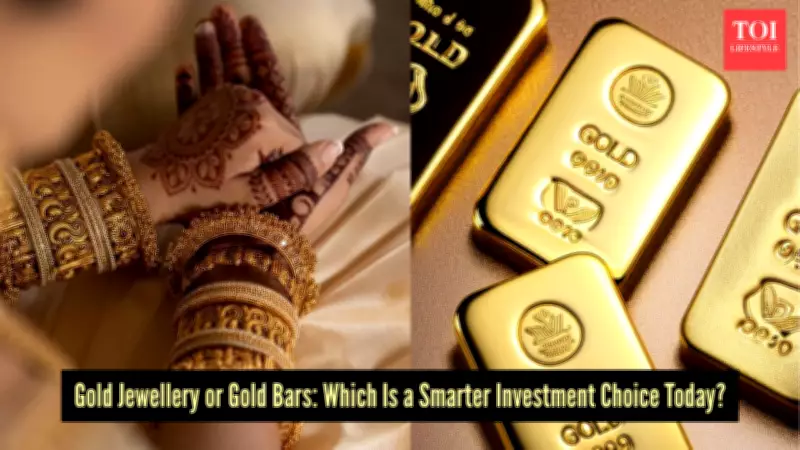
Gold holds a sacred place in Indian culture, deeply embedded in our festivals, weddings, and family traditions. For generations, purchasing gold has been viewed as a reliable financial safety net. You enter a gleaming jewellery showroom, select an exquisite bridal set, and convince yourself it is a brilliant financial decision for the future. However, does that stunning necklace genuinely enhance your wealth? The reality may be somewhat disappointing. When evaluating pure financial returns, solid gold coins and bars consistently outperform designer jewellery.
The Hidden Cost of Craftsmanship in Gold Jewellery
Consider your last gold chain purchase. You did not merely pay for the precious metal itself. You also covered the artistry, brand value, and intricate design work. These are the notorious "making charges." Depending on the complexity of the piece, these fees can easily add anywhere from 8% to a substantial 25% or more to your total cost. Now, imagine needing quick cash a few years later and deciding to sell that same chain. The buyer will weigh the item and determine its value based solely on the current raw gold rate. Those significant making charges you initially paid? They disappear completely. Since making charges are never recovered during resale, your so-called investment begins at a considerable loss the moment you exit the store.
The Purity Dilemma in Gold Jewellery
Another critical factor is what you are actually acquiring. Pure 24-karat gold is remarkably soft. If you attempted to wear a 24K bangle, it would likely deform by day's end. To ensure earrings and rings withstand daily use, jewelers must alloy the gold with stronger metals such as copper, silver, or zinc. This reduces the purity to 22K or even 18K. Not only are you paying a premium for a diluted asset, but liquidating it also presents challenges. When selling, verifying the exact purity of aged, worn jewellery can be a tedious process, diminishing its immediate liquidity and resale value.

Why Solid Gold Triumphs in Financial Performance
If your primary objective is to preserve and grow your wealth, shifting focus to solid gold is essential. Coins and bars are typically 24K, meaning they are 99.9% pure. You are investing directly in the raw precious metal rather than a designer's craftsmanship. Moreover, since these items are machine-stamped, making charges are remarkably low. You generally pay only a minimal 1% to 4% premium over the market rate. The real advantage emerges during resale. Selling a 24K gold coin is exceptionally straightforward. As a standardized, highly liquid asset, you receive a price nearly identical to the current market trading rate. There is no negotiation over lost design value or alloy composition.
Balancing Sentiment and Finance: The Final Verdict
Does this imply you should entirely cease buying jewellery? Certainly not. A beautifully crafted gold necklace provides sentimental, aesthetic, and cultural value that a plain metal bar cannot replicate. It is intended to become an heirloom. Simply adjust your mental categorization. Purchase jewellery because you desire to wear it, appreciate it, and commemorate life's milestones. Regard it as a luxury lifestyle expense. However, when preparing to make a serious, pragmatic financial investment? Opt for coins and bars. This approach ensures your wealth is preserved effectively while still allowing you to enjoy the cultural richness of gold jewellery.