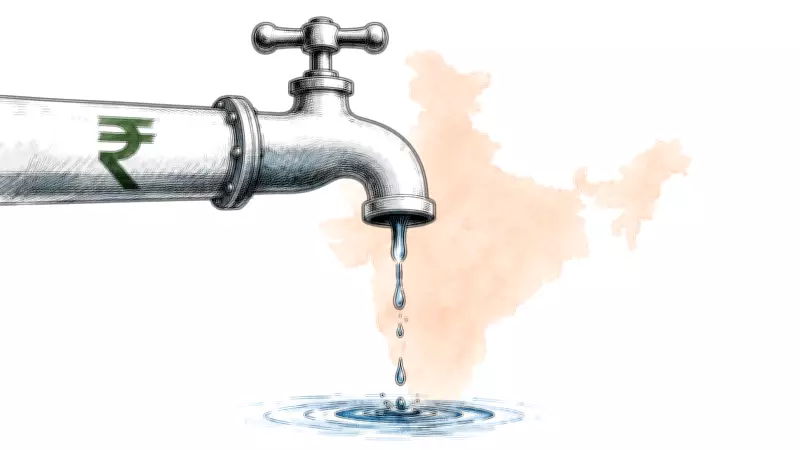
Foreign Direct Investment (FDI) has traditionally been viewed as the most reliable form of foreign capital—one that builds factories, transfers technology, and remains invested for the long term. However, recent data reveals a dramatic shift: India's net FDI has plummeted from $28 billion to a mere $1 billion over the past two years. This decline is not due to a lack of gross inflows, which remain robust, but rather a surge in repatriation and disinvestment by foreign investors.
The Numbers Behind the Decline
According to official figures, gross FDI inflows into India have stayed strong, averaging over $40 billion annually. Yet net FDI—the difference between inflows and outflows—has shrunk to a trickle. In the fiscal year 2024-25, net FDI stood at just $1 billion, compared to $28 billion two years earlier. This represents a staggering 96% drop.
Rising Repatriation and Disinvestment
The primary drivers of this decline are twofold. First, foreign companies have been repatriating profits and capital at an accelerated pace. Second, there has been a notable increase in disinvestment, where foreign investors sell their stakes in Indian companies and exit the market. Together, these outflows have nearly matched the inflows, leaving net FDI at negligible levels.

What This Means for the Indian Economy
FDI is crucial for India's economic growth, as it brings not only capital but also expertise, technology, and access to global markets. A sustained decline in net FDI could impact job creation, infrastructure development, and the balance of payments. However, policymakers remain optimistic, pointing to the resilience of gross inflows and the potential for a rebound as global economic conditions stabilize.
Government Response and Future Outlook
The government has taken several steps to attract more FDI, including easing regulations in key sectors like defense, insurance, and e-commerce. Additionally, production-linked incentive (PLI) schemes have been expanded to encourage foreign investment in manufacturing. While these measures have helped maintain gross inflows, the challenge lies in reducing outflows. Analysts suggest that improving the ease of doing business and ensuring policy stability could encourage foreign investors to stay longer and reinvest their profits.
In the near term, net FDI is expected to remain subdued, but a recovery is anticipated as global interest rates decline and investor confidence returns. For now, the sharp decline serves as a reminder that attracting foreign capital is only half the battle; retaining it is equally important.