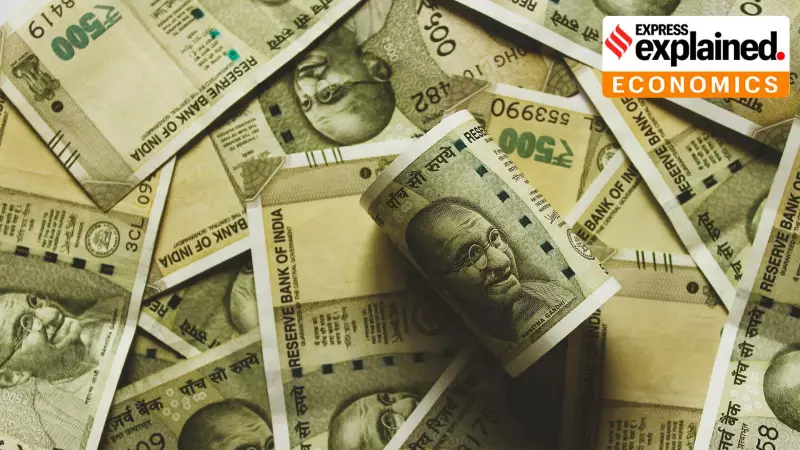
The Indian rupee, touching historic lows beyond 90 against the US dollar in late 2025, is sending ripples of concern through the economy. With a depreciation of approximately 5 per cent over the year, the currency's slide is more than a financial market headline; it's a direct hit to the pocket of the average Indian consumer.
Why the Rupee is Weakening and What It Costs You
Several factors have converged to pressure the rupee. Analysts point to a perceived softening in the Reserve Bank of India's (RBI) intervention, combined with delays in the India-US trade deal, imposed tariffs, weakening Foreign Direct Investment (FDI), and capital outflows from equity markets. The consequence is stark: the rupee has become Asia's worst-performing currency in 2025.
For households, this isn't an abstract concept. "In an economy, it is the consumer or the household who are the largest importer," explains Anindya Banerjee, head of currency and commodities at Kotak Securities. He urges people to look at the imported components in everyday goods purchased over the last five to six years. A weaker rupee makes all those imported elements more expensive, which can, in theory, dampen domestic demand if prices rise significantly.

The Direct Pinch: Education, Travel, and Daily Life
The impact is most acutely felt by families with international aspirations. Consider foreign education: an annual tuition fee of $100,000 translated to roughly Rs 85 lakh at an exchange rate of 85 per dollar. At 90 per dollar, that same fee jumps by a staggering Rs 5 lakh—more than double India's nominal per capita income of Rs 2.05 lakh in 2024-25.
Similarly, holidays to the United States and purchases of imported goods become substantially more expensive. While travel within Asia is also costlier due to the rupee's regional weakness, the effect is universal: a significantly weaker currency affects most aspects of life, some more visibly than others.
A silver lining exists in the form of record-low retail inflation, which stood at a mere 0.25 per cent in October 2025. However, the RBI itself has noted that a 5 per cent depreciation in the rupee could raise inflation by around 35 basis points.
Strategies to De-Risk Your Financial Goals
For those with fixed foreign currency obligations, like funding a child's overseas education, exchange rate volatility is a major concern. While complete insulation is impossible, targeted financial planning can offer a buffer.
"The options for hedging this risk are fairly limited for retail individuals," says Vishal Dhawan, founder and CEO of Plan Ahead Wealth Advisors. "The possible approach... is to look at investing in assets which are dollar-based, as part of their savings for a particular financial goal."
He emphasises that goals like education are inflexible compared to buying a car or house. Investors can utilise the RBI's Liberalised Remittance Scheme (LRS), which allows individuals to send up to $250,000 per financial year abroad for purposes including studies and investments. By investing in foreign assets in a staggered manner with a sufficient time horizon, one can potentially build a corpus that moves in sync with dollar-denominated expenses.
In essence, the rupee's fall is a powerful reminder for Indian households to internationalise a portion of their savings, especially for goals linked to foreign currencies. Proactive and informed investment in dollar-based assets emerges as a key strategy to navigate the uncertainty of a depreciating domestic currency.