

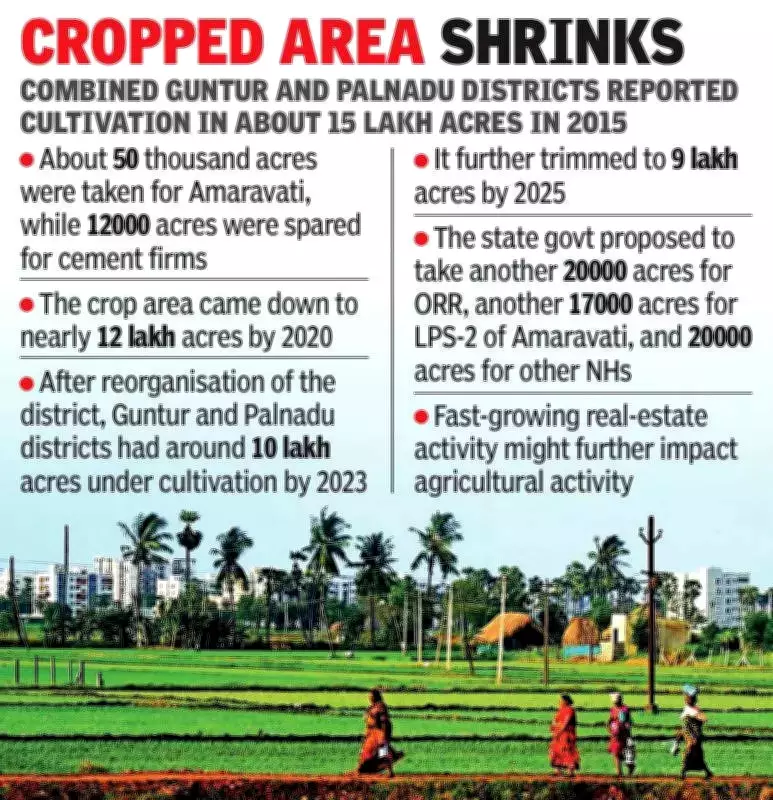
Andhra Pradesh's Agrarian Crisis: 3 Lakh Acres Lie Fallow in Guntur Region
In a development that has sent shockwaves through the agricultural community, nearly three lakh acres of fertile agricultural land have reportedly remained uncultivated across various parts of the erstwhile Guntur district in Andhra Pradesh. This alarming situation has raised serious concerns among farmers, agricultural experts, and policymakers about the rapidly changing agrarian landscape in a region once celebrated as one of the most fertile belts in the entire state.
The Stark Reality of Declining Cultivation
According to detailed reports from agricultural department sources, vast stretches of farmland that were traditionally dedicated to paddy cultivation and other commercial crops have remained completely fallow during the current Rabi season. The sharp and unprecedented fall in the cropped area has triggered intense debate about the future of agriculture in this crucial region. In several mandals, fields that once yielded abundant and prosperous harvests now lie barren and unproductive, presenting a stark visual contrast to the region's agricultural heritage.
Agricultural activity has reportedly diminished significantly when compared to previous years, with officials indicating that cropping intensity has dropped dramatically due to a complex combination of economic pressures and challenging climatic factors. The issue extends beyond the traditional boundaries, becoming particularly evident in areas now falling under the newly formed Palnadu district, where a noticeable and concerning portion of cultivable land was not brought under the plough this season.

Multiple Factors Driving the Agricultural Decline
Farmers across the region have cited multiple interconnected reasons for this disturbing decline in cultivation. The primary concerns include:
- Rising input costs for essential agricultural components such as seeds, fertilizers, pesticides, and diesel
- Persistent labour shortages that make farming operations increasingly difficult to manage
- Irregular water supply that undermines consistent crop production
- Inadequate remunerative prices for agricultural produce that fail to keep pace with escalating expenses
Many tenant farmers, in particular, are said to be facing mounting financial pressure that makes cultivation increasingly unviable as a livelihood option. As a direct result of these challenges, numerous cultivators are either scaling down their agricultural operations significantly or temporarily withdrawing from farming altogether to explore alternative income sources.
Infrastructure Development and Land Conversion Pressures
A major contributing factor to this agricultural crisis is the rapid shift of agricultural lands toward non-agricultural uses, including extensive real estate development and commercial conversion. The state government itself is currently taking over nearly 1.5 lakh acres of land for various infrastructure projects, including:
- The proposed outer ring road (ORR) of Amaravati
- Expansion of national highways throughout the region
- Development of new railway lines and transportation corridors
Simultaneously, private real-estate developers are on an aggressive spree of converting agricultural land to commercial use to develop residential and commercial layouts. The Centre has sanctioned major national highways in Guntur, Palnadu, and Bapatla districts over the last two years, creating additional pressure on agricultural lands.
While the National Highways Authority of India (NHAI) has acquired a massive extent of land for these projects, contractor firms have purchased additional land specifically for excavation of gravel (road metal) required for the upcoming national highways. Interestingly, many farmers have reported that leasing their land to gravel contractors has emerged as a more profitable short-term option compared to traditional farming.

Policy Directives and Economic Realities
The state government has further directed district collectors to ensure that contractors working on capital city projects do not face any shortage of essential materials like road metal, gravel, and other construction components. This directive has prompted several farmers to explore alternative avenues for generating quick income through short-term contracts related to capital city development.
While land located close to highway corridors is fetching increasingly fancy prices for real-estate ventures, even barren and less productive land is being utilized for road metal excavation operations. This economic reality has created a powerful incentive for land conversion that often outweighs the financial benefits of continued agricultural use.
"With nearly three lakh acres remaining uncultivated, the situation underscores the urgent need for comprehensive policy intervention to revive confidence among farmers and restore the region's agricultural vitality," emphasized CPM leader Pasam Rama Rao, highlighting the critical nature of the crisis.
The unfolding scenario presents a complex challenge that balances development needs with agricultural preservation, requiring thoughtful solutions that address both economic realities and food security concerns in one of Andhra Pradesh's most historically productive regions.





