

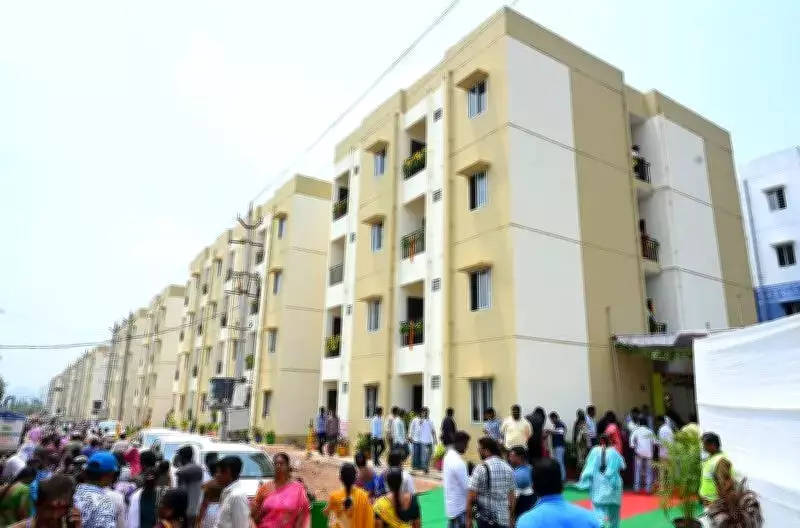
Andhra Pradesh's APTIDCO Colonies Redefine Urban Housing for Economically Weaker Sections
Vijayawada: The urban housing landscape in Andhra Pradesh is undergoing a profound and significant transformation, with the Andhra Pradesh Township and Infrastructure Development Corporation (APTIDCO) colonies emerging as a pioneering model of integrated living for economically weaker sections. Moving decisively beyond the traditional approach of providing standalone houses, the state is now constructing what officials describe as "mini townships" that seamlessly combine housing with comprehensive infrastructure, livelihood opportunities, and essential social amenities.
Shift from Construction to Complete Habitability
APTIDCO managing director Sunil Kumar Reddy emphasizes that the focus has fundamentally shifted from mere construction to ensuring complete habitability. "Earlier, housing projects often stopped with handing over units. Today, our priority is to make every colony fully liveable, with roads, water, drainage, lighting and livelihood support systems in place," he explains. This strategic pivot aims to create sustainable communities rather than isolated residential units.
Robust Physical Infrastructure Development
At the core of this transformation is the implementation of robust physical infrastructure across APTIDCO layouts. Key developments include:

- Cement concrete (CC) roads and internal road networks that connect colonies seamlessly to main roads.
- Underground drainage and sewerage systems systematically replacing the open and often inadequate drainage seen in older housing schemes.
- LED street lighting becoming standard, significantly improving safety while reducing energy costs for municipalities.
Addressing Critical Water Supply Concerns
Water supply, once a major concern in low-income housing projects, is being effectively addressed through dedicated systems integrated with the AMRUT 2.0 initiative. Overhead tanks, pipelines, and continuous supply mechanisms are gradually eliminating the dependence on water tankers that previously plagued many communities. Additionally, stormwater drains are being incorporated to prevent flooding during monsoon seasons, enhancing overall resilience.
Energy Efficiency and Cost Reduction Initiatives
A notable innovation is the push for energy efficiency within homes. Beneficiaries are being provided with energy-saving appliances such as LED lights and fans. "This is not just about comfort — it directly reduces monthly electricity bills for families and makes these homes more affordable to sustain," notes Sunil Kumar Reddy. This approach addresses both environmental sustainability and household economic stability.
Transforming Lives Through Livelihood Centres
Perhaps the most transformative feature of the APTIDCO model is the introduction of TIDCO Livelihood Centres (TLCs). These centres are specifically designed to foster self-employment, with particular emphasis on empowering women. Working in convergence with the Mission for Elimination of Poverty in Municipal Areas, the TLCs promote self-help groups, facilitate access to bank credit, and offer comprehensive skill development and entrepreneurship training. "Livelihood is the backbone of sustainability. Through TLCs, we are ensuring that residents don't just live here — they grow economically," the managing director asserts.
Comprehensive Social Infrastructure Integration
The government is also focusing intensively on creating essential social infrastructure within or near these layouts. This includes:
- Anganwadi centres for early childhood care and education.
- Community halls for social gatherings and events.
- Schools providing accessible education for children.
- Basic health facilities to address primary healthcare needs.
Furthermore, digital governance and transparency measures are being implemented as new features to enhance administrative efficiency and resident engagement. This holistic approach ensures that APTIDCO colonies represent not just housing solutions, but thriving, self-sufficient communities that uplift economically weaker sections through integrated development.






