

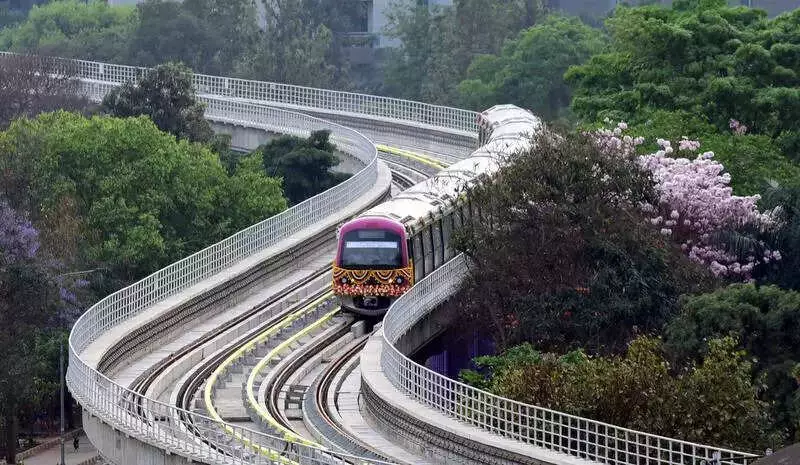
Bengaluru Metro Stations Set for Major Retail Expansion After 14 Years
In a significant development for Bengaluru's urban infrastructure, the Bangalore Metro Rail Corporation Limited (BMRCL) has announced plans to introduce retail outlets at several metro stations across the city. This move comes more than 14 years after the Sampige Road Metro station first opened its doors to commuters.
Commercial Tenders Invited for Seven Stations
On Sunday, BMRCL officially invited tenders to establish commercial spaces at seven metro stations, marking a strategic expansion of retail facilities within the metro network. The initiative aims to enhance passenger convenience while generating additional revenue streams for the metro corporation.
The commercial expansion will primarily focus on stations along the Green Line, including Madavara, Yeswantpur, KR Market, and Banashankari. Additionally, Pattandur Agrahara station on the Purple Line will also see commercial development. This widespread approach indicates BMRCL's commitment to transforming multiple stations into vibrant commercial hubs.

Sampige Road Station: A Key Focus Area
The Sampige Road Metro station, which commenced operations in 2011, stands out as a particularly significant location in this retail expansion. BMRCL has earmarked an impressive 8,000 square feet of space at this station for commercial use. The corporation is specifically targeting apparel brands or warehouse facilities to occupy this substantial area.
It is noteworthy that Sampige Road station was originally constructed under a public-private partnership (PPP) arrangement between BMRCL and Mantri Developers. This collaboration was designed to provide direct access to adjoining commercial buildings, creating an integrated urban development model from the station's inception.
BMRCL Maintains Control Despite PPP Model
Addressing questions about station ownership and control, BMRCL officials have clarified that the station remains firmly under the corporation's jurisdiction despite the PPP framework. A BMRCL official emphasized, "It is our station only; we entered a PPP agreement only for building and maintaining the station. It is our place; BMRCL has the right to call for that." This statement underscores BMRCL's authority in making decisions regarding commercial utilization of station spaces.
Diverse Commercial Opportunities Across Stations
The retail expansion plan encompasses a variety of commercial opportunities tailored to different station locations:
- KR Market station in Chickpet will open up 1,975 square feet of commercial space, likely accommodating quick-service restaurants, pharmacies, cafes, and apparel brands.
- Pattandur Agrahara station will feature 840 square feet of commercial area.
- The remaining stations included in the tender will offer smaller commercial spaces suitable for various retail ventures.
This diversified approach ensures that different stations can host businesses that best serve their specific commuter demographics and location characteristics.
Strategic Implications for Bengaluru's Urban Landscape
The introduction of retail outlets at these seven metro stations represents more than just commercial expansion—it signifies the evolution of Bengaluru's metro stations into multifunctional urban spaces. By integrating retail facilities with transportation infrastructure, BMRCL is creating more comprehensive transit-oriented developments that serve multiple purposes for city residents.
This initiative aligns with broader trends in urban planning where transportation hubs increasingly incorporate commercial, social, and recreational functions. The move is expected to enhance the overall commuter experience while contributing to the economic vitality of areas surrounding these metro stations.
As Bengaluru continues to expand and modernize its public transportation network, such commercial integrations represent forward-thinking approaches to urban infrastructure development that benefit both commuters and the city's economic ecosystem.






