

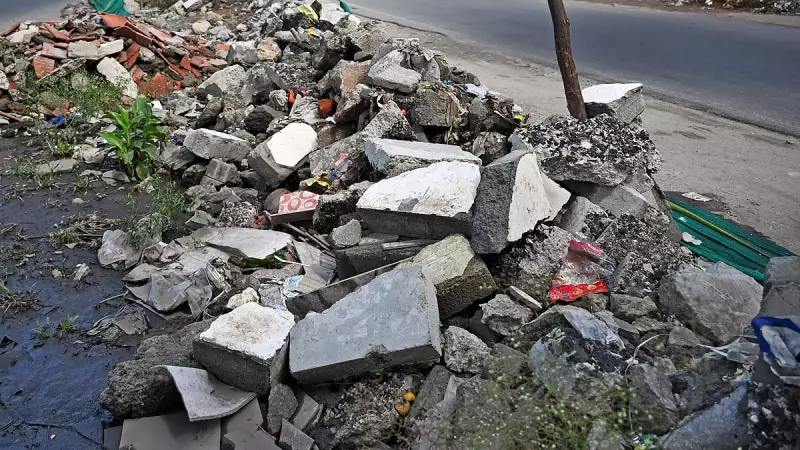
In a high-stakes move for Bengaluru's urban cleanliness, the Bengaluru Solid Waste Management Limited (BSWML) has awarded a colossal Rs 1,052 crore contract for managing construction and demolition (C&D) waste to a single private agency. This decision, aimed at streamlining debris removal across the city, has sparked significant concerns among officials regarding the civic body's capacity to enforce the contract terms and prevent malpractice.
The Mega Contract and Its Ambitious Scope
The contract, valued at Rs 1,052 crore, was granted to a consortium led by Ahluwalia Contracts (India) Ltd. The agreement spans eight years and covers the comprehensive management of C&D waste generated in the Bruhat Bengaluru Mahanagara Palike (BBMP) limits. The winning agency is responsible for the collection, transportation, processing, and scientific disposal of the debris.
This centralized approach marks a shift from the previous system where multiple agencies handled different zones. The single-agency model is intended to bring uniformity, accountability, and efficiency to a process that has long been chaotic. The contractor is mandated to process the waste at a plant in Doddabidarakallu and is also tasked with clearing legacy waste and illegal dump sites across Bengaluru.

Internal Concerns Over Enforcement and Vigilance
Despite the contract's potential benefits, senior officials within the BBMP and BSWML have voiced serious apprehensions. The primary worry is the lack of a robust monitoring mechanism to ensure the contractor fulfills all obligations. Key concerns include:
- Verification of Debris Quantity: Officials fear it will be difficult to accurately verify the amount of waste lifted from construction sites, leaving room for the agency to over-report.
- Preventing Illegal Dumping: There is a risk that the contractor, to cut costs, might illegally dump waste in peripheral areas instead of transporting it to the designated processing plant.
- BBMP's Enforcement Capacity: The civic body is perceived as lacking the manpower and technical vigilance needed to track hundreds of trips and sites daily, making effective oversight a daunting challenge.
An official pointed out that without a stringent, technology-driven monitoring system, the BBMP would have to rely heavily on the contractor's records, creating a potential conflict of interest. The fear is that the financial scale of the deal could outpace the civic body's administrative control, leading to poor outcomes.
The Rationale Behind the Single-Agency Decision
Proponents of the single-agency model argue that it simplifies coordination and fixes clear accountability. Previously, with multiple contractors, blame-shifting was common when debris was not cleared. Now, the responsibility rests solely with one entity. The BSWML has defended the decision, stating that the tender process was transparent and that the agency was selected based on technical and financial expertise.
The contract also includes the operation of a dedicated helpline (1533) for citizens to request debris clearance, aiming to improve public service. However, critics question whether the system will be effective without parallel investments in the BBMP's own monitoring infrastructure.
Looking Ahead: Challenges and Expectations
The successful implementation of this Rs 1,052 crore project is critical for Bengaluru's environmental health and aesthetics. Unmanaged C&D waste clogs drains, pollutes lakes, and creates traffic hazards. The BBMP's challenge now is to swiftly develop a credible oversight protocol, possibly involving GPS tracking of vehicles, third-party audits, and digital platforms for real-time reporting.
The coming months will be a test of whether this large-scale privatization of a essential civic service can work in the public interest, or if the enforcement worries will materialize, leading to another costly urban management lesson for India's tech capital.






