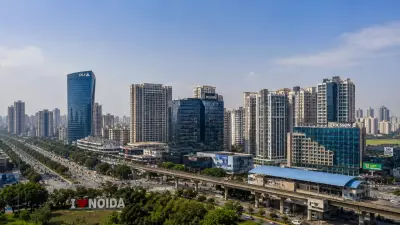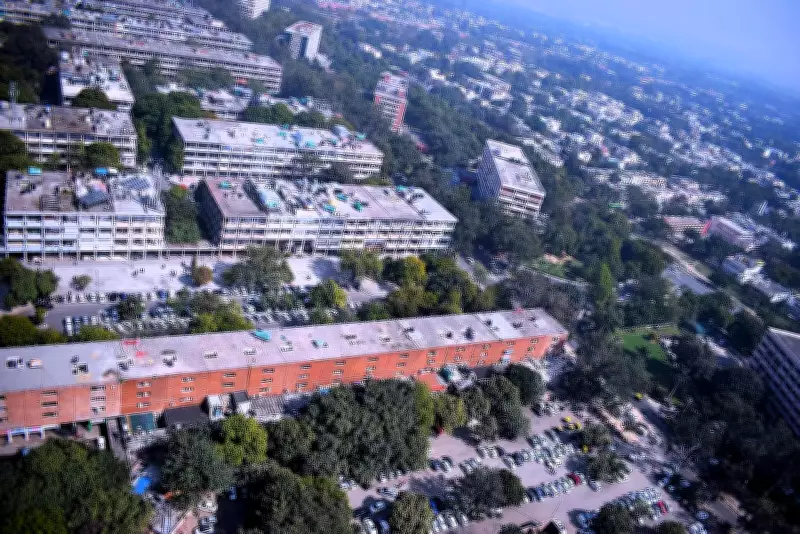
The Chandigarh administration has proposed amendments to the Chandigarh Master Plan (CMP) 2031 that could significantly expand housing and mixed-use development in the city. The changes aim to unlock large tracts of vacant land and permit higher-density construction, potentially addressing the growing housing demand and improving affordability.
Key Proposals to Address Housing Demand
Officials believe the amendments could make home ownership accessible to a larger section of residents. A key component is the near doubling of the city's mixed land use (MLU) area. The draft also proposes increasing the Floor Area Ratio (FAR) and encouraging vertical growth in selected areas. These measures are intended to increase housing stock within limited land resources and reduce pressure on surrounding towns.
According to a senior UT official, owning a house in Chandigarh has become unaffordable for most income groups. Even government agencies like the Chandigarh Housing Board have struggled due to restrictive FAR norms, building height limits, and scarce developable land. Consequently, many middle-class residents have moved to peripheral towns with inadequate civic infrastructure.

Expansion of Mixed Land Use Corridor
Under the proposed amendments, the existing mixed land use corridor along Vikas Marg will be extended by 1.5 kilometers on the southwestern side up to the Chandigarh-Punjab boundary, connecting with PR-5 Road in Mohali. This extension will be carved out of Pocket No. 8. Additionally, nearly 78 acres of vacant land in Sector 43's sub-city centre will be brought under mixed land use, and another 60 acres in Industrial Area Phase III will be converted to mixed-use development.
Peripheral areas within the city will also see high-rise housing, moving beyond their current use for rehabilitation colonies. With these additions, Chandigarh's total mixed land use area will increase from 252 acres to 428 acres. Any pocket within the 300-foot wide corridor along Vikas Marg not previously counted in the MLU inventory will automatically be governed by mixed land use norms.
Unlocking Housing Potential in IT Park
The amendments aim to unlock nearly 130 acres in Chandigarh's IT Park, where development stalled due to environmental restrictions on high-rise construction near the Sukhna Wildlife Sanctuary. The proposed IT Habitat project faced concerns from the Ministry of Environment, Forest and Climate Change in 2022 about disrupting migratory bird routes. To overcome this, the administration has proposed allowing plotted and flatted development in the IT Habitat area, enabling land utilization without violating height restrictions.
Strengthening Industrial Base
The draft also revisits planning norms for Industrial Area Phase III (153 acres) in the Raipur Kalan-Mauli Jagran belt. Currently, Industrial Areas I, II, and III occupy about 1,410 acres (4.8% of the city's area), below the recommended 7-8% industrial land use. The proposal enhances FAR norms in Industrial Areas I and II, raising permissible built-up area to over 15.24 lakh square meters in Area I and 7.86 lakh square meters in Area II, while creating parking for more than 23,000 equivalent car spaces.