

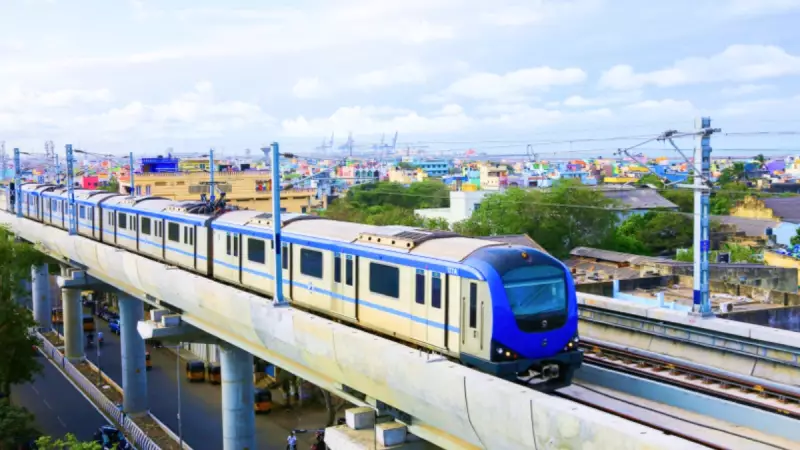
The bustling city of Chennai is set to receive a major boost to its public transportation network with the upcoming inauguration of a crucial new metro line. The Chennai Metro Rail Limited (CMRL) has announced that the Porur to Vadapalani section is scheduled to open for public service by mid-February 2026. This development marks a significant milestone in the ongoing Phase 2 expansion of the Chennai Metro.
Project Progress and Key Details
This new corridor forms an integral part of the 116.1 km Phase 2 project, which aims to vastly expand Chennai's metro network. The specific segment connecting Porur and Vadapalani is approximately 10 km long and is being constructed at a substantial cost. Officials have confirmed that physical construction progress on this stretch has already crossed the 75% mark, indicating steady advancement towards the 2026 deadline.
The line will feature several important stations, improving access to key residential and commercial hubs in West Chennai. Once operational, it will provide a seamless, congestion-free alternative to the heavily trafficked roads in these areas, such as the busy Mount-Poonamallee Road.

Integration and Broader Phase 2 Vision
A pivotal aspect of this new line is its design for integration with the existing metro network. The Porur-Vadapalani corridor will link directly to the operational Green Line at Vadapalani station. This connection will allow passengers to travel effortlessly from the western suburbs to the heart of the city and beyond, creating a more unified and efficient urban transit system.
The broader Phase 2 project, of which this line is a key component, is one of the largest metro rail undertakings in India. It is structured across three major corridors and is being developed with a focus on decongesting the city and promoting sustainable urban mobility. The timely completion of the Porur-Vadapalani section is seen as a critical step in realizing this vision.
Impact and Future Prospects
The opening of this metro line is expected to have a transformative impact on daily commuters and the city's infrastructure. It will significantly reduce travel time between Porur and Vadapalani, which currently can take over an hour by road during peak periods. The metro promises to cut this down to just minutes, offering a reliable and time-efficient mode of transport.
Furthermore, this enhanced connectivity is anticipated to spur economic activity and real estate development in the western corridors of Chennai. By providing a high-capacity transit option, the metro will improve accessibility, reduce the city's carbon footprint from vehicular traffic, and contribute to a better quality of life for residents.
With the mid-February 2026 target firmly in sight, Chennai Metro authorities are working diligently to ensure all construction, safety checks, and trial runs are completed smoothly. The city eagerly awaits this new chapter in its journey towards becoming a metropolis with world-class public transportation.






