

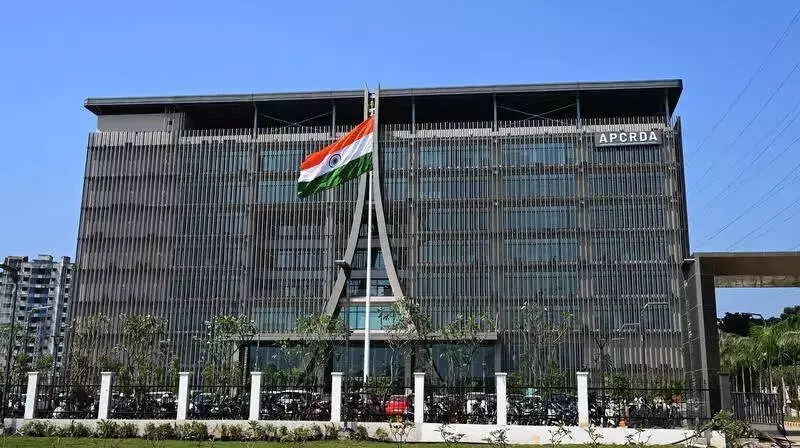
CRDA Moves Toward Single Layout Plan for Amaravati Land Pooling
The Capital Region Development Authority is actively considering a significant shift in its approach to land allocation. Officials are planning to develop a single, consolidated layout for returnable plots during the second phase of the land pooling scheme. This decision marks a departure from previous methods and is currently awaiting government approval after initial assessments.
Learning from Phase One Challenges
In the first phase of Amaravati's expansion, the government followed a different pattern. Layouts were developed separately in each village because farmers strongly demanded returnable plots within their own communities. While this approach addressed local concerns, it created practical problems for development authorities.
The scattered distribution of land parcels made large-scale planning difficult. Government officials found themselves without substantial, contiguous land areas needed for major infrastructure projects. This fragmentation complicated allocation processes and limited options for substantial development initiatives.

The Infrastructure Cost Factor
Multiple layouts require duplicate infrastructure systems. Each separate development needs its own roads, utilities, and public facilities. This duplication significantly increases overall project costs. By consolidating plots into fewer locations, the CRDA aims to create more efficient infrastructure networks that serve larger populations with shared resources.
Current Proposals Under Consideration
Officials have presented several options for the consolidated layout approach. One proposal suggests allocating land at one location for four villages in Pedakurapadu constituency, while another location would serve three villages in Tadikonda constituency. An alternative plan under discussion involves creating a single location for all seven villages together.
Another decision point concerns three villages in Tulluru mandal. Authorities must determine whether to develop a new layout specifically for these communities or integrate them into existing plots from the first land pooling phase.
Strategic Benefits of Consolidation
Consolidating returnable plots offers several strategic advantages for Amaravati's development. When government-accrued lands remain in larger, contiguous parcels, they become suitable for major projects requiring substantial space. Officials specifically mention an international airport and integrated sports complex as examples of developments that need extensive, uninterrupted land areas.
The single layout approach could also accelerate project completion. With farmers pressing for prompt handover of developed plots, a consolidated development model allows for more efficient construction workflows and faster delivery of finished properties.
Land Pooling Phase Two Details
The second phase of land pooling involves substantial territory acquisition. The government has initiated proceedings to acquire 20,494 acres through the LPS 2.0 scheme as part of Amaravati's continued expansion.
Major projects planned for LPS 2.0 include:
- New railway lines connecting the region
- A comprehensive sports city development
- Construction of an inner ring road
- Establishment of smart industrial zones
- Development of an international airport
The allocation ratio for pooled land follows this distribution:
- 30% dedicated to roads and essential amenities
- 10% reserved for parks, playgrounds, and open spaces
- 5% allocated for social infrastructure development
- 5% designated for affordable housing projects
- 25% returned to participating farmers
- The remaining percentage retained by the state government
This revised approach to land allocation represents a strategic adjustment based on practical experience from the first phase. By consolidating returnable plots, the CRDA hopes to create more efficient development patterns while addressing both farmer needs and larger urban planning requirements for Amaravati's growth.






