The Akhil Bharatiya Grahak Panchayat, a prominent consumer rights organization, has made an urgent appeal to Maharashtra Chief Minister Devendra Fadnavis. The group is demanding the strict enforcement of the original Maharashtra Ownership of Flats (MOFA) Act and the immediate withdrawal of its recent amendments. The consumer body has labeled these changes as unjust, anti-consumer, and against public interest.
Amendments Grant Legal Shield to Builders, Say Activists
In a detailed memorandum submitted to the Chief Minister on December 31, the organization issued a stark warning. They argued that the amendments fundamentally undermine the core purpose of MOFA, which is to protect flat purchasers. According to the Panchayat, these changes will lead to widespread injustice against ordinary citizens.
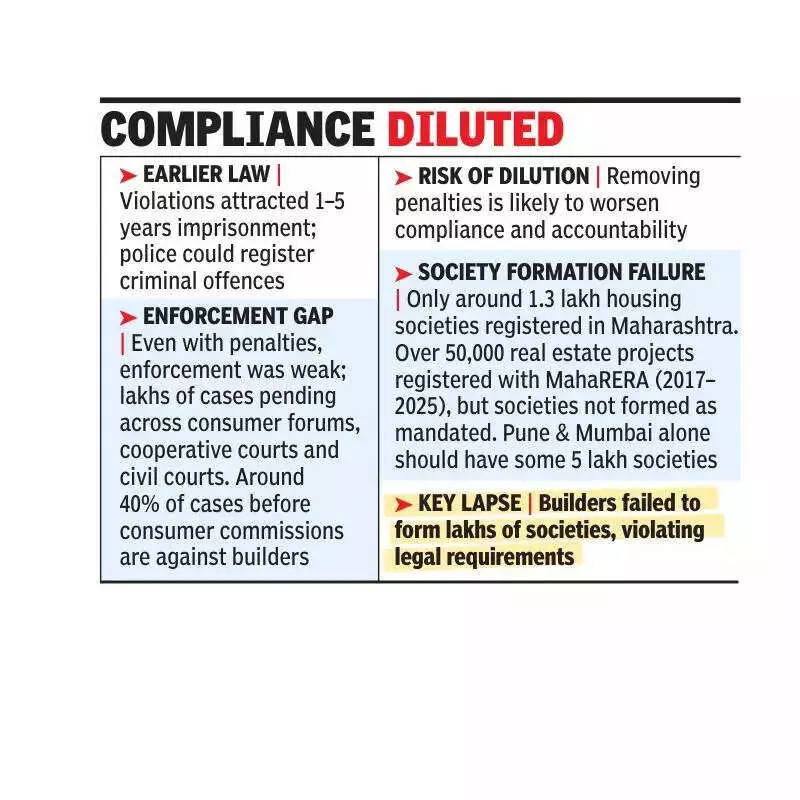
Vijay Sagar, an office-bearer of the Grahak Panchayat, explained the crux of the issue to the Times of India. He stated that the state government's decision to amend MOFA and exclude projects registered under the Real Estate (Regulation and Development) Act (RERA) after May 1, 2016, has made the older law largely ineffective. "The government has removed the fear of law by neutralizing penal provisions," Sagar said. He added that builders who violate agreements, abandon projects, or extort money from buyers are now immune to legal action due to these amendments.

Key Criminal Provisions Removed from the Act
The memorandum highlights that nearly 10 crucial MOFA provisions that previously allowed for imprisonment, fines, and criminal prosecution were deleted in the amendment. This effectively strips the law of its teeth. Some of the most significant provisions that have been rendered ineffective include:
- Section 13 (1): This section prescribed up to three years of imprisonment or fines for violations of key sections of the Act.
- Section 11: This mandated builders to convey land and buildings to housing societies or flat purchasers' associations.
- Section 14: This fixed criminal liability on company directors, partners, managers, and other officials for violations.
The letter explicitly states that by nullifying Section 13, the state has effectively granted legal protection to builders' offences.
Other Critical Safeguards Now Ineffective
The consumer body's list of now-weakened protections is extensive. It includes rules that ensured:
- Timely possession of flats only after obtaining an occupation certificate.
- Compulsory display of sanctioned plans at construction sites.
- Full disclosure of complete project information to buyers.
- Execution and registration of sale agreements after accepting no more than 20% of the flat's cost.
- Maintenance of buyers' advance payments in separate bank accounts.
- Construction strictly as per sanctioned plans.
- Application for society formation within four months of majority flat occupation.
- Execution of conveyance deeds within four months of society registration.
A Call for Criminal Action and Restoration of Rights
The Grahak Panchayat's demands are clear and direct. The group wants the Chief Minister to instruct police and other competent authorities to initiate criminal action against defaulting builders. Furthermore, they insist on the restoration of ownership and conveyance rights to homebuyers across Maharashtra. They believe that restoring the original MOFA provisions is essential to protect consumers from exploitative practices in the real estate sector and to ensure that builders are held accountable for their commitments.
The organization's strong stance underscores a growing concern among homebuyers who feel vulnerable due to the perceived dilution of consumer-centric laws in favor of developer interests.