

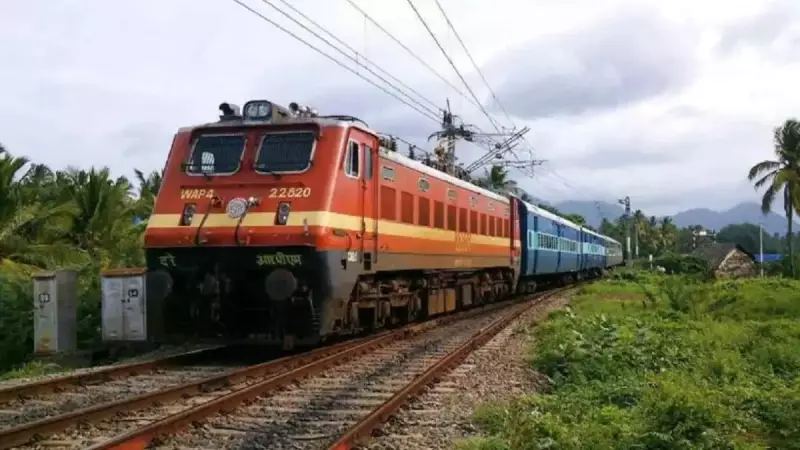
In a landmark move set to transform urban rail infrastructure, Indian Railways has proposed the country's first fully elevated railway terminal. The groundbreaking project is planned for Yelahanka in Bengaluru, Karnataka, with an estimated investment of a staggering Rs 6,000 crore.
The ambitious plan was unveiled by the South Western Railway (SWR) zone. It represents a significant shift in how major railway hubs are designed, moving infrastructure above ground to tackle the persistent challenges of urban congestion and land acquisition.
Project Vision and Key Details
The core vision behind the Yelahanka Elevated Terminal is to create a modern, efficient, and congestion-free nodal point for rail travel. Unlike traditional terminals that spread laterally, this facility will be built vertically. The design involves constructing the terminal's platforms, concourses, and passenger facilities on an elevated structure, while ground-level space is freed up for other uses.

According to the proposal, the terminal will be developed in two distinct phases. The initial phase is projected to cost around Rs 3,500 crore. The detailed project report (DPR) for this first phase is currently in its final stages of preparation. Once completed, it will be submitted to the Railway Board for technical approval and financial sanction, a critical step before work can commence.
Addressing Bengaluru's Congestion and Connectivity
The selection of Yelahanka for this pioneering project is strategic. Yelahanka is a rapidly growing suburb in North Bengaluru and serves as a crucial junction. The area has witnessed tremendous developmental pressure, leading to severe traffic snarls and logistical bottlenecks.
An elevated terminal directly addresses these issues. By building upwards, it minimizes the massive land footprint required for a conventional terminal of similar capacity. This is a vital advantage in a land-scarce and expensive metropolitan region like Bengaluru. The project aims to significantly decongest the area around the existing Yelahanka station and improve the overall flow of both rail and road traffic.
Furthermore, the terminal is expected to enhance multi-modal connectivity. It is designed to integrate seamlessly with other forms of public transport, including the Bengaluru Metropolitan Transport Corporation (BMTC) bus services and future metro rail expansions. This integration is key to creating a holistic urban transit solution for the city's northern corridor.
Broader Impact and Future Prospects
The successful implementation of the Yelahanka Elevated Railway Terminal could set a powerful precedent for future railway infrastructure projects across India, especially in other densely populated metropolitan cities. It demonstrates a forward-thinking approach to urban planning where infrastructure adapts to the city's constraints rather than the other way around.
For Bengaluru, a city perennially grappling with infrastructure strain, this project promises substantial long-term benefits. It is expected to boost regional connectivity, stimulate economic activity in and around Yelahanka, and provide a world-class travel experience for passengers. The Rs 6,000 crore investment also underscores the government's commitment to modernizing the country's rail network with innovative engineering solutions.
As the South Western Railway finalizes the blueprint, all eyes are on the approval process. The project marks a bold step into the future of Indian Railways, where elevation could become the new standard for urban terminal design.






