While shopping malls in Western nations grapple with store closures and an uncertain future, a powerful wave of global investment is now turning towards India's thriving retail sector. This shift is fueled by robust consumption growth and strong institutional confidence, creating a stark contrast to the challenges seen in other parts of the world.
West vs East: A Tale of Two Retail Landscapes
The United States has experienced a net shutdown of close to 1,200 mall stores since 2020. The situation is so severe that nearly 40% of vacant malls are being rezoned or repurposed for other uses. Meanwhile, on the other side of the globe, ANAROCK Research & Advisory projects capital inflows exceeding USD 3.5 billion into Indian malls over the next three years.
Anuj Kejriwal, CEO of Retail Leasing at Anarock Group, highlights this divergence. "Latest data confirms that Indian malls are poised to receive over $3.5 billion in capital inflows in the coming three years," he stated. This optimism is matched by brand expansion, with more than 88 foreign brands having recently entered India and planning aggressive growth, and many more global names seeking space in the limited stock of premium properties.

The Indian Advantage: Demand, Demographics, and Policy
India's appeal lies in a powerful combination of factors: a vast, young consumer base with unmet demand, relatively low competition in organized retail, and foreign direct investment (FDI) policies that welcome global players. The numbers tell a compelling story. India's per capita organized retail space is remarkably low—Tier 1 cities have just 4-6 sq ft per person, Tier 2 and 3 cities have 2-3 sq ft, and high-quality Grade A mall space is a mere 0.6 sq ft per person. This pales in comparison to the US average of 23 sq ft or China's 6+ sq ft.
"This glaring gap, coupled with India's per-capita income nearly doubling in the past ten years, has created a demand-supply mismatch rarely seen in global retail," explains Kejriwal. The result is a red-hot market for top-tier assets. Grade-A malls are operating at 95–100% occupancy, with long waiting lists for prime locations. Rents have surged past pre-pandemic levels, and in an unusual global phenomenon, leasing cycles are now faster than construction cycles.
Footfalls, REITs, and a "Phygital" Future
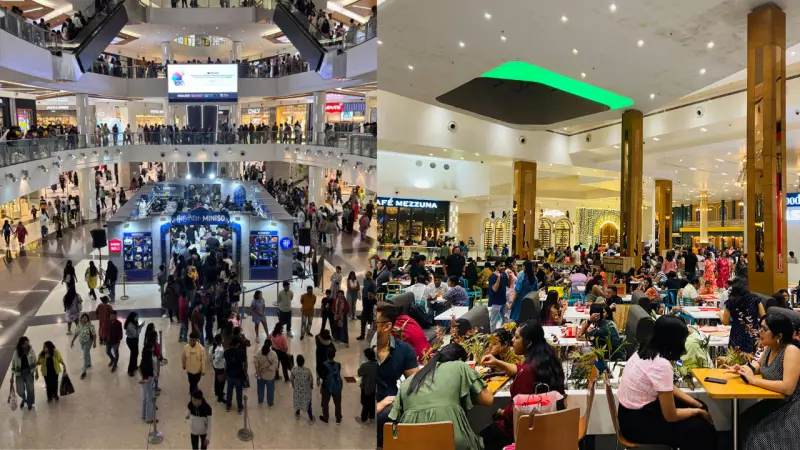
India's consumption story is strong, with the economy on track to hit $6 trillion by 2030. Malls are buzzing with activity, regularly seeing over 20,000 visitors on weekdays and 40,000 on weekends. Food, beverages, and entertainment drive 30-35% of these visits. This vibrant activity has sharpened investor appetite, but quality supply is constrained—fewer than 100 of India's 600+ operational malls meet institutional standards.
A landmark moment was the 2023 listing of Blackstone's Nexus Select Trust REIT, which owns 19 malls. "It legitimized retail as a transparent, scalable asset class in India," Kejriwal notes, adding that at least two more retail REITs are expected by 2030. Furthermore, Indian malls have synergized with, rather than been defeated by, e-commerce. With online retail penetration at just 8%, many brands adopt a 'phygital' model, using physical stores for experience and online platforms for scale.
Financially, the sector is highly attractive. Grade-A malls in India deliver internal rates of return (IRR) of 14–18%, nearly double the yields in many Western markets, supported by rental escalations and revenue-sharing models.
"This makes India unique among major retail markets globally," Kejriwal concludes. "While the West deals with oversupply and online competition, India faces a shortage of quality supply, has rising incomes, heavy foot traffic, and rapid brand growth." This strength is reflected in the data: retail leasing in India jumped almost 70% year-on-year in the first half of 2025, and new mall supply grew by over 160%.