

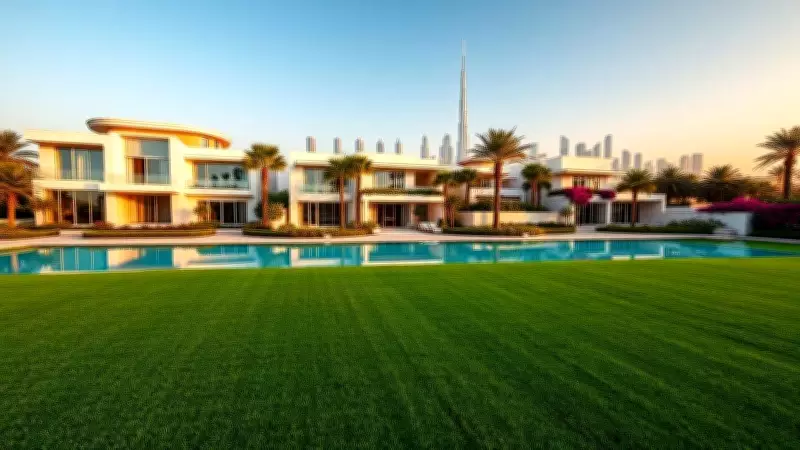
Iranian Missile Strikes Challenge UAE's Property Investment Haven Status
The unprecedented property boom that has driven rapid urban development across the United Arab Emirates now faces its first significant test following Iranian missile strikes that have shaken the region's carefully cultivated reputation as a secure investment destination. The attacks, which targeted critical infrastructure including airports, ports, and residential areas in both Dubai and Abu Dhabi, have created immediate uncertainty in a market that has flourished primarily through foreign capital inflows.
Immediate Market Reactions and Investor Concerns
Financial markets responded swiftly to the escalating geopolitical tensions. Shares of major UAE developers experienced sharp declines on Wednesday, with Aldar Properties (Abu Dhabi's largest listed developer) and Emaar Properties (the company behind iconic projects like downtown Dubai and the Burj Khalifa) both dropping approximately 5%. Simultaneously, bond prices for several prominent property companies declined, effectively closing this crucial funding channel for new issuances as risk spreads widened across the sector.
Data from Betterhomes reveals the particular vulnerability of Dubai's property market structure: off-plan properties accounted for 65% of all transactions in 2025. This substantial portion represents homes yet to be constructed, creating a precarious pipeline that depends heavily on sustained overseas interest. A senior real-estate banker confirmed to Reuters that his firm had postponed a planned capital raising linked to UAE property this week, noting that "investors are not thinking at this stage of investing in the region" and that the risk premium for UAE real estate had become "much higher."

Developer Responses and Fundamental Strengths
Despite the market sell-off, some developers sought to project confidence in the face of regional instability. Ziad El Chaar, CEO of luxury developer Dar Global (responsible for multiple Trump-branded projects across the Gulf), stated: "In this region we know things start quickly and end quickly and we overcome this because the fundamentals across the GCC nations are strong." He emphasized that "nothing is on hold ... everything is on track" regarding ongoing developments.
The property rally gained significant momentum following the COVID-19 pandemic, fueled by UAE reforms that attracted wealthy individuals and global investors. A combination of tax-free environments, flexible visa regulations, and economic liberalization encouraged substantial capital migration. Notable contributors included Russians relocating after the Ukraine conflict, along with billionaires, family offices, and hedge funds drawn by zero income tax and the country's positioning as an emerging global financial hub.
Demographic and Price Growth Context
By 2025, the UAE's population had surpassed 11 million, with expatriates comprising nearly 90% of residents according to official data—one of the highest proportions globally. This influx of residents and investors propelled property prices to remarkable heights. Fitch reported Dubai real estate prices climbing 60% between 2022 and the first quarter of 2025, while CBRE documented residential prices rising nearly 13% year-on-year in the fourth quarter. Over the same period, Abu Dhabi residential property values increased by approximately 32%.
Mohammed Ali Yasin, CEO of Ghaf Benefits (a Lunate company in Abu Dhabi), told Reuters that the true impact on real estate would become clearer once the conflict concludes: "The real effect on real estate should be measured on the level of demand once the conflict halts. That is where the true impact will be felt."
Underlying Supply Concerns and Future Outlook
Concerns about market overheating had emerged even before the recent escalation. JPMorgan analysts noted last week that Dubai's population growth might prove insufficient to absorb the 300,000 to 400,000 housing units expected to enter the market by 2028. Economists at Abu Dhabi Commercial Bank emphasized the critical importance of overseas buyers for market stability, stating: "Foreign interest in purchasing property following the conflict will be critical," highlighting that expatriates and non-resident investors form a fundamental pillar of demand.

New housing supply is projected to increase from the second half of this year and remain elevated for the following two years—coinciding precisely with this period of heightened geopolitical tension. Ryan Lemand, co-founder and CEO of Neovision Wealth Management in Abu Dhabi, observed: "Real estate investment typically relies on stability, visibility and sustained investor confidence, all of which tend to weaken during prolonged geopolitical uncertainty."
The transformation of Dubai's skyline over the past two decades—from the ambitious Palm Jumeirah development to the ongoing construction of the larger Palm Jebel Ali—has symbolized the region's property ambitions. Abu Dhabi has pursued its own transformation through steady coastal development. Now, this growth model faces its most substantial challenge as investors reassess the risk-reward equation in a suddenly more volatile regional environment.





