

KAOMA 2025: A New Era for Karnataka's Ageing Apartments
In a significant move to address the growing concerns over structural safety and livability in older residential buildings, the Karnataka government is set to introduce the Karnataka Apartment Ownership and Management Act (KAOMA) 2025. This legislation draws a stark parallel to the existing vehicle fitness tests, where cars older than 15 years must prove their roadworthiness and emission compliance. However, until now, apartment complexes, some dating back 40 years or more in Bengaluru's Central Business District (CBD), have operated without comparable mandatory safety checks.
The Pressing Need for Structural Audits and Redevelopment
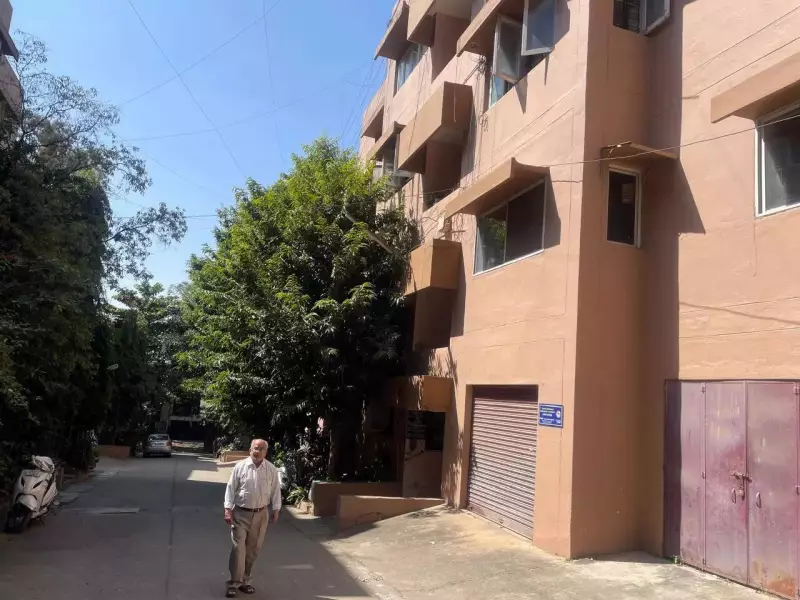
Many of these older buildings, constructed during the 1970s and 1980s apartment boom in areas like Malleswaram, Ulsoor, and Frazer Town, now exhibit signs of significant wear and tear. While some have been reasonably maintained, others are structurally weak, posing serious risks to residents. These ageing structures often lack basic modern amenities such as elevators and adequate parking facilities, which are essential for contemporary urban living.
When redevelopment proposals emerge, they frequently encounter intense opposition from certain residents. Fears of displacement, financial burdens, loss of community ties, and mistrust towards developers commonly lead to stalemates, leaving underlying safety and livability issues unresolved. This gridlock has created situations of pandemonium in some complexes, where essential maintenance and upgrades remain perpetually delayed.

Key Provisions of KAOMA 2025
According to Satish Mallya, President of the Bangalore Apartments' Federation (BAF), the new Act introduces crucial mandates. "Apartments that have completed 30 years will have to get a structural audit done. The audit needs to be repeated every five years thereafter," he explained. The draft legislation includes a dedicated chapter on apartment redevelopment, aiming to streamline what has historically been a cumbersome and contentious process.
Mallya emphasized the importance of tabling KAOMA 2025 in the Karnataka Assembly during the upcoming budget session in March. Beyond redevelopment, the Act is expected to modernize apartment governance by clarifying ownership rights, strengthening Apartment Owners Associations (AOAs), and improving dispute resolution mechanisms. "Along with stronger enforcement by K-RERA, this framework can help avoid many pitfalls seen in Maharashtra," he added, highlighting lessons from other states.
Case Studies: The Human Face of Redevelopment Challenges
The urgency of this reform is palpable in personal stories from residents. Madan Badi, a resident of a 40-year-old apartment complex on Ulsoor Road, describes a dilapidated structure with pervasive cracks, weakened by peepal trees growing on walls and compromised by rusted pipes and leaking sewage. The building, originally left incomplete by a bankrupt builder, was exposed to the elements for years before owners completed it themselves in 2000, accelerating structural damage.
Despite the clear need for redevelopment—estimated at Rs 12-15 crore—the project is stalled because four out of ten owners oppose it. Under current rules, even a single dissenting vote can block progress. Opposition stems from varied concerns: demands for extra square footage, full rent coverage during construction, fear of business disruption, or anxiety over losing rental income.
In Malleswaram, O Dhruva, an 87-year-old director of the 47-year-old Dattaprasad society, represents another perspective. The building, constructed well but lacking an elevator, houses many senior citizens who are deeply attached to their homes. "I want to die here only," Dhruva states, expressing comfort in his current residence and skepticism about builders' promises. He notes that redevelopment involves complex logistics, potential legal entanglements, and risks of unmet commitments, making many residents reluctant to embark on such projects.

Expert Insights and Broader Implications
Experts underscore that KAOMA 2025 is a much-needed reform for Bengaluru, which has been grappling with the challenges of ageing apartments. Bhaskar T Nagendrappa, President of CREDAI Karnataka, points out that while widespread structural risks may not exist, redevelopment is increasingly necessary to boost housing supply, utilize infrastructure efficiently, and promote walk-to-work lifestyles. He advocates for Karnataka to study successful frameworks from states like Maharashtra to draft an effective policy.
Suchitra Deep, an architect and community activist, observes that Malleswaram residents, like many in older neighborhoods, are often financially conservative and resistant to major repairs. She predicts that Bengaluru will follow Mumbai's path towards more redevelopment, despite potential resistance from long-term residents.
Nandana K Nair, a psychology student and resident, adds a crucial human dimension, noting that while government moves to ease redevelopment are positive, the psychological impact on elders—for whom home represents memories, routine, and identity—must not be overlooked in the pursuit of progress.
Proposed Solutions and Future Outlook
Residents and experts alike propose practical measures to complement KAOMA 2025. Madan Badi suggests introducing a mandatory 'fitness certificate' system for buildings after a certain age, similar to vehicle checks, with compulsory redevelopment if declared unsafe. He also recommends allowing redevelopment based on a majority threshold (e.g., 50%+) rather than unanimity and mandating the formation of associations with binding decision-making powers.
As Bengaluru's older apartments, concentrated in CBD and adjacent areas, continue to age, the need for systematic upgrades becomes more pressing. Many buildings from the mid-1980s onward, which replaced large family homes, now require significant upkeep of core systems like plumbing and electrical, exacerbated by rising labor and material costs post-COVID.
KAOMA 2025 represents a proactive step towards ensuring safety, enhancing livability, and facilitating smoother redevelopment processes. By addressing structural audits, governance clarity, and resident concerns, the Act aims to transform Karnataka's approach to managing its ageing housing stock, potentially setting a benchmark for other states facing similar challenges.





