

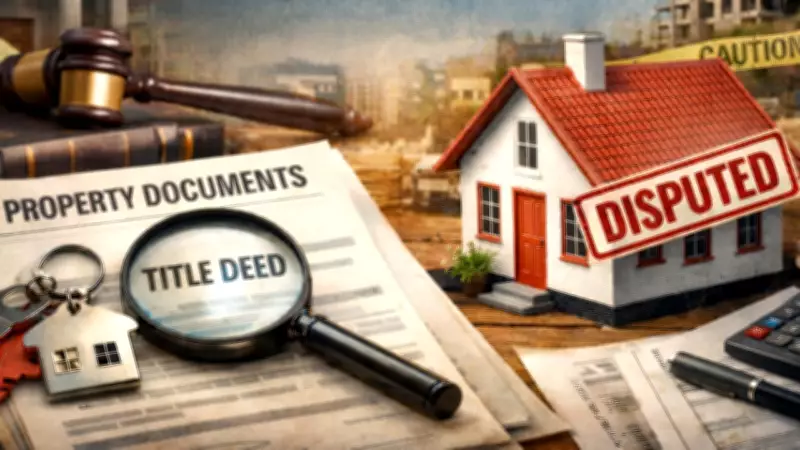
The Critical Importance of Property Document Verification
Purchasing a property represents one of the most significant financial commitments an individual will make in their lifetime. Given the substantial investment involved, ensuring the property's legal compliance and authenticity becomes absolutely essential to prevent future disputes, fraud, or unexpected liabilities. With numerous cases of ownership conflicts and regulatory violations emerging in today's real estate market, prospective buyers must conduct comprehensive due diligence before finalizing any transaction.
Why Document Verification Matters
Experts emphasize that verifying a property's documentation is not merely a formality but a crucial protective measure. According to legal professionals including Tusi Kumar, Partner at Singhania & Co, SS Global Law Firm, and representatives from Mahendra Lifespaces, failure to properly examine documents can lead to severe consequences. These include title disputes that trap properties in prolonged litigation, unauthorized construction that municipal authorities may seal or demolish, and land use violations when properties are built on land not zoned for residential purposes.
Additionally, buyers risk facing bank enforcement actions if undisclosed mortgages exist, denial of essential utilities like electricity and water due to missing certificates, and unexpected liability for pending property taxes or utility bills. Proper verification safeguards against these risks while ensuring secure ownership and peaceful possession.

Essential Documents for Property Buyers to Examine
Before committing to any property purchase, prospective buyers should meticulously review the following key documents:

- Title Deed (Original): This foundational document confirms the seller's legal ownership and right to transfer the property. Buyers must verify its authenticity and ensure it is properly registered in the seller's name.
- Chain of Title Documents: These historical records establish the property's ownership lineage. A clear, uninterrupted chain demonstrates there are no competing claims or unresolved disputes.
- Encumbrance Certificate: This official certification confirms the property is free from financial liabilities such as loans, mortgages, or third-party legal claims.
- Sale Agreement: This contract defines all transaction terms including price, payment schedule, possession timeline, and responsibilities of both buyer and seller.
- Property Tax Receipts: Recent receipts prove there are no outstanding municipal dues and that the property is correctly recorded with local authorities.
- Approved Building Plan: Issued by municipal authorities, this document verifies the construction complies with approved layout and zoning regulations.
- Completion Certificate (CC): Provided after construction completion, this certificate confirms the property was built according to approved plans and regulatory standards.
- Occupancy Certificate (OC): This certification declares the building is fit for occupation and meets all civic and safety requirements including water supply, sanitation, and electricity.
- RERA Registration Details: Buyers should verify the project's registration number on the official Real Estate Regulatory Authority portal and review all disclosures regarding approvals, deadlines, and any legal proceedings.
- No Objection Certificates (NOCs): These include clearances from relevant authorities such as fire departments, environmental agencies, water boards, and electricity providers, depending on the specific project requirements.
- Possession Letter: Issued by the builder, this document confirms the exact date when the buyer will receive physical possession of the property.
- Loan Clearance Certificate (If Applicable): This ensures any existing loan against the property has been fully repaid and the lender no longer maintains any claim on the asset.
Expert Recommendations for Buyers
Legal experts strongly advise consulting qualified property lawyers who specialize in real estate transactions. Additionally, conducting independent verification through government portals and local municipal authorities provides an extra layer of protection. Understanding all transaction intricacies before completing the purchase is essential for avoiding costly mistakes.
Proper due diligence not only protects buyers from legal disputes and financial losses but also ensures they achieve secure ownership and peaceful possession of their property investment. In today's complex real estate environment, thorough document verification represents the most reliable safeguard for one of life's most important financial decisions.





