

Civil Society Coalition Unveils Urban Mobility Charter Ahead of Bengal Assembly Polls
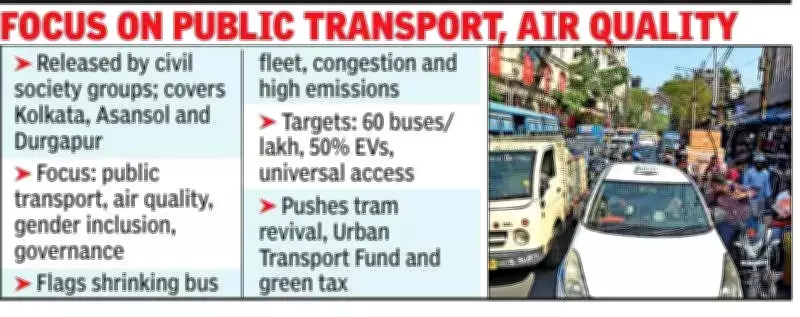
With the assembly elections in West Bengal just weeks away, a significant coalition of civil society organizations has introduced a comprehensive Urban Mobility Charter specifically designed for Kolkata and other major urban centers across the state. This initiative is a direct call to action for political parties, urging them to prioritize substantial reforms in public transportation, advocate for cleaner mobility solutions, and ensure safer streets for all residents.
Charter Development and Core Principles
The charter was collaboratively developed by prominent groups including the SwitchON Foundation, Kolkata Cycle Samaj, Kolkata Bus-o-Pedia Foundation, Asar, and The Climate Thinker. It strategically frames urban mobility not merely as a transportation issue but as a critical component interconnected with public health, gender equity, and broader economic opportunities for the populace.
Highlighting a Deepening Urban Transport Crisis
The document sheds light on a severe and worsening crisis within Kolkata's transport infrastructure. As the home to nearly 60% of the state's urban population, Kolkata has experienced a dramatic reduction in its public bus fleet, which has shrunk from over 6,000 vehicles to approximately 3,500, despite a consistent rise in commuter demand. This shortfall has resulted in approximately 72% of daily commuters facing severe overcrowding and unreliable service.

Furthermore, the transport sector is a major contributor to air pollution, accounting for 19% to 31% of PM2.5 emissions in the city's core areas. A significant number of buses continue to operate on outdated BS III diesel engines, exacerbating environmental concerns. Industrial hubs such as Asansol and Durgapur remain classified among India's non-attainment cities for air quality, highlighting the regional scale of the issue.
Inefficiency and Governance Gaps
Despite relatively low rates of private vehicle ownership, Kolkata was ranked as the second-most congested city globally in 2024. This ranking underscores profound inefficiencies in road usage and a lack of integrated transport planning. Notably, the charter points out that 60% to 70% of daily trips in Kolkata and Asansol are under 4 kilometers in distance, presenting a substantial opportunity to promote walking and cycling as viable, eco-friendly alternatives.
The coalition has identified critical governance gaps, including the absence of a dedicated intracity state transport undertaking and weak transparency in transport data management. Among its specific recommendations is a call to revive and modernize the city's historic tram services as part of a sustainable transport mix.
A Comprehensive Roadmap for 2031
The Urban Mobility Charter outlines a detailed and ambitious roadmap with targets set for the year 2031. Key proposals include:
- Expanding and modernizing the public bus system to meet growing demand.
- Creating a dedicated Urban Transport Fund to finance sustainable mobility projects.
- Establishing empowered, unified transport authorities for better coordination.
- Ensuring that a bus stop is accessible within a five-minute walk for most residents.
- Formally integrating informal transport modes, such as auto-rickshaws, into the broader network.
Push for Electrification and Inclusive Measures
With electric vehicles currently representing only 1.5% of the state's vehicle fleet, the charter strongly advocates for rapid electrification of public transport. It calls for a significant expansion of charging infrastructure and the implementation of green taxes to incentivize cleaner vehicles. Additionally, the proposal includes socially inclusive measures such as introducing free bus travel for women and implementing gender sensitization training for all transport staff to ensure safer and more equitable access.

Political Engagement Ahead of Elections
The coalition has proactively engaged with leaders across various political parties, strategically positioning comprehensive mobility reform as a critical test of governance and public commitment in the lead-up to the assembly elections. This charter serves as both a policy blueprint and a public accountability tool, challenging candidates to address the urgent transport and environmental needs of Bengal's urban citizens.





