

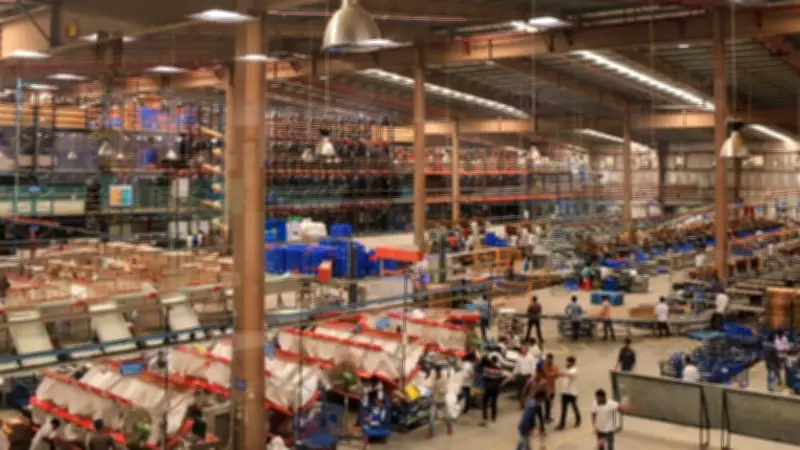
Kolkata's warehousing market demonstrated notable resilience throughout 2025, with total leasing volumes reaching 4.6 million square feet according to a comprehensive report from Knight Frank India. While this figure represents a substantial 30% year-on-year decline from the 6.5 million square feet recorded in 2024, industry analysts emphasize that this moderation stems primarily from elevated land prices and limited availability of Grade A facilities rather than any structural weakness in underlying demand.
Key Demand Drivers and Sectoral Shifts
Third-party logistics (3PL) and e-commerce companies continued to serve as the primary engines of demand within Kolkata's warehousing landscape. Together, these two sectors accounted for more than half of all leasing activity throughout the year. The e-commerce segment maintained a solid 22% market share, bolstered by sustained consumer spending and the ongoing need to strengthen last-mile delivery networks across the region.
The 3PL sector, while remaining the largest single contributor to overall leasing, experienced a softening of its market share to 32% from 42% during the previous year. This shift reflects evolving occupier strategies and a trend toward consolidation of space requirements among logistics providers.

Manufacturing Emerges as Growth Engine
Manufacturing emerged as a particularly notable growth driver within Kolkata's warehousing market, recording a 7% year-on-year increase in leasing activity. This sector expanded its market share significantly to 21% from just 13% in 2024, indicating rising momentum from industrial occupiers establishing or expanding their presence in eastern India.
Geographical Distribution and Supply Dynamics
On the geographical front, Dankuni and its surrounding suburbs retained their leadership position, capturing an impressive 60% of total leasing activity in 2025. This dominance is supported by the area's strategic positioning along the Durgapur Expressway and National Highway 19, coupled with strong labour availability and exceptional regional connectivity.
The National Highway 16 cluster, previously designated as Old NH 6, increased its market share to 40% from 38% in the previous year. This growth has been facilitated by improving Grade A supply and enhanced connectivity advantages that continue to attract occupiers.
Notably, Taratala-Maheshtala and Andul Road clusters recorded no leasing activity during the year, highlighting the constraints posed by limited availability of large land parcels and modern warehousing stock in certain city clusters.
Rental Stability and Market Outlook
Rentals across Kolkata's warehousing market remained remarkably steady throughout 2025, reflecting continued occupier confidence despite the overall slowdown in transaction volumes. Grade A rents in the NH 16 cluster ranged between INR 18 to 27 per square foot per month, while Dankuni and its suburbs recorded rents of INR 18 to 25 per square foot per month.
Taratala-Maheshtala and Madhyamgram-Barasat continued to command premium rental ranges, largely due to land scarcity and proximity advantages. These areas maintained rents of INR 27 to 30 per square foot per month and INR 27 to 35 per square foot per month respectively.
Future Prospects and Infrastructure Development
Knight Frank India analysts noted that with ongoing infrastructure upgrades and continued expansion by manufacturing and e-commerce players, Kolkata is well-positioned to regain leasing momentum in the coming quarters. The city is expected to further strengthen its strategic role as the primary logistics gateway to eastern and northeastern India.
Backed by improving infrastructure networks and evolving occupier requirements, the Kolkata warehousing market remains fundamentally positioned for a rebound. The combination of sustained demand drivers and strategic geographical advantages suggests that the current moderation represents a temporary phase rather than a long-term trend.






