

Maharani Bagh: From Model Colony to Urban Strain in Delhi
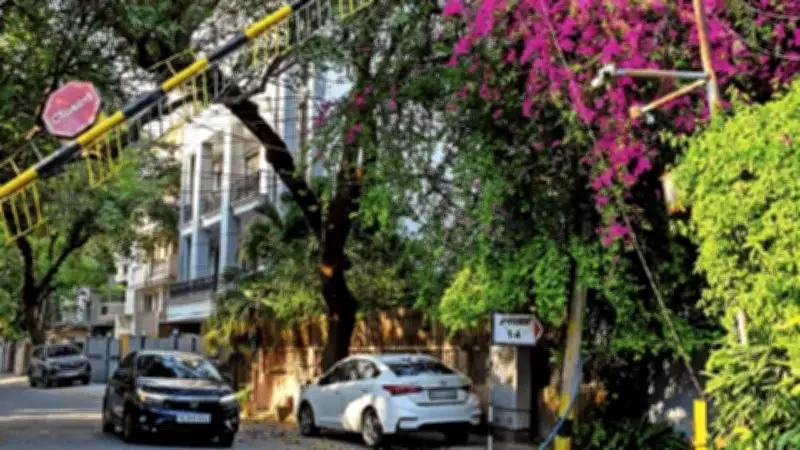
Tree-lined roads, meticulously planned homes, and vibrant green spaces adorned with bougainvillea define Maharani Bagh in southeast Delhi. Long celebrated as one of the capital's most upscale neighborhoods, this colony has historically been viewed as a "model" of thoughtful urban planning, showcasing an orderly and spacious living environment.
Planned Origins and Residential Character
Designed initially with only 210 plots, Maharani Bagh was laid out with wide roads, dedicated service lanes, and abundant green spaces. Planned to accommodate approximately 1,300 residents, it functioned for decades as a well-balanced and self-sustaining residential area, reflecting a strong emphasis on livability. "It created an orderly and spacious living environment," says resident Shiv Mehra, highlighting its historical appeal.
Even today, residents note that the neighborhood retains its quiet residential character despite proximity to major arteries like Ring Road and Mathura Road. Its planned layout, lush greenery, and residential scale have historically distinguished it as an example of organized urban development.

Infrastructure Under Pressure
However, rising population has begun to place increasing pressure on infrastructure, with some residents describing the strain as now visible across the colony. Sewer lines have become prone to failure, while ageing water pipelines laid decades ago risk contamination. Stormwater drains, meant to carry rainwater, now double as sewage channels, leading to flooding and foul odours during heavy rains.
"It's a textbook case of unplanned densification without parallel infrastructure augmentation," explains another resident, Amitosh Moitra. Roads designed for limited residential traffic now function as public thoroughfares, with commuters cutting through to avoid congestion on main roads.
Social and Physical Transformations
The transformation has been social as well as physical. Ayesha Kapur, who has known Maharani Bagh since childhood, describes it as a "lovely neighborhood" shaped by wider urban pressures affecting Delhi. She recalls quieter streets where children cycled and neighbors shared close bonds. Today, a road that would house 10 families accommodates 45-50 households.
"With property subdivisions and busier lifestyles, community interaction has declined," Kapur notes. In recent years, drainage and infrastructure work has added to residents' frustrations, with several parts dug up, sewage flow issues persisting in some stretches, and prolonged construction disrupting daily life.
Root Causes of the Strain
Mehra points out that infrastructure has effectively been frozen in time. "Policy changes allowed additional floors on every plot, turning single homes into four households. The population has surged past 5,000, but civic facilities remain largely the same as when the colony was planned for barely a quarter of its current load."
Parking pressures have intensified, with people occupying service lanes. Overhead electric cables get entangled in trees, causing disruptions, while garbage disposal has become chaotic, with waste accumulating near entrances and attracting strays.
Comparative Resilience Amid Challenges
Despite these challenges, residents assert that Maharani Bagh fares better than many other areas in Delhi where infrastructure has deteriorated rapidly. Its foundational planning continues to provide a buffer against complete urban decay, though urgent upgrades are needed to address the mounting pressures of densification.






