

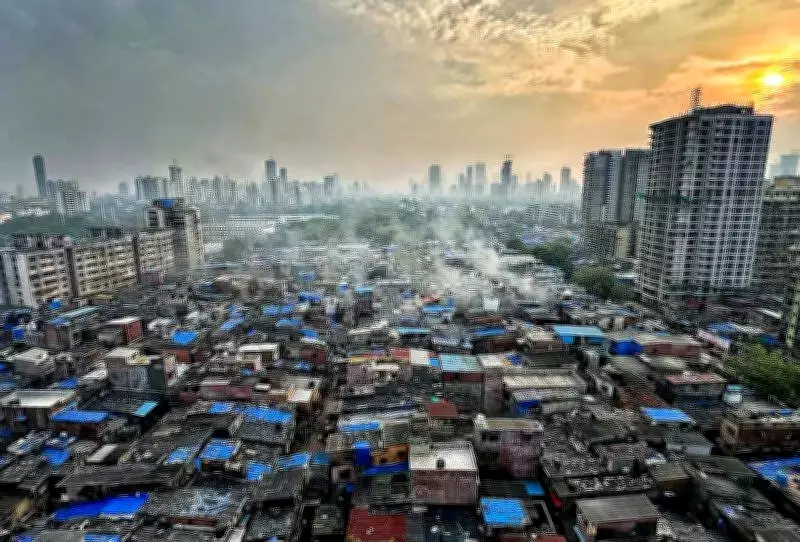
MIDC Launches Ambitious 338-Acre Slum Rehabilitation Drive in Navi Mumbai
The Maharashtra Industrial Development Corporation (MIDC) has taken a monumental step toward urban transformation by issuing a comprehensive Request for Proposal (RFP) for what stands as one of the most extensive slum rehabilitation initiatives within the Mumbai Metropolitan Region. This groundbreaking project specifically targets informal settlements sprawling across a vast 338-acre expanse situated in the strategically important Thane-Belapur industrial belt of Navi Mumbai.
Unprecedented Scale Targeting Decades-Old Settlements
The rehabilitation drive focuses intently on approximately 35,800 slum structures that have proliferated along the Trans Thane Creek (TTC) corridor, stretching between the areas of Digha and Shirwane. Over multiple decades, systematic encroachment has dramatically altered the landscape, converting substantial portions of MIDC's designated industrial land into densely populated residential settlements. The sheer magnitude of this undertaking positions it among the most ambitious redevelopment projects witnessed in the region since the famous Dharavi rehabilitation efforts.
Stringent Qualification Criteria and Project Structure
Under the clearly defined tender conditions established by MIDC, only development entities capable of rehabilitating more than 1,900 families will meet the minimum qualification threshold. This specific eligibility requirement has generated considerable discussion within industry circles, with concerns emerging about potentially limited competition that could advantage larger, well-established real estate corporations. To optimize execution efficiency, MIDC has strategically planned to divide the colossal project into three distinct packages across different sectors of the corridor. This segmentation approach will enable multiple agencies to undertake work simultaneously, significantly accelerating overall project delivery timelines.

Comprehensive Developer Responsibilities and Vision
Selected developers will assume complete, end-to-end responsibility for the project lifecycle, encompassing critical phases including meticulous planning, substantial financing arrangements, large-scale construction activities, and the systematic rehabilitation of all eligible residents. MIDC officials have emphasized that assigning this single-point accountability is absolutely essential given the project's enormous scale and the exceptionally high land valuation within the corridor, which preliminary estimates suggest runs into several thousand crores of rupees. The envisioned redevelopment is projected to fundamentally transform the entire belt into a vibrant, mixed-use zone incorporating both residential and commercial components, thereby unlocking significant economic potential.
Strategic Shift from Previous Proposals
This current initiative represents a notable strategic departure from earlier proposals that contemplated transferring the land to the Navi Mumbai Municipal Corporation for cluster-based redevelopment. A previous plan to establish a special purpose vehicle (SPV) through collaboration between MIDC and the civic body ultimately did not materialize. This occurred after the municipal corporation expressed a requirement for full land ownership, despite having received prior approvals for the transfer of approximately 225 acres for the rehabilitation purpose.
Flexible Implementation and Stakeholder Engagement
MIDC Chief Executive Officer P Velarasu has clarified that the agency is now proceeding decisively under a group redevelopment model while maintaining flexibility to incorporate valuable stakeholder feedback. "Consultations with residents, public representatives, and other key stakeholders will be conducted comprehensively before any final decisions are formally made," Velarasu affirmed. MIDC officials have further noted that many of these settlements have existed for several decades, with previous attempts to clear encroachments proving largely unsuccessful. A detailed survey conducted over ten years ago successfully identified eligible beneficiaries across more than a dozen distinct slum pockets within the corridor. By advancing with this structured redevelopment plan, MIDC aims to achieve multiple objectives:

- Regularize housing for thousands of residents
- Dramatically improve critical urban infrastructure
- Unlock the substantial latent economic potential of one of the region's most vital industrial belts
This landmark project signifies a major commitment to urban renewal and socio-economic development in the Mumbai Metropolitan Region, with potential implications for similar initiatives across Maharashtra and beyond.





