Namo Bharat Rapid Rail and Meerut Metro Set to Transform Delhi-Meerut Real Estate Landscape
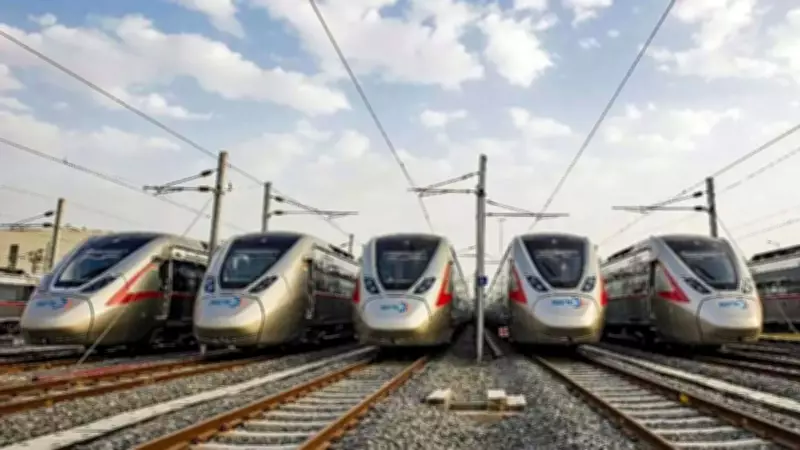
The complete operational launch of the 82-kilometer Namo Bharat rapid rail corridor connecting Delhi and Meerut, along with the newly integrated Meerut Metro system, is poised to deliver a substantial boost to real estate development and investment activity across the entire route, according to industry analysts and property developers. This major infrastructure milestone represents a transformative shift in regional connectivity and urban planning for the National Capital Region.
Property Prices Already Surging Along Transit Corridor
According to detailed industry estimates, property values within a strategic two-kilometer radius of stations along the Namo Bharat corridor have already experienced remarkable appreciation, climbing between 30 percent and 67 percent over just the past two years. With the entire high-speed rail stretch becoming fully operational imminently, market experts anticipate prices will firm up even further, creating new valuation benchmarks for residential and commercial properties.
Prime Minister Narendra Modi is scheduled to officially inaugurate this landmark corridor on February 22. Once fully functional, the high-speed rail link will dramatically reduce travel time between Delhi and Meerut to approximately one hour, fundamentally improving daily commuting patterns and enhancing regional mobility for millions of residents.

Infrastructure Project Aims for Decentralized Growth
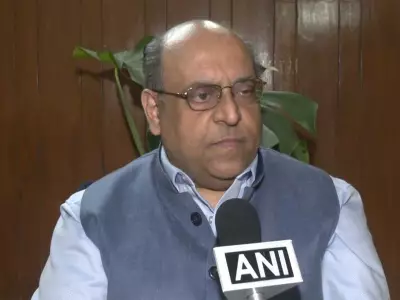
The ambitious project is being implemented by the National Capital Region Transport Corporation (NCRTC). A significant 55-kilometer section featuring 11 stations is already operational, providing a preview of the corridor's transformative potential. Shalabh Goel, Managing Director of NCRTC, emphasized that the project was specifically designed to promote decentralized, polycentric growth throughout the National Capital Region.
"When the Namo Bharat project was originally conceptualized, one of the primary objectives was to enable balanced, polycentric development across NCR," Goel explained. "We are actively harnessing the potential of Transit Oriented Development (TOD) principles in the region to foster sustainable, integrated communities around transportation hubs."
The dramatically improved connectivity is expected to support reverse migration patterns, encourage new business activity, and open up fresh residential and commercial hubs along the entire alignment, particularly in cities like Meerut, Ghaziabad, Muradnagar, and Modinagar.
Real Estate Developers Capitalize on New Opportunities
Real estate firms are strategically positioning themselves to capitalize on the enhanced connectivity. Major developers including Paras Buildtech and Alpha Corp are already launching ambitious projects along the corridor, such as the prominent MeerutOne development in Modipuram.
Santosh Agarwal, Executive Director at Alpha Corp, highlighted the transformative impact: "By reducing travel time from Sarai Kale Khan to Meerut to just one hour, the Namo Bharat trains will make the city far more accessible and aspirational for homebuyers and businesses. Improved connectivity combined with frequent, reliable services will spur significant economic activity, create sustained demand for quality housing, and unlock substantial opportunities for commercial growth."
Pritam Mishra, Senior Vice President of Sales at Paras Buildtech, noted that the simultaneous launch of both the Namo Bharat corridor and the 23-kilometer Meerut Metro—which shares infrastructure with the Rapid Rail Transit System—would fundamentally transform the local property market dynamics.
"For Meerut's real estate landscape, these two integrated projects will serve as absolute game-changers, effectively elevating peripheral zones into high-demand urban nodes," Mishra stated. "Over the last two years alone, property prices in areas along the Namo Bharat route have appreciated by 35 to 40 percent, reflecting a structural market shift driven predominantly by infrastructure-led demand."

Transit-Oriented Development Takes Center Stage
Developers are increasingly aligning their projects with Uttar Pradesh's progressive Transit Oriented Development (TOD) policy, which actively encourages mixed-use developments around major transit stations. This approach mirrors successful models implemented in international cities like Hong Kong, Singapore, and Tokyo, where TOD frameworks have effectively financed public transport systems while simultaneously improving urban planning outcomes.
In India, the National Metro Rail Policy of 2017 explicitly promotes TOD and Value Capture Financing (VCF) models to help generate sustainable revenue streams and create transit-friendly, walkable communities. International development agencies including the Asian Development Bank and the World Bank are providing technical and financial support to NCRTC in implementing these innovative initiatives.
NCRTC has comprehensive plans to monetize strategic land parcels around stations, generate substantial non-fare box revenue, and develop integrated commercial, residential, and service hubs near Namo Bharat stops—a coordinated move that could further reshape the entire property landscape along the Delhi-Meerut economic corridor for decades to come.