Nashik's Urban Landscape Undergoes Massive Redevelopment Surge
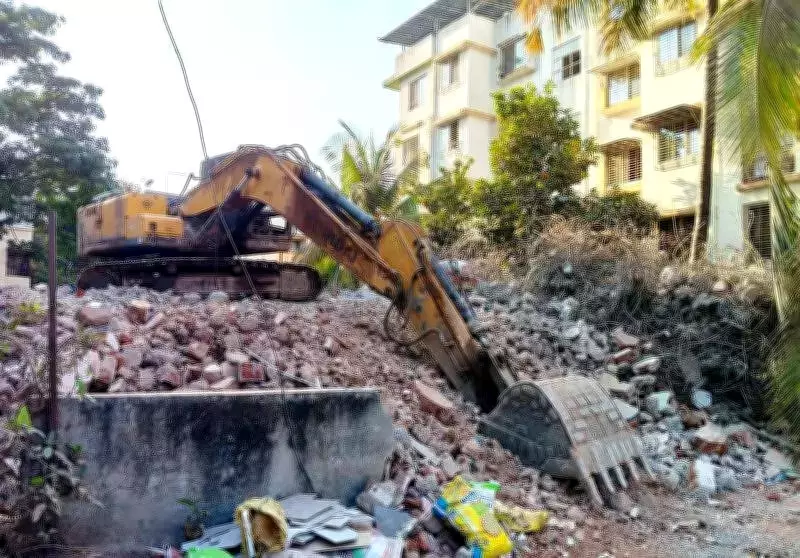
Redevelopment activity in Nashik has accelerated dramatically in recent years, with civic data revealing a substantial transformation of the city's built environment. According to official figures from the Nashik Municipal Corporation (NMC), more than 16,000 old properties have been demolished and reconstructed in just the past seven years alone.
Two Decades of Transformation
The comprehensive NMC data shows that 29,222 properties have undergone redevelopment over the last twenty years. The fact that 16,000 of these transformations occurred in the most recent seven-year period indicates a remarkable acceleration in reconstruction activity across Nashik. This trend reflects a growing preference among residents and developers to replace aging structures with modern buildings featuring upgraded amenities and enhanced safety features.
Annual Redevelopment Pace and Property Characteristics
NMC reports indicate that approximately 2,500 structures have been redeveloped annually over the past five years. The majority of these properties are between 30 and 40 years old and fall into categories considered structurally weak or outdated. Most redeveloped properties have been old houses, standalone bungalows, and small residential buildings that no longer meet contemporary living standards.

With infrastructure aging and safety concerns becoming increasingly prominent, many homeowners are choosing reconstruction as a strategic long-term investment. This approach not only enhances safety standards but also significantly boosts property values in Nashik's evolving real estate market.
Regulatory Changes Driving Development
Officials emphasize that modifications in planning regulations have played a crucial role in accelerating redevelopment. The introduction of the unified Development Control and Promotion Regulations (DCPR) in 2020 brought liberalized Floor Space Index (FSI) norms, including premium FSI options and expanded use of Transferable Development Rights (TDR).
Uday Ghuge, vice-president of the Confederation of Real Estate Developers Association of India (Credai) Nashik, explained the regulatory impact: "Before the unified DCPR, the basic FSI available was only 1, with an additional 0.40 through TDR, which restricted redevelopment prospects. The unified DCPR introduced in 2020 provided more premium FSI options."
Ghuge detailed the current FSI allowances: "On a 9m-wide road, the total permissible FSI, including TDR and premium FSI, now is 3.2. On a 30m road, the total permissible FSI, including TDR and premium FSI, now is 4.8. This triggered large-scale redevelopment of old buildings over the past six to seven years."
Market Forces and Development Patterns
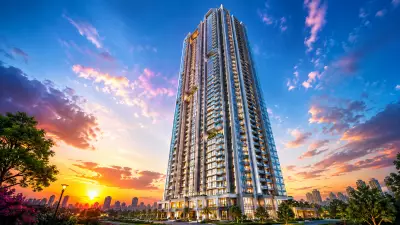
Rising land prices and growing demand for amenity-rich, multi-storey housing have further motivated developers to replace older low-rise structures with taller buildings. This shift offers better financial returns for developers while providing improved living conditions for residents.
Ghuge contextualized Nashik's development history: "Nashik's settlement pattern historically has been dominated by horizontal development. In the last 30 to 40 years, standalone houses, bungalows and small two- or three-storey buildings have come up everywhere in the city. But as land prices increased and demand for flats in apartment buildings grew, redevelopment became the practical solution."
The Scale of Aging Infrastructure
Civic records reveal the substantial scope of aging properties in Nashik that may require future redevelopment. Approximately 25,000 properties are more than 60 years old, while another 28,971 fall in the 40 to 60-year age bracket. Additionally, over 100,000 properties in the city are between 15 and 40 years old, highlighting the extensive pool of structures that may need reconstruction as Nashik continues to expand and modernize.
Challenges and Future Prospects
Ghuge identified specific challenges in Nashik's redevelopment landscape: "Nashik has over 6,000 housing societies and apartment buildings along 9m roads, many of which are several decades old and urgently need redevelopment." He noted that the FSI sanctioned in Nashik remains lower than what is permitted in Thane and Pune, making some redevelopment projects financially challenging.

The Credai representative outlined potential solutions: "We are pursuing the issue with the state government. If additional 0.5 FSI is approved in line with Thane and Pune, redevelopment of old buildings will get the necessary momentum."
This comprehensive redevelopment trend represents a fundamental shift in Nashik's urban fabric, transforming the city from a landscape dominated by horizontal development to one increasingly characterized by vertical growth and modern infrastructure.