

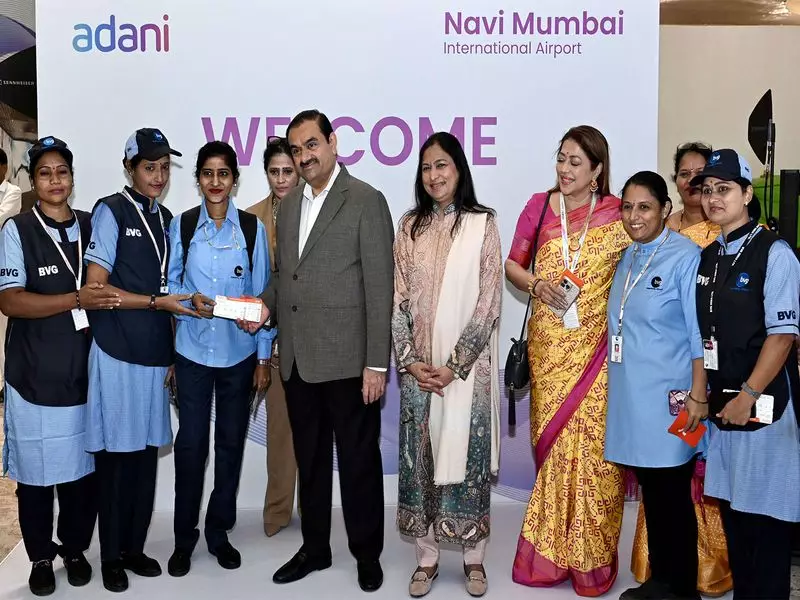
The much-anticipated Navi Mumbai International Airport (NMIA) officially opened its doors to the public on Monday, marking a significant milestone in India's aviation infrastructure. The airport, developed by the Adani Group, successfully handled a total of 48 flights on its very first day of commercial operations, serving over 4000 passengers.
A Smooth Inaugural Day for the New Aviation Hub
The airport's operations commenced with the arrival of an IndiGo flight from Hyderabad at 2:05 PM. This was closely followed by the departure of another IndiGo service to Jaipur at 3:15 PM, officially kicking off the airport's flight schedule. The initial flight operations are being managed from the newly constructed Terminal 1. A key feature of the airport's launch is the seamless transfer of select flights from Mumbai's Chhatrapati Shivaji Maharaj International Airport (CSMIA) to the new facility in Navi Mumbai, a process coordinated to ensure minimal disruption for travelers.
On this historic first day, the airport facilitated the movement of more than 4000 passengers across the 48 flight movements, which included both arrivals and departures. The operations saw participation from several major Indian carriers, including IndiGo, Air India, Akasa Air, and Vistara, showcasing the aviation industry's immediate adoption of this new infrastructure.

Strategic Importance and Future Expansion Plans
The launch of NMIA is a critical development aimed at decongesting the air traffic at the existing Mumbai airport, which has been operating near full capacity. The new airport is strategically located in Ulwe, Navi Mumbai, and is poised to become a major aviation hub for the Mumbai Metropolitan Region. The Adani Group, which took over the project's development, has emphasized the airport's role in boosting regional connectivity and economic growth.
The current operational capacity is just the beginning. The airport is designed for significant expansion. The initial phase, which includes Terminal 1, is built to handle an estimated 20 million passengers annually. Future development phases will scale up this capacity dramatically, with the ultimate goal of serving 90 million passengers per year upon full completion. This expansion will be supported by the construction of a second runway and additional terminal facilities in the coming years.
A New Chapter for Mumbai's Connectivity
The successful first day of operations at Navi Mumbai International Airport represents more than just a new travel facility; it signifies a major leap forward in India's infrastructure capabilities. The airport is expected to enhance air travel efficiency, stimulate job creation in the region, and support the broader economic ambitions of Maharashtra and the country. As flight schedules normalize and more airlines begin operations from NMIA, passengers can look forward to greater options and improved connectivity, solidifying Mumbai's position as a global aviation gateway.
Authorities have reported that the transition and first-day operations were conducted smoothly, with all systems functioning as planned. The focus now shifts to ramping up operations and integrating the airport fully into the national and international aviation network.






