

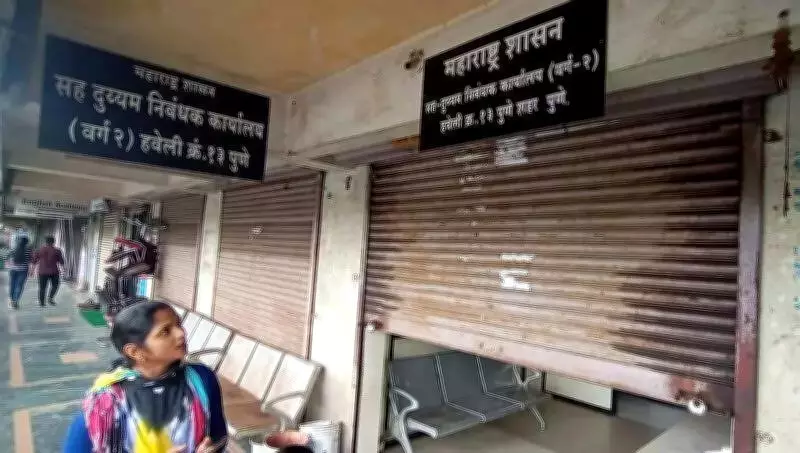
Pune Registrar Mandates Saturday Operations to Tackle Backlog of Over 3,200 Pending Rent Agreements
In a decisive move to address mounting citizen grievances, Pune's joint district registrar, Santosh Hingane, has issued a directive requiring all city sub-registrar offices with more than 100 pending documents to remain operational this Saturday. This special session aims to clear the significant backlog of leave and licence applications that has been causing administrative delays and public inconvenience.
Citizen Complaints Prompt Urgent Action
The order follows repeated complaints from citizens and real estate associations about prolonged delays in processing registrations. In a formal letter dispatched on Friday, Hingane highlighted that a substantial number of applications remain pending, despite previous instructions to complete leave and licence registrations on the same day they are received online at the joint sub-registrar's office.
"The pending number of applications is large and citizens are complaining. The situation is administratively unacceptable," the letter stated emphatically. Hingane revealed to TOI that currently, 3,236 applications are pending across Pune's 27 city registration offices, underscoring the scale of the issue.

Saturday Operations and Reporting Requirements
The registrar's order mandates that the concerned joint deputy registrar, in-charge deputy registrar, and computer operators at affected offices must be present on Saturday to facilitate the completion of registrations. Additionally, a written report detailing the total pending numbers must be submitted to Hingane by the end of the day.
Officials estimate that over 6,000 documents are awaiting clearance at various sub-registrar offices across the state, which operates 517 such facilities. This broader context highlights the systemic nature of the backlog.
Proposed Reforms and Implementation Delays
In September of last year, a proposal was introduced to allow online leave and licence registrations to be processed by any sub-registrar office within a district, rather than limiting it to specific offices in a taluka. This "one district, one registration" initiative was designed to expedite application processing, but its implementation has faced delays.
Hingane assured that he is actively following up with the main office, and the system is expected to roll out soon. "While the ‘one district, one registration' facility has been operational for document registration since May 1, 2025, the online leave and licence applications that were earlier handled by limited offices will now be distributed to all offices. This will help reduce pendency and speed up the tenant registration system," he explained.
Impact on Citizens and Real Estate Sector
Citizen groups have voiced concerns that these delays are adversely affecting individuals who require registered rental agreements to submit documents for various government schemes. Sachin Shinghavi, president of the Association of Real Estate Agents in Pune, pointed out a critical timeline issue: with March 10 being the last date to apply for admissions under the Right to Education Act, delays in registering rent agreements could jeopardize admissions for children whose parents rely on these documents.
"We were following up with the state registration department and they have addressed the issue finally," Shinghavi noted, expressing relief at the registrar's intervention.
He further emphasized that a registered rent agreement serves as a key proof of residence for many applicants, particularly parents who have recently moved to rented accommodation or whose leave and licence agreements are still being formalized. The association had raised alarms as some sub-registrar offices were taking over a fortnight to clear registered documents. Annually, Pune district sees approximately nine lakh rent agreements registered, highlighting the volume and importance of this process.
This Saturday's operational push represents a crucial step towards alleviating the administrative bottleneck, ensuring that citizens can access essential services without undue delay, and supporting the real estate ecosystem in Pune.






