

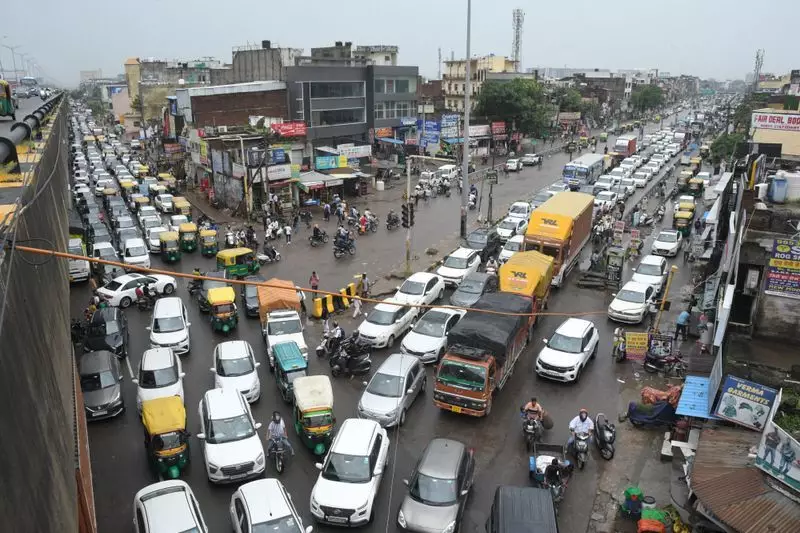
In a significant move aimed at tackling chronic traffic congestion, the Punjab government has given its long-awaited green signal to the ambitious Zirakpur-Panchkula bypass project. The state cabinet, chaired by Chief Minister Bhagwant Mann, has approved the detailed project report (DPR) and administrative sanction for the massive infrastructure undertaking valued at Rs 1,878.16 crore.
Project Overview and Key Specifications
The proposed bypass is designed as a crucial piece of infrastructure to streamline vehicular movement between two major national highways. The project entails the construction of a 4.5-kilometre-long elevated corridor that will seamlessly connect National Highway 5 (NH-5) with National Highway 7 (NH-7). This strategic link is expected to provide a much-needed alternative route, diverting a substantial volume of through-traffic away from the heavily congested Zirakpur-Panchkula stretch.
The engineering design calls for a six-lane structure with provisions for future expansion. The bypass will originate near the Airport Road in Zirakpur, integrating with NH-5, and will culminate near the Housing Board Chowk in Panchkula, connecting to NH-7. This alignment is meticulously planned to optimize connectivity and minimize land acquisition complexities.

A Long-Awaited Solution to Traffic Woes
The approval of this project marks the culmination of years of planning and public demand. The Zirakpur-Panchkula stretch has been notorious for its traffic snarls, causing daily delays for commuters, commercial vehicles, and residents alike. The congestion not only wasted fuel and time but also contributed significantly to air and noise pollution in the bustling corridor.
Officials highlight that the new bypass will serve as a dedicated pathway for vehicles not destined for the local areas of Zirakpur, Derabassi, or Panchkula. By channeling this through-traffic onto the elevated corridor, the project promises to drastically decongest the ground-level roads, leading to smoother and safer travel for local commuters. The initiative is seen as vital for supporting the region's economic growth and improving the overall quality of life for its inhabitants.
Implementation and Next Steps
With the administrative and financial sanctions now in place, the focus shifts to the execution phase. The Public Works Department (PWD) of Punjab will be the nodal agency responsible for implementing this mega-project. The government has directed the department to initiate the tendering process swiftly to select a competent contractor.
The project is expected to be executed on a Engineering, Procurement, and Construction (EPC) model, which is favored for its potential to ensure timely completion within a defined budget. While an official timeline for completion will be finalized after the contractor is appointed, the project is anticipated to take approximately 30 months from the commencement of construction. The state government has emphasized its commitment to ensuring minimal disruption during the construction phase through careful project management.
The final approval was granted during a cabinet meeting held on March 19, 2024, bringing a decisive end to the prolonged discussions and planning around this critical infrastructure need. The project is now poised to move from the drawing board to reality, offering a concrete solution to one of the region's most persistent civic challenges.






