

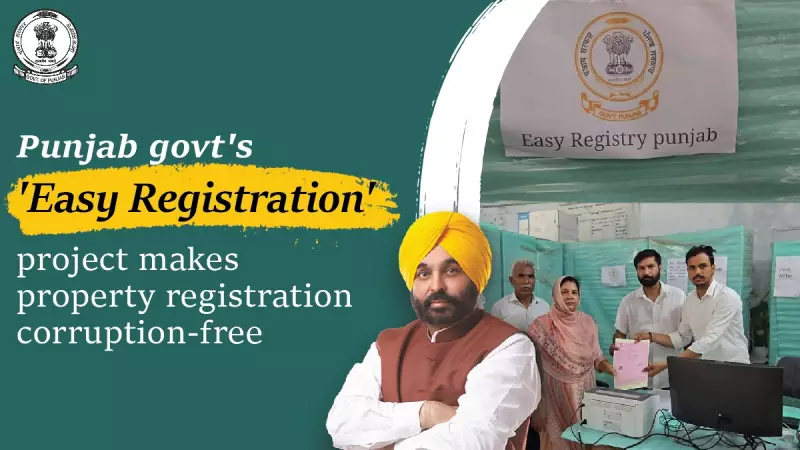
In a significant move towards transparent governance, the Punjab government has successfully implemented its Easy Registration Project, effectively eradicating corruption from the property registration process. This landmark e-governance initiative, launched under the leadership of Chief Minister Bhagwant Mann, has streamlined procedures that were once notorious for delays and illicit demands.
A Digital Overhaul for a Corrupt System
The project, which has been operational for several months, represents a complete digital transformation of the state's registration department. Previously, citizens faced a cumbersome and often exploitative system when registering property deeds, sale agreements, or other documents. The manual process was riddled with opportunities for middlemen and officials to demand bribes for expediting services or even for basic processing.
Now, the entire workflow has been migrated online. Citizens can book appointment slots, submit necessary documents, and make payments through a centralized digital portal. The system mandates that all communication and document flow happens electronically, leaving a transparent audit trail. This design inherently removes the points of human intervention where corruption typically thrived.

Key Features and Direct Benefits
The core of the Easy Registration Project lies in its citizen-centric features. The online portal allows for prior appointment booking, eliminating long and chaotic queues at registration offices. All fee calculations are automated and displayed upfront, ensuring there is no ambiguity or room for arbitrary cash demands.
Perhaps the most impactful change is the introduction of a direct bank payment gateway. Registration fees and stamp duties are now paid directly to the government treasury via online banking, UPI, or other digital methods. This crucial step cuts off the cash-handling chain that was a primary source of leakages and bribes. Officials no longer handle cash, and citizens receive instant digital receipts.
Furthermore, the project integrates with other government databases for verification, reducing the need for citizens to procure multiple physical certificates. The time taken for registration has been slashed dramatically, with many processes that took days now being completed within hours.
Government's Stance and Public Response
Chief Minister Bhagwant Mann has positioned this project as a cornerstone of his administration's commitment to "clean and hassle-free governance." The government has stated that the system is designed to be self-sustaining and foolproof against manipulation. Regular monitoring and feedback mechanisms have been put in place to address any technical glitches.
Early feedback from citizens and real estate stakeholders has been overwhelmingly positive. Homebuyers and property owners have reported a seamless, predictable, and dignified experience—a stark contrast to the past. The real estate sector, which relies heavily on clear and swift documentation, has welcomed the transparency, believing it will boost investor confidence and market health.
The Road Ahead for Transparent Governance
The success of the Easy Registration Project sets a powerful precedent for other states and government departments. It demonstrates how targeted digital intervention can dismantle deeply entrenched systems of corruption. The Punjab government has indicated plans to further integrate this system with land records and municipal databases to create a unified property management ecosystem.
The project's impact goes beyond mere convenience. By restoring trust in a critical public service, it strengthens the social contract and promotes the rule of law. It proves that with political will and smart technology, systemic corruption can be tackled effectively. As the system matures, it is expected to become the new standard for all property-related transactions in Punjab, making the state a leader in corruption-free real estate administration.






