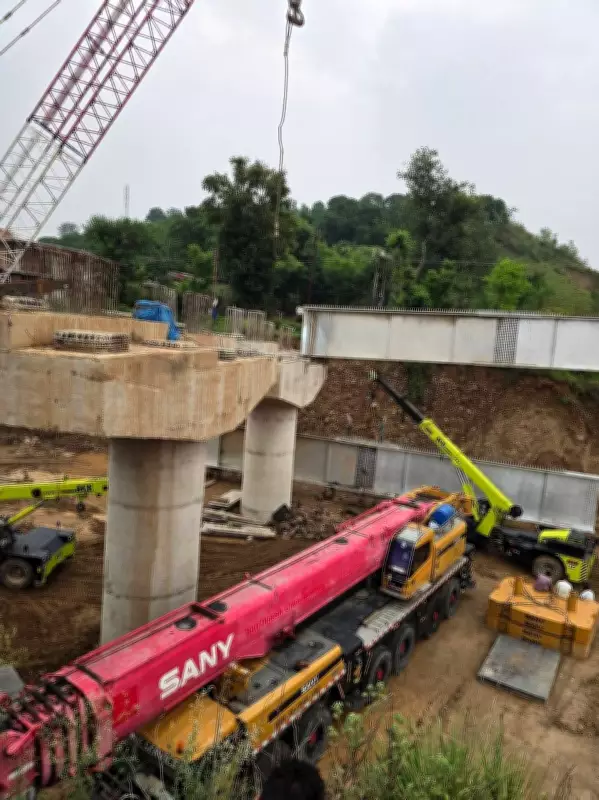
The Riyund Khud Bridge, a key structure on the Mataur–Shimla four-lane highway in Himachal Pradesh, is expected to open for vehicular traffic by September 1, 2026, according to National Highways Authority of India (NHAI) officials. The bridge, built on 62-metre-high pillars with two steel spans of about 60 metres each, is in its final construction phase.
Construction Progress and Timelines
NHAI officials confirmed that steel spans have been installed on one section of the bridge, while work on the remaining span and reinforcement is advancing rapidly. The authority aims to complete the remaining work within two months, barring weather-related or other unforeseen delays. Construction is continuing round the clock to meet the scheduled deadline.
Project Director Rakesh Yadav stated, "If construction proceeds without interruption, the Riyund Khud Bridge will be opened to traffic by September 1, marking a major milestone in the completion of the Mataur–Shimla four-lane project."

Design Modifications and Delays
The bridge design had to be modified twice during construction, leading to a delay of nearly a year. Despite these challenges, NHAI officials remain optimistic about completing the project on schedule.
Impact on Connectivity and Travel
Once operational, vehicles travelling from Kachhiari bypass towards Kangra will pass through the newly constructed Daulatpur tunnel and the Riyund Khud Bridge, significantly improving connectivity on the four-lane corridor. The completion of the bridge and the adjoining four-lane section is expected to reduce the distance between Kachhiari and Ranital by around 5 kilometres, from approximately 20 km to 15 km. The project is also expected to improve traffic flow, reduce travel time, and provide a safer, more comfortable journey for commuters and tourists travelling to Kangra.
Project Cost and Environmental Measures
The Kachhiari–Ranital section of the four-lane project has been completed at a cost of around ₹1,100 crore and is considered one of the model NHAI projects. NHAI has also planned to plant around 25,000 saplings along the corridor after the project is completed to minimise environmental impact.