

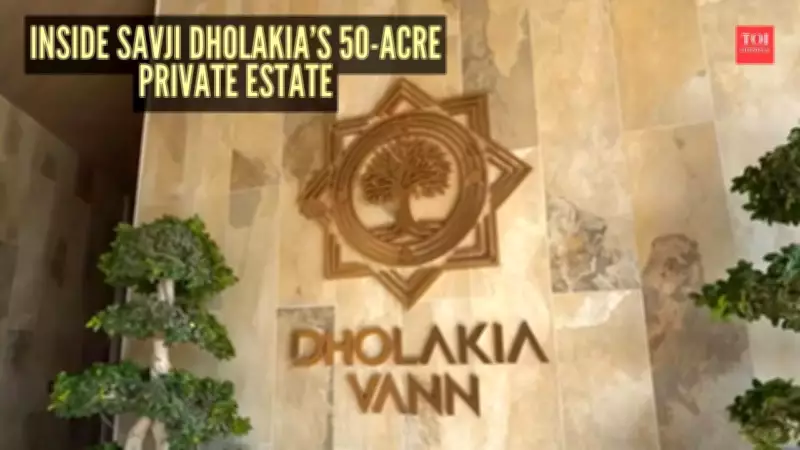
Savji Dholakia's 50-Acre Estate: A New Paradigm in Ultra-Luxury Indian Real Estate
In India's rapidly transforming ultra-luxury real estate sector, the private residence of Savji Dholakia stands as a monumental example of visionary planning and opulent living. Widely recognized as the "Diamond King of India" and the founder of Hari Krishna Exports, Dholakia's estate transcends mere wealth display, embodying a meticulously crafted philosophy of land utilization, community integration, and enduring legacy. This expansive property, detailed in a YouTube vlog by Curly Tales, offers a fascinating glimpse into the future of high-end residential development.
A 50-Acre Residential Ecosystem: Beyond the Single Mansion
Spanning nearly 50 acres in Surat, this private estate is often likened to a luxury resort, fundamentally redefining the scale of residential real estate in India. Rather than constructing a solitary mansion, the property is designed as a self-contained residential ecosystem, where extended family members reside in separate villas within a unified, gated landscape. This innovative layout masterfully balances privacy with proximity, creating a model akin to a boutique township developed exclusively for one family.
From a real estate planning perspective, this approach represents a premium land-use strategy. Eschewing vertical construction, the estate prioritizes open spaces, lush greenery, and resort-style amenities—features that have gained immense value in post-pandemic luxury markets focused on wellness and holistic living environments. The design philosophy draws more from hospitality architecture than traditional residential norms, transforming the property into a lifestyle destination rather than merely a dwelling place.

Resort-Style Amenities and Family-Centric Estate Planning
The estate's meticulously landscaped gardens, leisure zones, and shared recreational areas underscore a broader trend in luxury properties, where value is increasingly driven by experiential living, wellness integration, and nature immersion rather than mere construction costs or built-up area. This shift reflects the evolving priorities of India's ultra-high-net-worth individuals, who seek environments that enhance quality of life.
Housing multiple generations across independent villas also signals a significant move toward family-centric estate planning. By consolidating land ownership while decentralizing living units, such estates preserve individual privacy without fragmenting family geography. This model is gaining traction among affluent business families in India, who view large land parcels as both emotional assets and appreciating investments, offering flexibility for future development.
Land as Legacy: Symbolism and Investment Philosophy
The estate holds profound symbolic significance, mirroring Dholakia's journey from humble beginnings in Surat to building a global diamond empire. It serves as a tangible expression of business success and achieved stability, often becoming the ultimate repository of wealth through real estate. This aligns with the investment patterns of India's wealthy business families, who favor residential complexes with substantial land components for their dual emotional and financial value.
Such properties not only represent personal achievement but also offer strategic flexibility, allowing for adaptive use over time, ensuring the legacy endures across generations.
Setting a Benchmark in Indian Ultra-Luxury Real Estate
While India boasts numerous high-value private homes, Dholakia's 50-acre residential campus distinguishes itself through its unprecedented scale, thoughtful planning, and community-oriented design. It blurs the boundaries between a private residence and a curated residential township, hinting at how future luxury developments may evolve—prioritizing space, sustainability, and shared family infrastructure over sheer architectural extravagance.

In essence, this estate is more than a personal retreat; it symbolizes a progressive real estate model where land, lifestyle, and legacy converge. It provides a compelling insight into how India's wealthiest homeowners are redefining luxury living in the 21st century, setting new standards for opulence, functionality, and familial harmony.





