

West Bengal Unveils Ambitious Urban Regeneration Plan for 25 Cities
In a significant move toward urban transformation, West Bengal Finance Minister Chandrima Bhattacharya presented a comprehensive modernization blueprint for twenty-five cities across the state during Thursday's vote-on-account budget presentation. The ambitious plan targets urban centers spanning from the industrial hubs to cultural and tourist destinations, signaling a major push for planned development.
Comprehensive City Modernization Initiative
The extensive list of cities earmarked for regeneration includes Howrah, Diamond Harbour, Burdwan, Durgapur, Bolpur, Krishnagore, Barasat, Raiganj, Siliguri, Berhampore, Malda, Kalyani, Serampore, Andal, Bankura, Purulia, Digha, Midnapore, Jhargram, the NKDA area, Gangarampur, Jalpaiguri, Cooch Behar, Alipurduar and Darjeeling. This represents one of the most comprehensive urban development initiatives undertaken by the state government in recent years.
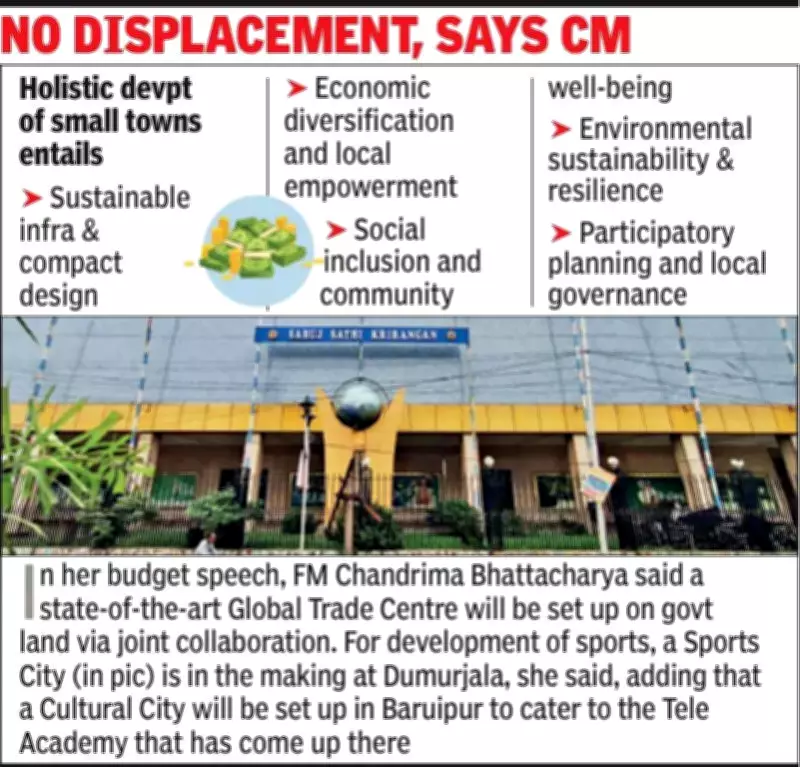
Following the budget announcement, Chief Minister Mamata Banerjee elaborated on the implementation strategy, revealing that consultants will be appointed to conduct thorough surveys of all towns included in the plan. A dedicated committee will also be formed to explore execution methods that minimize adverse effects on existing inhabitants, addressing potential displacement concerns proactively.

Real Estate and Business Community Response
The urban regeneration proposal has generated significant enthusiasm among real estate developers and business leaders across West Bengal. Industry experts believe that proper implementation could attract substantial investment for developing planned urban townships throughout the state, potentially transforming the economic landscape.
Rishi Jain, Managing Director of Jain Group, expressed strong optimism about the initiative, stating: "This is a massive adrenaline shot for the state's skyline. It is not patchwork development; it is a full-blown land-value explosion. Modernising several cities at once is a massive unlock for the realty market from Siliguri to Digha. It's a construction spree that puts the whole state on the development map."
Mahesh Agarwal, Managing Director of Purti Realty, highlighted the government's commitment to people-friendly development, noting: "The budget displayed the government's intent to upgrade Bengal's cities in a planned and people-friendly way. Investments in roads, flyovers, water supply, power and affordable housing will directly improve daily urban life."
Infrastructure and Planning Considerations
Urban planning experts have emphasized the importance of strategic implementation to avoid displacement of current residents. Former KMDA chief engineer Bhaskar Sengupta stressed the need for comprehensive planning, stating: "A proper land use masterplan is needed based on which cities and townships could be further modernised." Town planners have suggested that creating mini-satellite townships with proper master plans could effectively prevent displacement while enabling modernization.
Siddharth Pansari, Managing Director of Primarc Group, described the initiative as "a positive step that will usher in holistic development with community development, futuristic spaces and digital infrastructure." This sentiment was echoed by industry leaders who see the plan as addressing multiple development dimensions simultaneously.
Economic and Employment Implications
The modernization plan is expected to have far-reaching economic consequences beyond the real estate sector. Sanjay Budhia, Managing Director of Patton International, highlighted the multi-faceted benefits: "The move will make these towns business-friendly, environment-friendly and employment-friendly."
Abhijit Roy, Managing Director of Berger, elaborated on the economic decentralization potential: "This will boost economy by decentralising job creation through sector-specific clusters, while simultaneously driving real estate demand." The development of employment-driven cities across the state could help distribute economic opportunities more evenly throughout West Bengal.

Industry Collaboration and Infrastructure Challenges
Real estate industry representatives have expressed keen interest in partnering with the state government on this ambitious initiative. Credai Kolkata President Apurva Salarpuria noted: "This will further enhance attractiveness of the state as a business destination and drive demand for office and industrial spaces." Similarly, Credai West Bengal President Sushil Mohta confirmed the realty industry's willingness to collaborate in the modernization effort.
However, industry leaders have also identified infrastructure challenges that need addressing. Mohta specifically flagged critical issues in certain growth corridors, particularly around crossings such as Barasat and Amtala, where narrow roads and encroachments create significant bottlenecks that could hinder development progress.
Sahil Saharia, CEO of Bengal Srishti Infrastructure Development, emphasized the broader implications: "A boost to infra growth in the districts is what Bengal Srishti Infrastructure Development is also betting on." This reflects the widespread anticipation that improved infrastructure will catalyze broader economic development across the state's urban centers.
Sanjay Jain, Managing Director of Siddha, summarized the forward-looking nature of the initiative: "The government's vision to develop modern, business-friendly and employment-driven cities across the state is a timely and forward-looking step." The comprehensive approach to urban regeneration appears poised to reshape West Bengal's urban landscape while addressing both economic and social development objectives.





