

World's Thinnest Homes: Architectural Marvels Defying Space Constraints
The architectural world continually evolves with structures that challenge conventional design principles. While skyscrapers dominate headlines for their height, another category of buildings captures imagination through extreme narrowness. These residential structures, scattered across continents from Europe to Asia, represent remarkable feats of engineering and creativity. They answer fundamental questions about minimal living spaces and demonstrate how architects maximize functionality within severe spatial limitations.
Why Build So Thin?
Several factors drive the creation of these extraordinarily narrow buildings:
- Urban Density Pressures: In crowded cities where land is scarce and expensive, architects must innovate to create viable living spaces within tight footprints.
- Historical Land Parceling: Unique property divisions from earlier eras sometimes leave irregular plots that inspire unconventional architectural solutions.
- Creative Engineering Challenges: Some architects deliberately pursue extreme designs to test structural possibilities and aesthetic boundaries.
These buildings have gained global recognition not just for their dimensions but for how they transform challenging constraints into livable, functional homes. Here are five of the world's most astonishing narrow residential structures.

Keret House — Warsaw, Poland (0.92–1.52 meters wide)
Widely recognized as the world's narrowest residential building, Keret House in central Warsaw measures a mere 92 centimeters (3.0 feet) at its slimmest point. Designed by Polish architect Jakub Szczęsny and completed in 2012, this architectural landmark squeezes between two existing structures. Despite its minuscule 14-square-meter (151-square-foot) floor area, the building contains a sleeping area, compact kitchenette, and bathroom. Commissioned by Israeli writer Etgar Keret, the structure exists in a legal gray area—it doesn't meet Warsaw's minimum building code dimensions and is officially classified as an art installation rather than a conventional residence.
Sankaku Biru (Triangle Building) — Tokyo, Japan (Less than 2 feet at narrowest)
Tokyo's Triangle Building, located in the Nerima ward, represents another extraordinary architectural achievement. At its narrowest point, the building measures under 2 feet wide. What makes this structure particularly remarkable is its vertical arrangement of multiple full-floor apartment units across five stories. Each compact unit includes essential amenities: a kitchenette, bathroom, and living space. This design demonstrates how Japanese architects creatively address urban space limitations while maintaining residential functionality.
La Estrecha — Valencia, Spain (1.07-meter façade)
Often called "the narrow one" in Europe, La Estrecha in Valencia features a façade measuring just 1.07 meters (42 inches) wide. Originally built as an independent family home, this slender structure stands elegantly on Plaza Lope de Vega. Its architectural beauty lies in how it maintains proportion and aesthetic appeal despite extreme dimensional constraints, serving as a testament to Spanish architectural ingenuity.
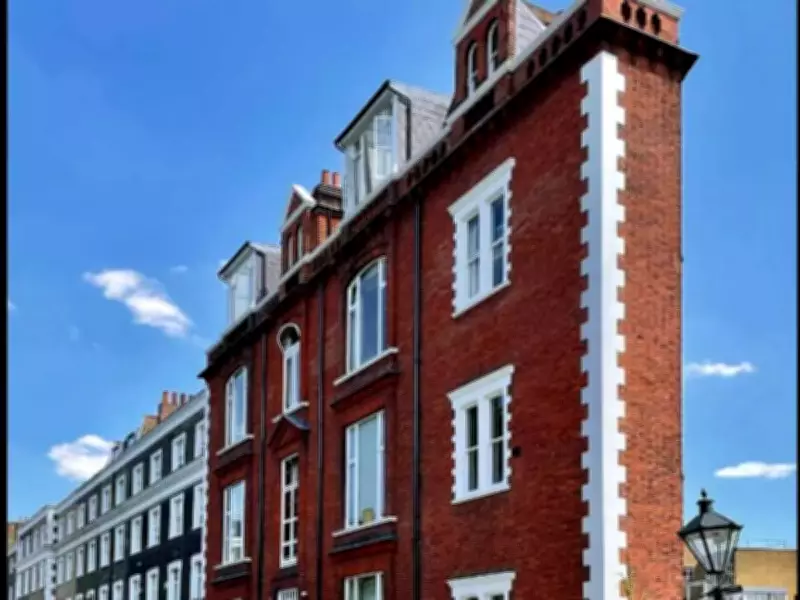
Thin House — London, England (1.8 meters wide)
London's Thin House, also known as Five Thurloe Square, completes the European representation of narrow residential architecture. Constructed in the late 19th century, this building measures approximately 6 feet (1.8 meters) at its narrowest point. Originally designed as an artist's studio, the structure has gained contemporary fame for its distinctive proportions and historical significance within London's architectural landscape.
Skinny House — Mamaroneck, New York, USA (3 meters wide)
The Skinny House in Mamaroneck, New York, represents American contribution to narrow residential architecture. Built in 1932 and measuring roughly 10 feet (3 meters) wide, this iconic structure carries historical narratives within its walls. Its significance has been formally recognized through inclusion on the National Register of Historic Places, where it's documented as one of America's narrowest residential buildings.

These five structures collectively demonstrate how architectural innovation transcends dimensional limitations. They prove that even the narrowest spaces can be transformed into functional, aesthetically pleasing homes through creative design and engineering. As urban populations continue to grow and space becomes increasingly precious, such architectural solutions may inspire future developments that maximize livability within minimal footprints.





