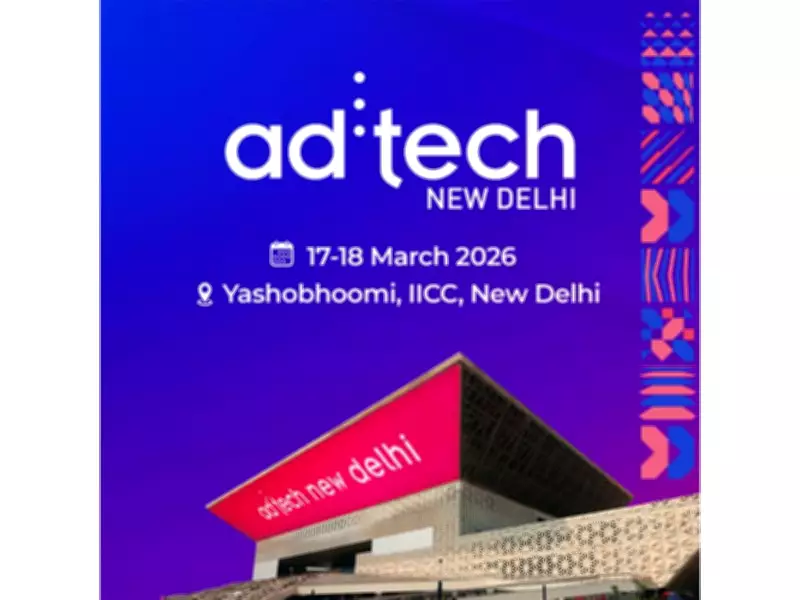
ad:tech New Delhi 2026 Opens at "The Bold Front," Exploring Marketing's AI-Powered Future
The 15th edition of ad:tech New Delhi commenced today at Yashobhoomi, gathering top leaders from marketing, media, advertising, and technology sectors. This premier event is set to delve into how artificial intelligence, evolving data ecosystems, and shifting consumer behaviors are fundamentally transforming the marketing landscape.
A Strategic Pivot in Marketing
Under the theme "The Bold Front," the conference aims to foster discussions on the rapid convergence of human creativity and intelligent technology. This synergy is redefining how brands establish connections with their audiences in an increasingly digital world.
Jaswant Singh, Country Managing Director of ad:tech India, highlighted the strategic shift occurring across the industry. "Consumer expectations are evolving at an unprecedented pace, demanding brands to respond with intelligence and agility," he stated. "At ad:tech New Delhi 2026, we are exploring how AI, data, and programmatic media can enable organizations to gain deeper audience insights and deliver more relevant experiences. Success today hinges not just on reach, but on the trust and value a brand cultivates at every interaction. Companies are learning to blend creativity with data-driven insights to enhance engagement. While creativity and human judgment remain indispensable, technology is amplifying their impact, paving the way for future growth and resilience."

Innovation and Engagement on Display
Over the past 15 years, ad:tech New Delhi has solidified its reputation as a key platform for marketing innovation in India. It facilitates idea exchange, technological exploration, and navigation of the digital ecosystem among industry pioneers.
The 2026 edition buzzed with energy in the expo hall, featuring over 70 companies showcasing advancements in:
- Artificial Intelligence
- Programmatic Advertising
- Martech Solutions
- Data Intelligence
- Digital Media
Attendees participated in partner sessions led by giants like Google, Amazon, Magnite, and Click2Commission, gaining practical insights into platform strategies, publisher success, and emerging trends. Interactive activations, including Jenga, Tetris, and table tennis, added a fun and engaging layer to the experience.
The event's scale, with participation from global tech firms, agencies, publishers, and marketing leaders, underscores the dynamism and rapid growth of India's marketing technology ecosystem.
Exploring "The Bold Front" Across Multiple Stages
Day 1 of the conference unfolded across three stages—VISION, LIVE, and DEEP DIVE—focusing on the evolution of marketing leadership as AI transitions from experimentation to deep integration within marketing frameworks.
Jamie Jouning, Global Head of Advertising at The Economist, delivered the opening keynote, emphasizing the need for smarter systems in an AI-driven environment. "We operate in a world of constant uncertainty, where AI adoption varies widely. Success isn't about speed alone, but about designing intelligent systems and making sharper, value-driven choices," he remarked.
Sessions throughout the day covered a range of topics:
- AI-powered programmatic advertising and media buying
- Connected TV and search innovations
- Generative AI in marketing workflows
- The evolving influence of creators and youth culture
Speakers consistently noted that AI is not replacing creativity but expanding opportunities for experimentation and innovation. Panels also addressed critical issues like ethical AI, transparency, and building consumer trust in automated systems.
Creativity and Technology in Harmony
A central theme was the role of creativity in the age of intelligent technology. David Shing, known as the Digital Prophet, elaborated on this dynamic: "Design has always evolved with technology. From paper-based creativity to desktop publishing, each shift has redefined creation. Today, AI represents the next inflection point, where technology seems to anticipate intent. As we express ideas, systems can translate them into real-time outputs, blurring the lines between imagination and execution."

Discussions explored hybrid models where human expertise collaborates with AI-driven systems, alongside trends like connected TV and quick commerce. Speakers stressed that effective marketing in 2026 requires balancing speed and scale with intelligence, simplification, and data-driven decisions.
Prasad Sanagavarapu from Invidi summarized insights from media sessions: "Television is far from stagnant; it's evolving through a hybrid model that combines linear scale with digital precision. This synergy is redefining media investments for marketers today."
Afternoon sessions delved into AI-native operating models, content as a core currency, commerce acceleration, and intelligent search, illustrating how leaders are translating technological advances into tangible business growth.
Consumer Behavior and Trust in the AI Era
Paul D'Arcy from Moloco highlighted the importance of consumer relationships in an AI-disrupted landscape: "Technology is accelerating rapidly, and the 2026 AI Disruption Index shows that transactional value propositions are vulnerable. The only defense against AI disintermediation is strong customer relationships. In times of high disruption, trust is the currency that retains its value."
Key Takeaways and Future Directions
By the end of Day 1, a clear consensus emerged: AI is no longer just enhancing marketing tools—it is reshaping the industry's entire operating system. From programmatic infrastructure and AI-powered creativity to connected TV, quick commerce, and intelligent search, marketers at ad:tech New Delhi 2026 are navigating a new frontier where human insight and machine intelligence converge.
The day concluded with the ad:tech Honours Awards, recognizing organizations and innovators pushing the boundaries of marketing technology. With another day of discussions and networking ahead, the conference continues to unite the industry in exploring the future of digital marketing.
About ad:tech
ad:tech New Delhi is organized by the Comexposium Group, a global leader in event management. The group hosts over 150 B2C and B2B events across sectors like IT, security, digital, and high-tech, operating in more than 23 economic growth zones worldwide and engaging over 3.5 million visitors and 48,000 exhibitors annually.