

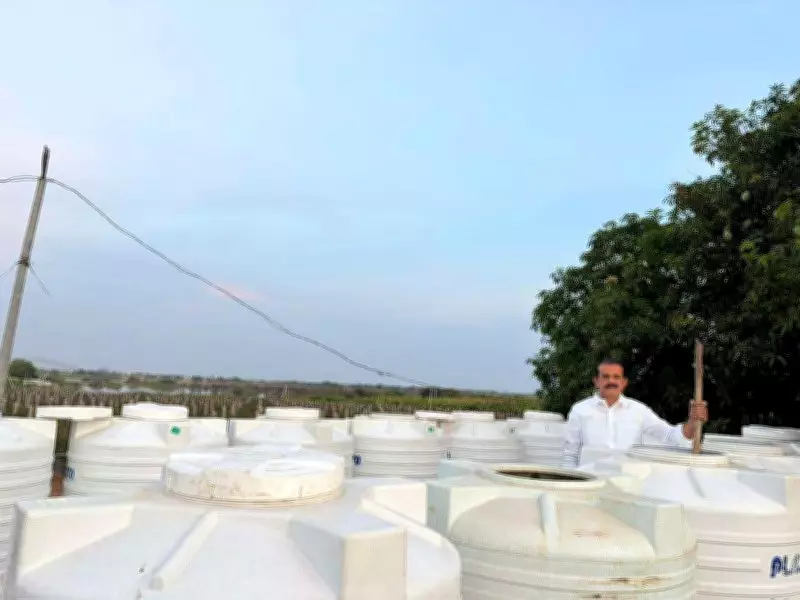
In a remarkable turn for Indian agriculture, Mekala Shiva Shankar Reddy, a farmer from Anantapur in Andhra Pradesh, has emerged as a pioneer in high-yield, chemical-free farming. His innovative techniques are redefining traditional farming practices and offering a sustainable path forward for the nation's agricultural sector.
The Genesis of a Farming Revolution
Reddy's journey began with a deep concern over the adverse effects of chemical fertilizers and pesticides on soil health, crop quality, and farmer livelihoods. Determined to find a better way, he experimented with natural farming methods, eventually developing a unique system that boosts yields without synthetic inputs.
Key Techniques Employed
- Natural Soil Enrichment: Use of compost, green manure, and bio-fertilizers to enhance soil fertility naturally.
- Integrated Pest Management: Employing beneficial insects, neem-based sprays, and crop rotation to control pests without chemicals.
- Water Conservation: Drip irrigation and mulching to optimize water use, critical in drought-prone Anantapur.
- Diverse Cropping: Intercropping and multi-tier cropping to maximize land use and reduce risk.
Remarkable Results
Reddy's farm now produces yields comparable to, and often exceeding, those of conventional farms. His crops—including groundnut, tomato, and paddy—are healthier, have longer shelf lives, and command premium prices in markets. Moreover, his input costs are significantly lower, increasing his profit margins.

Impact on the Farming Community
Reddy's success has inspired hundreds of farmers in Anantapur and beyond to adopt chemical-free methods. He regularly conducts training sessions and farm visits, sharing his knowledge freely. Many farmers report improved soil health, reduced expenses, and better incomes after implementing his techniques.
Challenges and Future Prospects
Despite the successes, Reddy acknowledges challenges such as initial transition period, lack of institutional support, and market access for organic produce. He advocates for stronger government policies promoting natural farming, including subsidies for bio-inputs and better certification processes.
Looking ahead, Reddy aims to establish a model farm that serves as a learning center for farmers across India. He also plans to collaborate with agricultural universities to scientifically validate his methods and scale them up.
Conclusion
Mekala Shiva Shankar Reddy's story is a testament to the power of innovation and determination. By proving that high yields and chemical-free farming can go hand in hand, he offers a beacon of hope for sustainable agriculture in India. His work not only benefits individual farmers but also contributes to environmental conservation and food safety for the nation.






