

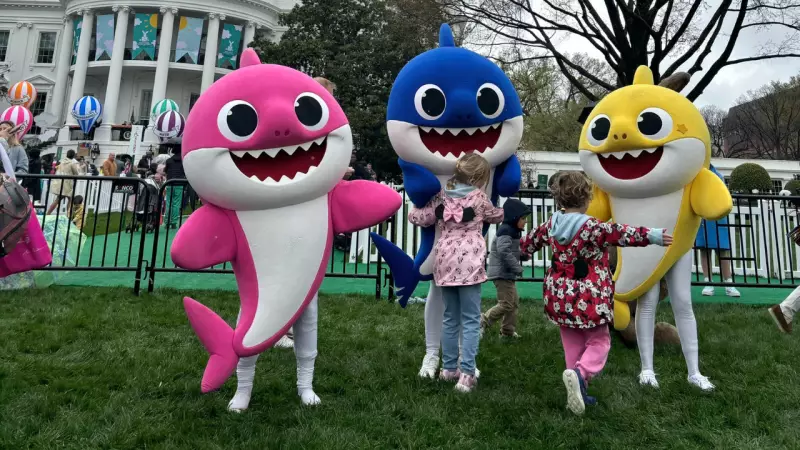
From Humble Beginnings to Stock Market Sensation
Can a simple children's melody truly evolve into a business empire valued at over $400 million? This incredible transformation became reality for South Korea's Pinkfong, which began its journey in a cramped Seoul office with just three employees who weren't even certain about receiving regular salaries.
The company's co-founder, Kim Min-seok, recently reflected on those challenging early days with humor, noting their workspace was remarkably small. "The office was tiny – even smaller than this," he told BBC reporters, adding that during those initial phases, "we didn't even expect a salary at the time."
More than ten years later, the same company achieved a spectacular stock market debut on South Korea's exchange. On its first trading day, Pinkfong's shares surged by over 9%, catapulting the company's market valuation beyond the $400 million mark (£304 million). This represents an extraordinary ascent for an enterprise that originally focused on creating digital entertainment for children aged twelve and younger.

The Baby Shark Phenomenon That Changed Everything
The turning point arrived unexpectedly in June 2016 when Kim approved what seemed like routine content: a 90-second video featuring a children's song. This video, now globally recognized as Baby Shark, would eventually amass more than 16 billion views on YouTube, earning the distinction of being the platform's most-watched video in history.
"We didn't expect it to stand out from our other content," Kim admitted during the BBC interview at Pinkfong's headquarters. "But looking back, it became a major turning point that set the stage for our global journey."
Interestingly, while Pinkfong created the viral version that captivated the world, the melody itself has much deeper roots. Music historians believe the tune originated in American summer camps during the 1970s. Media analyst Kevin Chew characterizes the modern recording's repetitive "Baby shark, doo, doo, doo, doo, doo, doo" as particularly "attractive for children, though possibly annoying for adults."
Kim acknowledges the composition's peculiar power, comparing it to K-pop music. "It's very fast-paced, rhythmical and it's addictive," he explained, noting that the melody's chanting quality makes it easily memorable for young children.
The Viral Domino Effect and Business Expansion
The Baby Shark video didn't achieve viral status immediately. Its remarkable ascent began when dance routines from the song started appearing at children's events across Southeast Asia. As videos featuring both children and adults performing the dance circulated online, viewership numbers exploded exponentially.
Kim recalls the office atmosphere transforming overnight into what he describes as "festival-like" excitement as team members watched view counts skyrocket in real-time. By November 2020, Baby Shark officially became YouTube's most-viewed video, and for several years, it generated approximately half of Pinkfong's total revenue.
This financial success enabled the company to diversify its character portfolio, expand merchandise offerings, and significantly grow its content catalog beyond the single viral hit.
Navigating Challenges and Future Ambitions
Success brought its share of obstacles, including a 2019 plagiarism lawsuit from an American composer. Pinkfong maintained that their version derived from a public-domain folk song, and South Korea's Supreme Court ultimately dismissed the claim. Kim described the court's decision as uplifting, though interestingly, Pinkfong had already submitted its stock listing application before the verdict arrived.
Today, Pinkfong has dramatically outgrown its three-person origins, now employing approximately 340 people with international offices in Tokyo, Shanghai, and Los Angeles. The company underwent rebranding in 2022, becoming The Pinkfong Company, named after the cheerful pink fox character that appeared in its earliest content.

The organization now confronts a critical question from investors: Can it avoid being perceived as a one-hit wonder? Korea University's Min Jung Kim points out that the company benefits from targeting toddlers, who typically watch content repeatedly. However, she emphasizes that Pinkfong must demonstrate its other characters can achieve similar reach as Baby Shark.
Currently, Baby Shark accounts for roughly 25% of Pinkfong's revenue, while another franchise called Bebefinn contributes approximately 40%. Parent reactions remain mixed, with some appreciating educational elements while others find content over-stimulating for children.
Through its stock market debut, Pinkfong raised nearly $52 million that Kim says will fund character and film expansion. The company aims to become a "tech-driven" creator utilizing viewing data to shape future projects.
Kim remains confident that Pinkfong's future won't be constrained by its monumental hit, noting the company has already accomplished "what many creators have always dreamed of." The next challenge involves proving that lightning can indeed strike twice in the competitive world of children's entertainment.





