

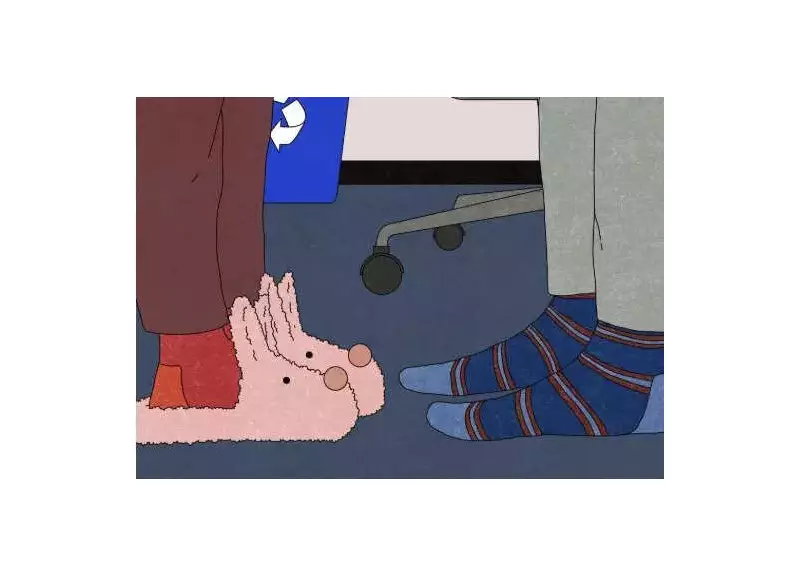
Imagine walking into a bustling tech startup office and being asked to remove your shoes at the door. This scene, reminiscent of entering an Indian home or a house party, is becoming a new reality in innovative workspaces across the United States. A growing number of startups, particularly in the technology and artificial intelligence sectors, are implementing formal 'no shoes' policies, trading formal footwear for socks, slides, and slippers.
The Rise of the Shoes-Off Startup
The trend is gaining noticeable traction. Ben Lang, an employee at the shoes-off startup Cursor, even created a dedicated website, noshoes.fun, to track the movement. His site lists over a dozen companies that have embraced this approach. The list includes several prominent artificial intelligence firms, such as Replo and Composite, highlighting how the trend is particularly buzzy in cutting-edge tech circles.
"I've only worked at startups that have a no-shoes in office policy," Lang stated on social media in August. For these companies, the policy is more than a quirky rule; it's a deliberate part of their culture. Some offices are laid with soft rugs to enhance the barefoot experience, while others provide complimentary slippers to employees and visitors, ensuring comfort and hygiene.

Creating a 'Second Home' for Employees
For startup founders, the policy is a strategic move to foster a unique and comfortable work environment. Sneha Sivakumar, co-founder and CEO of Spur—a company that uses AI to check websites for bugs—explained the ethos behind their policy. At their Manhattan office, workers receive branded slides upon arrival, and guests are requested to follow suit.
Sivakumar emphasized that the no-shoes rule actively contributes to making the office feel like a "second home" for her team of 10 employees. This sense of domestic comfort and informality is seen as a key benefit in attracting and retaining talent in a competitive market, where workplace culture is a major differentiator.
The 'Pajama Economy' in Action
This cultural shift in professional settings has not gone unnoticed by experts. Nick Bloom, a Stanford economist renowned for studying work culture, provided insightful context. He identified the shoes-off trend as partly a manifestation of "the pajama economy in action."
Bloom's analysis points to the lasting impact of the pandemic-era work-from-home model. As employees who grew accustomed to the comfort and habits of their home offices return to shared workspaces, they are naturally bringing those relaxed norms with them. The formal boundary between home and office life is blurring, and the adoption of a no-shoes policy is a tangible symbol of this broader, post-pandemic evolution in workplace expectations.
The movement signifies a deeper change in how tech companies view productivity and employee well-being, prioritizing comfort and a homely atmosphere alongside innovation and output.






