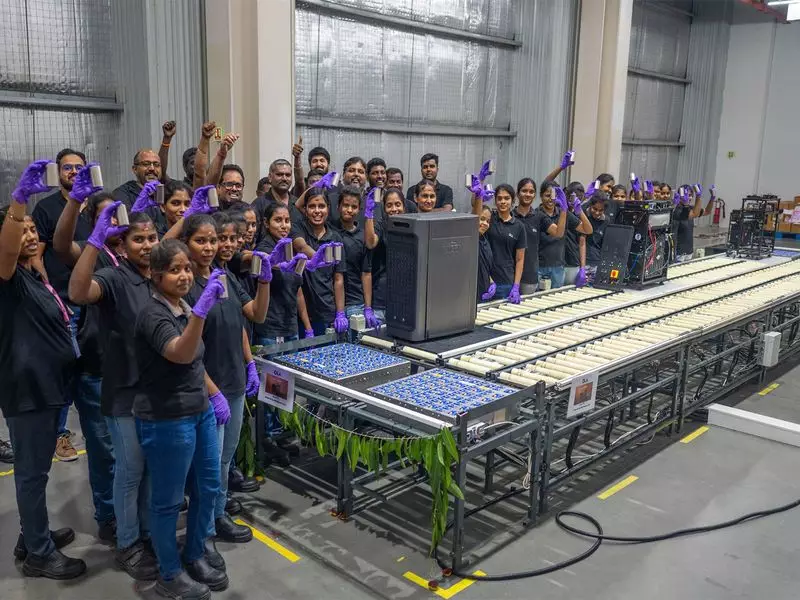
Ola Electric has achieved a significant milestone in India's electric vehicle (EV) journey. The company has officially rolled out the first batch of its new 'Shakti' electric scooter from its state-of-the-art Gigafactory in Krishnagiri, Tamil Nadu. This launch is particularly notable as these scooters are powered by the company's indigenously developed and manufactured 4680 'Bharat' battery cells.
A New Chapter in Indigenous EV Manufacturing
The rollout of the Shakti scooter signifies a major step towards self-reliance in the Indian EV ecosystem. For years, a critical component of electric vehicles—the battery cell—has largely been imported. Ola Electric's move to design, develop, and produce its own cylindrical 4680 format cells at its Gigafactory aims to change that narrative. The company claims this is a first for an Indian automotive company, marking a shift from assembly to deep manufacturing.
The Gigafactory, which is part of Ola's larger Futurefactory campus, is described as one of the most advanced cell manufacturing facilities in the world. The commencement of production for the Bharat Cell was announced in December 2023, and its integration into a commercial product like the Shakti scooter demonstrates the company's vertical integration strategy.

Powering the Future: The 4680 Bharat Cell Advantage
The 4680 cell is a larger format battery cell that promises higher energy density, improved range, and faster charging compared to traditional smaller cells. By manufacturing these in-house, Ola Electric aims to gain greater control over its supply chain, reduce costs in the long run, and tailor the battery technology specifically for Indian riding conditions and consumer needs.
The company has stated that the initial phase of the Gigafactory has a capacity of 5 GWh. However, the ambition is to scale this up massively. Once fully operational at its planned capacity, the facility is expected to produce enough cells to power 10 million electric vehicles annually. This scale is crucial not only for Ola's own product lineup but also for potentially supplying other players in the market, positioning India as a future hub for EV battery production.
What This Means for India's EV Ambitions
The successful integration of indigenous cells into a market-ready product is a strong validation of the Indian government's Production Linked Incentive (PLI) scheme for Advanced Chemistry Cell (ACC) battery storage. It underscores a growing capability within the country to master complex, high-technology manufacturing processes.
For consumers, the long-term promise is of more affordable and efficient electric two-wheelers. Local cell production can help buffer against global supply chain fluctuations and currency risks, potentially leading to better pricing and availability. The rollout of the Shakti scooter is the first tangible consumer-facing outcome of this large-scale investment in core battery technology.
Ola Electric's move sets a new benchmark in the industry and is likely to accelerate similar investments and R&D efforts from other domestic and international players looking to establish a foothold in the world's largest two-wheeler market. The journey from cell to vehicle, all under one roof in Tamil Nadu, marks a pivotal moment in India's quest to become a global EV powerhouse.