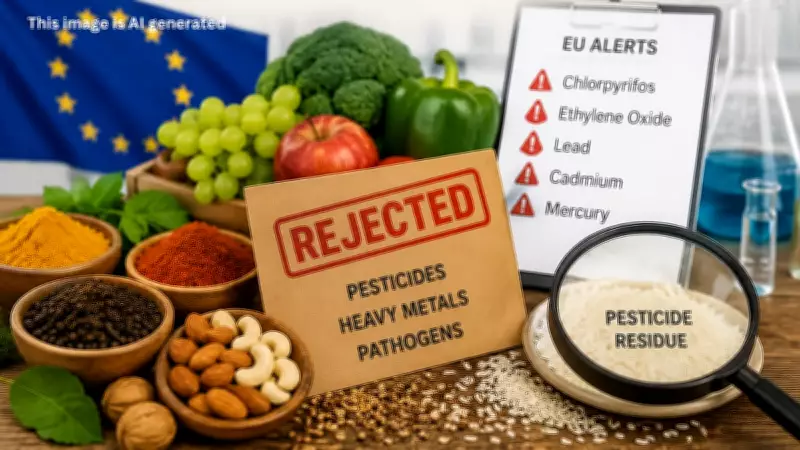
The European Union has raised concerns over 365 Indian products, citing the presence of pesticides and heavy metals exceeding permissible limits. The notification includes a wide range of items such as herbs and spices, fruits and vegetables, nuts, nut products and seeds, cereals and bakery products, and dietetic foods. These products were flagged under the EU's Rapid Alert System for Food and Feed (RASFF), which monitors food safety across member states.
Products Under Scrutiny
According to the data, herbs and spices accounted for a significant portion of the flagged items, followed by fruits and vegetables. Nuts, nut products, and seeds also featured prominently, along with cereals and bakery goods. Dietetic foods, including those intended for special dietary requirements, were also on the list. The notifications highlight the presence of pesticide residues such as chlorpyrifos, ethion, and acephate, as well as heavy metals like lead and cadmium.
Implications for Indian Exports
This development poses a challenge for Indian exporters, as the EU is a major market for agricultural and food products. The frequent alerts could lead to stricter inspections and potential trade barriers. Indian authorities are expected to investigate the root causes and implement corrective measures to ensure compliance with EU standards. The Ministry of Commerce and the Food Safety and Standards Authority of India (FSSAI) are likely to engage with stakeholders to address these concerns.

Industry Response
Exporters have expressed the need for better testing facilities and awareness programs for farmers regarding pesticide usage. Many are calling for a shift towards organic farming and integrated pest management practices to reduce chemical residues. The Spices Board and Agricultural and Processed Food Products Export Development Authority (APEDA) are working on traceability and certification systems to enhance quality control.
Looking Ahead
India's agricultural exports to the EU were valued at over $5 billion in the previous fiscal year. To maintain this trade, it is crucial to align with the EU's stringent food safety regulations. The government has initiated discussions with the European Commission to resolve the issue, while also strengthening domestic monitoring mechanisms. The long-term solution lies in adopting sustainable agricultural practices and improving supply chain transparency.