

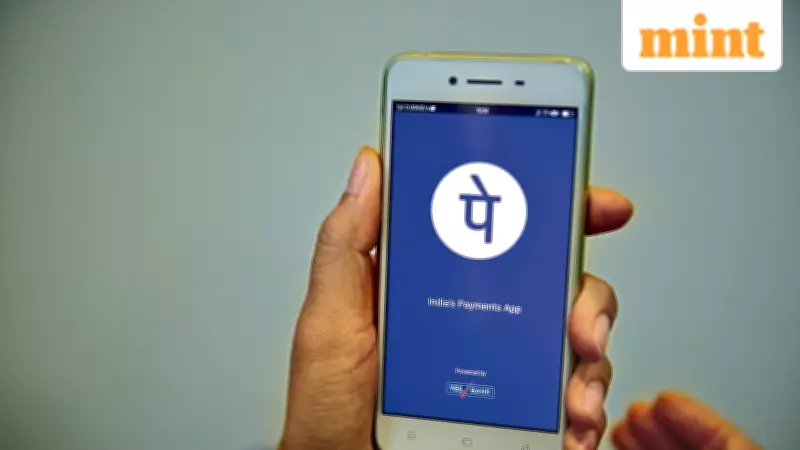
In a significant development for India's financial technology sector, PhonePe has taken a major step toward its initial public offering (IPO) by submitting its Updated Draft Red Herring Prospectus (UDRHP) to regulatory authorities. This move comes after receiving the crucial green light from the Securities and Exchange Board of India (SEBI), marking a pivotal moment in the company's journey toward becoming a publicly traded entity.
PhonePe's IPO Timeline and Structure
The digital payments giant had initially filed confidential IPO documents back in September 2024, setting the stage for what promises to be one of the most anticipated market debuts in recent years. With the updated prospectus now submitted, industry observers expect PhonePe to enter the public markets in the near future, potentially creating substantial value for investors and stakeholders alike.
Offer Details and Key Stakeholders
According to the comprehensive details outlined in the UDRHP, the public offering will feature an offer for sale comprising up to 50,660,446 equity shares. This substantial offering is being led by Walmart, PhonePe's primary stakeholder, alongside other prominent investors including Tiger Global and Microsoft. The participation of these global investment powerhouses underscores the confidence in PhonePe's business model and growth trajectory.

Market Dominance and Financial Performance
PhonePe continues to maintain its commanding position in India's Unified Payments Interface (UPI) ecosystem, capturing an impressive market share exceeding 48% based on transaction value. The latest data from the National Payments Corporation of India (NPCI) reveals that the platform processed a staggering 9.8 billion transactions in December alone, demonstrating its widespread adoption and operational scale.
The company has demonstrated consistent revenue growth over multiple years, benefiting from diversified income streams while continuously enhancing its financial performance metrics. This sustained expansion has been instrumental in attracting and retaining a remarkable roster of investors beyond the primary stakeholders.
Additional Investor Portfolio
PhonePe's investor base reads like a who's who of global finance, featuring prominent names such as General Atlantic, Ribbit Capital, TVS Capital, and the Qatar Investment Authority. This diverse and sophisticated investor pool reflects the company's strong fundamentals and growth potential in the competitive digital payments landscape.
Stakeholder Participation in the IPO
As part of the IPO process, Walmart, as the largest shareholder, plans to divest approximately 9% of its stake in PhonePe. Meanwhile, Tiger Global intends to reduce its holding by 0.2%, and Microsoft plans to offload 0.7% of its stake. These strategic divestments represent calculated moves by major investors while maintaining significant positions in the company's future growth story.
Comprehensive Risk Assessment
The Updated Draft Red-Herring Prospectus provides transparent disclosure of various risks that potential investors should consider carefully. These encompass multiple dimensions of the company's operations and market environment.
Financial Performance Challenges
PhonePe has documented a history of net losses and negative cash flows from operating activities. The company reported restated losses of ₹(14,444.22) million, ₹(12,032.05) million, ₹(17,274.10) million, ₹(19,961.71) million, and ₹(27,960.69) million for specific six-month periods ending September 30 in 2025 and 2024, along with fiscal years 2025, 2024, and 2023 respectively. Additionally, negative net cash flows from operating activities amounted to ₹(1,172.71) million, ₹(6,291.52) million, and ₹(7,682.50) million for corresponding periods.
Revenue Concentration Concerns
The Consumer Payments segment has contributed significantly to operational revenue, accounting for 56.14%, 68.84%, 63.34%, 71.56%, and 82.91% during specific reporting periods. Any disruption in this critical segment could adversely affect the company's business operations, financial position, operational results, and cash flow stability.

Cost Structure Vulnerabilities
Should payment processing fees imposed by financial institutions increase substantially, and if PhonePe cannot effectively pass these additional costs to merchants or consumers, the company's profit margins and overall profitability could face considerable pressure.
Partnership and Network Dependencies
The company's success heavily depends on maintaining and expanding its network of users, merchants, lending partners, insurers, and other business collaborators. Failure to sustain these crucial relationships could significantly impact business performance, financial health, operational results, cash flow, and future prospects.
Cybersecurity and Operational Risks
Like all digital platforms, PhonePe faces persistent cybersecurity threats that could potentially disrupt operations and incur additional expenses. Such incidents might negatively impact the company's reputation, brand equity, business continuity, financial stability, operational efficiency, and cash flow management.
Talent Management Challenges
The organization's continued success relies heavily on the ongoing contributions of its workforce, particularly Key Managerial Personnel and Senior Management. The ability to attract, retain, and motivate talented employees while maintaining corporate culture during rapid growth phases represents a critical success factor for sustained performance.
Legal and Regulatory Considerations
PhonePe and its subsidiaries are involved in ongoing legal proceedings that could potentially result in unfavorable rulings. Such outcomes might create liabilities for damages or penalties, potentially harming business operations, financial status, operational outcomes, cash flow, and future prospects.
Innovation and Product Development
The company's growth trajectory depends significantly on its capacity to innovate and develop new products and services. Inability to accurately forecast demand for these new offerings could substantially impact business performance, financial health, operational results, cash flow, and future opportunities in the competitive fintech landscape.
Brand Reputation and Trust Factors
PhonePe's business success is intrinsically linked to the strength of its brand and the trust users place in its platform. Any inability to maintain, protect, or enhance this brand strength and user confidence could negatively affect business performance and market position.
Compliance and Regulatory Adherence
Non-compliance by PhonePe, its merchants, lending institutions, insurers, or other business associates with relevant anti-corruption, anti-money laundering, counter-terrorist financing, and economic sanctions regulations could result in penalties and potentially damage the company's reputation in domestic and international markets.





