

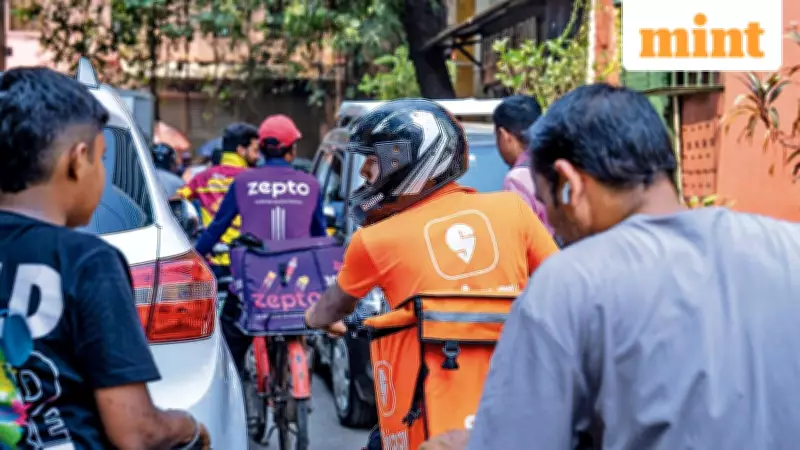
Quick Commerce's Strategic Shift: From Impulse Buys to Planned Purchases
India's quick commerce sector, once built on the foundation of impulse purchases and urgent top-ups, is undergoing a significant transformation. Platforms like Swiggy Instamart and Zepto are aggressively pushing shoppers toward bulk buying and planned orders in a bid to lift average order values (AOV) and improve unit economics. This strategic pivot comes as intense competition and margin pressures force players to rethink their fundamental business models.
The Bulk Buying Push: Early Gains and Underlying Costs
The numbers initially appear promising. Swiggy Instamart's Maxxsaver feature, launched in April last year, has driven its AOV up to ₹746 in the December quarter from ₹534 a year earlier. Similarly, Zepto's SuperSaver, tested in Bengaluru since September 2024, aims to boost order values through discounts on purchases above ₹1,000. These initiatives target moving consumers from spontaneous buys to planned weekly or monthly shopping, offering savings on orders across thousands of products, including non-grocery items like apparel and kitchenware.
However, analysts caution that these headline gains come with substantial costs. Much of the growth in order values is being fueled by deeper discounts, free-delivery thresholds, and various incentives that directly weigh on profitability. Larger baskets also increase packing complexity and last-mile delivery expenses, raising critical questions about whether higher AOVs genuinely translate into healthier financial outcomes for these platforms.

Analyst Skepticism: The Profitability Conundrum
Despite early consumer uptake, the economics of bulk buying in quick commerce remain unproven according to industry experts. Satish Meena, analyst at Datum Intelligence, notes that while larger baskets improve order values, the challenge lies in how these behaviors are induced. "Unless subsidies taper meaningfully, higher AOVs don't automatically translate into better margins," Meena emphasizes, highlighting the fundamental tension between growth and profitability.
Recent financial data underscores these concerns. An HSBC report from March 2025 suggests that value-oriented programs could squeeze Ebitda margins from 6% to 3% in the near term, indicating that discount-driven features offer only limited sustainable growth. Swiggy Instamart's own numbers reveal the strain - its Ebitda margin improved only marginally to negative 2.5% in the December quarter from negative 2.6% in the previous quarter, prompting the company to review its discounting strategy.
The Road Ahead: Balancing Growth with Sustainability
Looking forward, bulk-buying features will likely remain integral to quick commerce strategies, but with more measured approaches to investments and discounting. Swiggy Instamart CEO Amitesh Jha has signaled a shift away from deep discounting for higher AOVs, stating the firm will "not throw good money at bad growth." This reflects growing industry recognition that sustainable profitability requires more than just inflated order values.
Meena points to Blinkit's success as a potential model, noting that the market leader has grown through operational efficiencies rather than deep discounting on bulk purchases. This approach represents what analysts see as a classic playbook for sustainable growth in the sector. Additionally, platforms are experimenting with features like slotted deliveries and order combining to smooth demand patterns and reduce per-order costs, though these innovations must balance with quick commerce's core promise of rapid delivery.
As competition intensifies, the ultimate test for India's quick commerce players will be whether they can successfully transition consumers to planned purchases without eroding already thin margins. The sector's future may depend on finding the delicate equilibrium between customer incentives and financial sustainability in one of the world's most dynamic e-commerce markets.






