

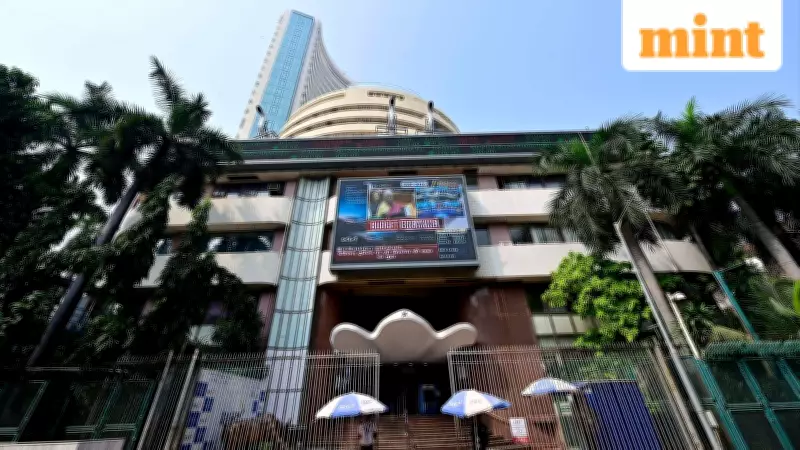
Budget Day Market Carnage: BSE 500 Records Worst Sell-Off in Five Years
The Indian stock market witnessed a historic bloodbath during Sunday's budget session, with market breadth hitting at least a five-year low. A staggering four out of every five stocks in the BSE 500 Index retreated, marking the most widespread sell-off on a budget day since 2021. This analysis, based on the common sample of stocks currently belonging to the BSE 500 Index and excluding interim budgets, reveals a systemic decline that erased gains across every sector except pharmaceuticals and textiles.
Unprecedented Decline Intensity
While the Budgets of 2023 and 2024 also saw significant declines—with 62% and 68% of stocks falling respectively—today's market carnage was far more systemic and intense. The severity was particularly stark: nearly 1% of stocks plunged over 10%, a level of devastation mirrored only in 2023. This represents a dramatic shift from previous budget sessions where market performance was more balanced.
Major Casualties and Contributing Factors
Leading the decline was Hindustan Copper Ltd, which tumbled nearly 13%, followed closely by Multi Commodity Exchange (MCX), which plummeted 12%. The sell-off was fueled by a perfect storm of negative factors: a massive crash in precious metals combined with a sharp hike in the securities transaction tax (STT) on derivatives. The STT increase saw futures rise from 0.02% to 0.05% and options from 0.1% to 0.15%, creating immediate investor anxiety.

Other major casualties included IIFL Finance (down 10%) and Bharat Dynamics (down 9.8%). Metal stocks came under particularly sharp selling pressure after silver futures prices in global markets tumbled by more than 30% in a single session on Friday, creating ripple effects throughout the Indian market.
Market Breadth Analysis
The market breadth statistics reveal the full extent of the carnage:
- Approximately 9% of stocks dropped between 5% and 10%
- Around 70% of constituents fell up to 5%
- Only about 20% of stocks managed to stay in the green
This represents a sharp contrast to previous budget sessions where over 30% of stocks typically held their ground. In the budgets of 2021 and 2022, more than 60% of stocks actually traded in positive territory. Overall, the 30-scrip blue-chip index Sensex was down nearly 2% while the broader BSE 500 Index declined by 2%.
STT Hike Sparks Investor Concerns
Investor anxiety is primarily focused on the STT hike for futures and options, with the disproportionately steep increase on futures causing the most concern among market participants. Pranav Haridasan, managing director and chief executive of Axis Securities, highlighted the broader implications: "This comes on the back of higher capital gains taxes in 2025, raising overall transaction costs for market participants."
Haridasan further elaborated on the potential consequences: "Futures are a margined, risk-managed product and not typically the primary source of retail excess, which raises questions on whether higher STT will deliver the desired outcome or instead weigh on liquidity, participation, and India's market cost competitiveness. These concerns are being voiced by foreign investors and domestic traders, and are reflected in the immediate market reaction."
Bright Spots in the Market Carnage
Despite the widespread decline, some stocks managed to buck the trend and trade in positive territory. Anant Raj rose 5.4% following a proposed tax holiday until 2047 for foreign cloud companies, while Amber Enterprises rallied 4.7% on the proposal that the Centre will expand the electronics component manufacturing scheme (ECMS) to a net outlay of ₹40,000 crore.

Pharmaceutical companies also provided a rare bright spot, with stocks soaring on the proposal to launch Biopharma Shakti with an outlay of ₹10,000 crore. Gyanendra Tripathi, partner and lead-indirect tax for north and west at BDO India's tax and regulatory advisory, noted: "The announcement underscores a clear policy intent to deepen India's presence in high-value biologics and biosimilars. By focusing on domestic manufacturing capacity, regulatory strengthening, and supply-chain resilience, the initiative aims to improve India's competitiveness in global biopharma markets at a time of rising demand and supply-chain diversification."
The budget day market performance reflects deep-seated concerns about transaction costs and global commodity volatility, while highlighting specific sectors that benefited from targeted policy announcements. The dramatic contrast between this year's market reaction and previous budget sessions underscores the sensitivity of Indian markets to tax policy changes and global economic factors.





